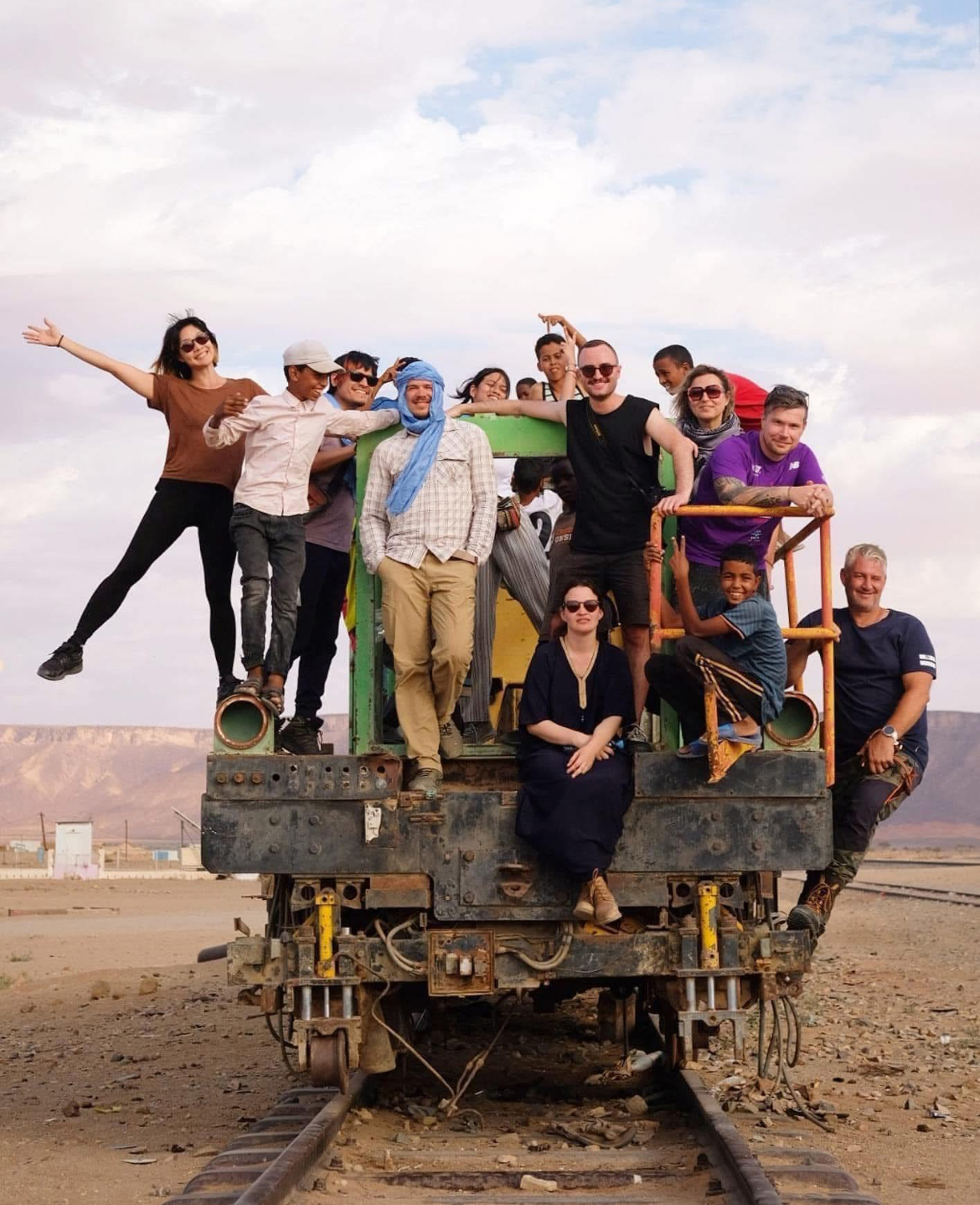
Long before you see it, you hear it. The ground in Choum starts to vibrate ten minutes before the train arrives — a low, rhythmic tremor you feel through your boots more than you hear with your ears. Then a single headlight appears on the eastern horizon. The sound builds into something that fills your whole chest. And then it passes: two hundred wagons, three kilometres of steel, iron ore dust hanging in the air long after the last wagon disappears west.
Nobody can quite prepare you for that moment. Everything in this guide helps you get there ready.
What Is the Iron Ore Train?
SNIM — Société Nationale Industrielle et Minière, Mauritania's state mining company — has been running this railway since the 1960s. Its job is simple: carry iron ore 704 kilometres from the mines of Zouerate across the Sahara to the Atlantic port of Nouadhibou. It runs whether you're there or not. It doesn't slow down for you, doesn't wait, and was built with no thought for your comfort. That's rather the point.
Each convoy can carry up to 210 wagons strung together across more than three kilometres of track. At full speed it takes several minutes for the whole train to pass through a station. The westbound train carries iron ore from Zouerate toward the port of Nouadhibou. Empty freight wagons generally return east toward Zouerate. These are working freight wagons, not passenger accommodation. Access cannot be assumed to be permitted, and travelers should confirm authorized arrangements with the railway operator.
The railway is also the only reliable overland link between Zouerate and the Atlantic coast. Alongside whoever travelled from Europe to ride it, the train carries Mauritanian traders, herders, soldiers, and families moving between communities that have no paved road connection. Sitting next to them — in the passenger carriage or a neighbouring wagon — is half the experience.
For a full overview of what a guided Iron Train experience involves, see our Mauritania Iron Ore Train tour.
The Two Ways to Ride
When the train reaches a boarding point, you have two options. The right choice depends on what you're actually after.
Open Iron Ore Wagons
This is why most people come. Westbound trains carry iron ore toward Nouadhibou, while empty wagons generally return east toward Zouerate. Open freight wagons are not designed for passengers, and access cannot be assumed to be permitted. The floor is iron, the sides are iron, there is no roof. You sit or lie on the metal while the desert scrolls past at 50–60 km/h, fine red dust drifting up from the wagon floor and off the train itself.
Officially it's free. Confirm any local boarding arrangements at the station. Keep small notes in your pocket; nobody near Choum has change for large bills. This is separate from the price of an organized guided trip.
The nights are what most people remember. By October the summer heat is gone, and once the sun sets the temperature drops fast. By midnight in a moving open wagon you will be genuinely cold regardless of how warm the afternoon was. But there is no light pollution for hundreds of kilometres in any direction, and the Milky Way out here looks like a physical band of light across the whole sky. Ask anyone who has done this trip which part they remember most and they will say the night.
Passenger Carriage
At the back of the train there's a single enclosed wagon: wooden benches, a roof, walls that block most of the wind and dust. Mauritanian passengers use it regularly — traders, women with children, people making ordinary journeys between towns with no road connection. Confirm current ticket costs and arrangements at the station before you board.
It's crowded and not always clean, but it's social in a way the open wagons aren't. You'll share tea, manage some broken French or a few words of Hassaniya Arabic, and arrive in considerably better shape. If someone in your group has health concerns or genuinely can't face a night in the open desert, the carriage is the right call.
For everyone else: open wagons for the night, carriage as backup once you've had enough. You can move between them at stops.
Boarding from Choum
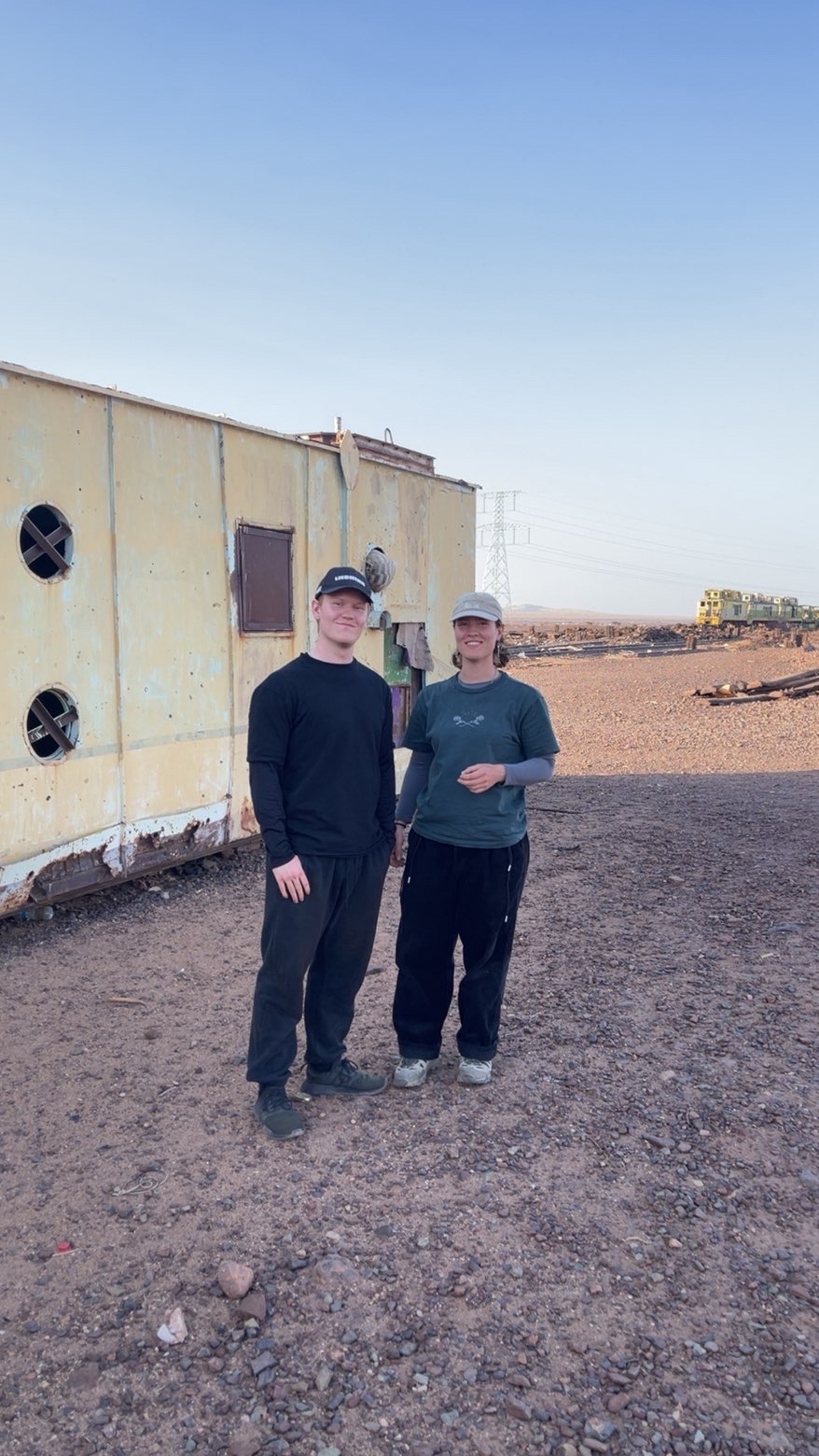
Choum is a settlement of a few hundred people clustered around the railway stop, a water tower, and not much else. There's no hotel — though someone will always find you a place to sleep — no ATM, no restaurant in the formal sense, and no mobile signal. You buy bread from a woman who bakes it at home, drink tea with whoever else is waiting, and spend several hours doing very little.
Budget for that wait. The train comes when SNIM's operations dictate, not when it's convenient. Our local contacts track it through radio and accumulated experience, but it still arrives when it arrives. Four to eight hours is normal; we've waited twelve. Bring enough food and water for the wait plus the entire journey, download something to read offline, and adjust your expectations before you arrive.
How Boarding Actually Works
The train slows at Choum but rarely stops completely. You need to have identified your target wagon beforehand, be positioned correctly on the right side of the tracks, and move when the moment comes. Watch how the Mauritanian passengers around you do it first — most of them have done it many times. SNIM workers often help guide people to the right spot.
Stay calm before the train reaches you, not after. Once it's arriving, the time for decisions is over. Both hands on the wagon rim, test your footing, then commit. Rushing when the wagon arrives is how people get hurt.
The train does not stop for you
A missed handhold with the next wagon already moving toward you is serious. Position yourself before the train arrives, use three points of contact at all times, and let your guide direct the approach. If you miss your wagon, wait — there will be another one.
Boarding from Zouerate
Zouerate is a SNIM company town — every shop, school, and road exists because of the mine. Getting there from Nouakchott takes two full days of 4x4 driving through some of the least-visited terrain in West Africa.
If you go: the Zouerate station is the most organised boarding point on the line. SNIM has a proper facility here, you can inspect wagons before departure, and you have more time to negotiate carriage access. Trains typically depart in the early morning or late afternoon. The full 704 km run from Zouerate takes 14–20 hours.
The town has a few basic hotels and a market. The landscape around it — vast flat hamada cut by red-sand dunes — is striking in the way empty places often are. Travellers who approach the town and its people with respect tend to be welcomed warmly; this is a working community, not a tourist stop.
For most itineraries, Choum is the practical choice. Zouerate suits those who want the full distance or are already exploring the far north.
How to Get to Choum
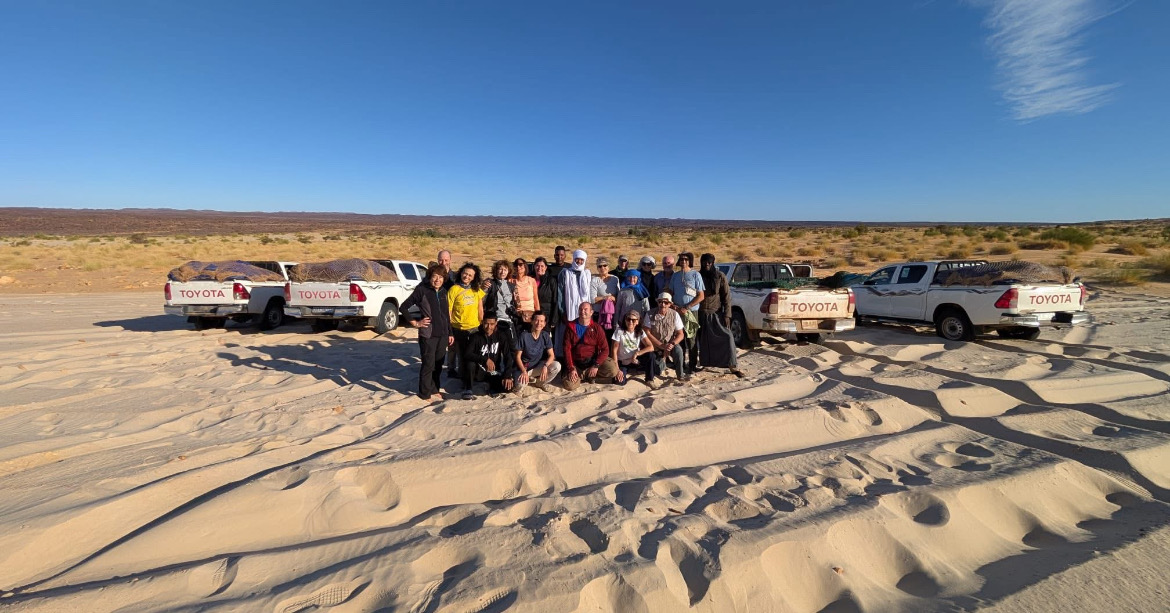
Most arrivals come through Nouakchott — direct flights from Casablanca, Dakar, and Paris. From Nouakchott, Choum is a two-day drive north. Nearly everyone breaks it into the same three legs:
Four to five hours on a sealed road through the Adrar plateau. Atar is the largest town in the region — hotels, a market, phone signal. Stock up on everything here. Last reliable ATM and fuel stop before the desert. This is also where you'll typically meet your guide if you haven't already.
Two to three hours on a desert piste. Most itineraries include at least one night here — a UNESCO-listed medieval caravan city with ancient manuscript libraries, a towering dune on its edge, and an afternoon light that photographs remember. Worth taking time.
Half a day to a full day depending on the route and current conditions.
Coming from Nouadhibou
If you're arriving by ferry from the Canary Islands, or flying into Nouadhibou directly, you can drive east to board at Choum and ride the train back west. Same destination, approached from the opposite direction — and strangely satisfying to arrive in a city by the hardest possible route when you could have just stepped off a plane there two days earlier.
Overland from Dakhla
Overlanders driving south from Europe cross into Mauritania at Guerguerat on the Western Sahara border. From Nouakchott the route to Choum is the same as above. See our upcoming Dakhla to Mauritania Travel Guide Coming Soon for the full crossing walkthrough.
Realistic Expectations
The Iron Ore Train is not a comfortable experience. It is an unforgettable one. There's a difference. Read this section before you go.
Delays
The train runs on a mining schedule and operates on Mauritanian time. It can arrive hours late, or come early and leave before you're positioned. We've seen travellers wait four hours; we've also waited twelve. Budget a full day of flexibility around your departure from Choum. Do not plan an onward flight from Nouadhibou within 24 hours of your expected arrival. Things happen.
Dust
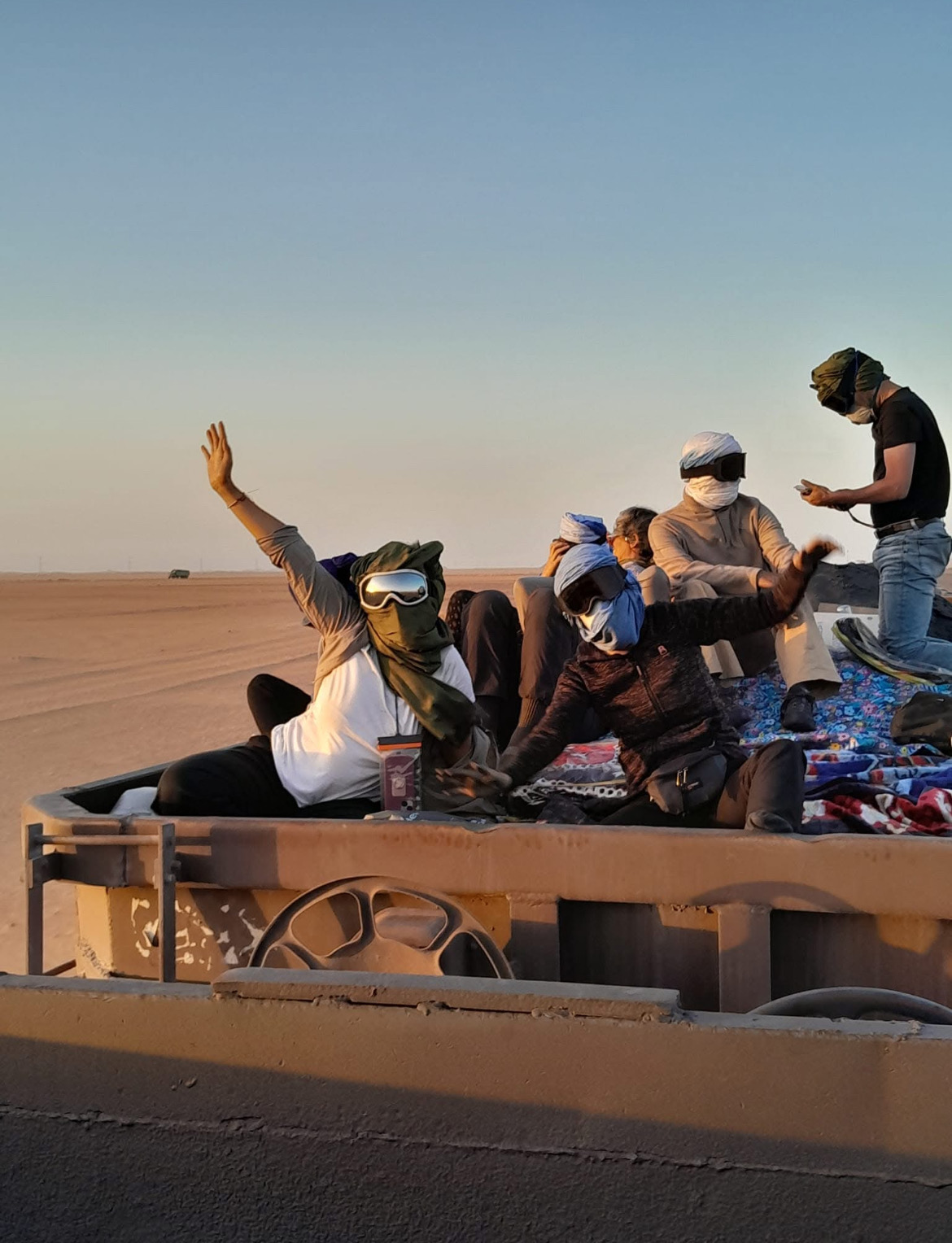
Iron ore dust is fine, reddish, and pervasive. The wagons look empty — they are not clean. Within twenty minutes of boarding without a mask, you will feel it in your throat and eyes. By the time you arrive in Nouadhibou, your skin, hair, and clothes will be red. Some fabrics never fully come clean. This is not a complaint — it is what the train is. Seal your electronics before you board, not after.
Heat
The October-to-March window is recommended specifically because the open wagons in summer are genuinely dangerous. Iron walls absorb and radiate heat. Water needs become critical. If your dates fall in April through September and you can't shift them, talk to us — the carriage is a safer option in warm months and the timing of your departure matters significantly.
Cold
The Sahara's day-night temperature swing is wider than most people from moderate climates experience. A 30°C afternoon can become a 10°C night. In a moving open wagon at 50 km/h, wind chill makes it feel several degrees colder still. A sleeping bag rated to 5°C is not optional — get into it before you're cold, not after. People who ignore this spend the second half of the journey genuinely miserable.
Toilets
There are none. No facilities on the open wagons. The passenger carriage does not have formal toilet facilities either. The train stops occasionally in open desert — that is your opportunity. Plan ahead, stay hydrated sensibly, and accept this as part of the trip before you arrive.
Food
Nothing is sold on the train. No water, no food, nothing. What you carry onto that wagon is everything you have for the full journey plus the wait. Buy bread, dates, and tinned goods in Atar or from Choum's small market. Bring more water than you think you need. If the train is delayed and your wait stretches, your reserves will matter.
Comfort
The wagon floor is bare iron. After an hour it is uncomfortable. After four hours it is painful without something between you and the metal. Bring a foam sit mat or a small inflatable sleeping pad — this single item significantly changes the experience. Noise is constant while moving and conversation is difficult. Sleep is possible but not easy in the open wagons.
The Journey Hour by Hour
Boarding to first hour
Put your dust mask on before you climb in, not after the train starts moving. Find a position against the wagon wall — something to lean against matters over an eight-to-twelve-hour journey. Lying back on your pack lets you look straight up at the sky, which is the correct direction to be looking.
After dark
This is when it changes. The temperature drops fast after sunset, and the wind chill of a moving train accelerates it. Get into your sleeping bag before you feel cold. What you get in exchange is a sky most people have genuinely never seen — no electricity for hundreds of kilometres, the Milky Way a solid stripe of light across the darkness. Most people fall quiet when it appears.
Stops along the way
The train stops briefly at a few points between Choum and Nouadhibou. When it stops: get out, stretch, handle bathroom needs, and refill water if anyone is offering it. The train restarts without announcement — don't wander.
Signal and time
You will have no phone signal for most of the journey. Download offline maps before leaving Atar. Tell someone at home your plans before you board. Carry a power bank; batteries drain faster in the cold. The disconnection is — genuinely, not rhetorically — one of the better parts.
Common Mistakes First-Time Travellers Make
These come up again and again. Most are easy to avoid once you know about them.
Not budgeting enough water
Travellers routinely underestimate how much water they need. Account for the wait in Choum (potentially all day) plus the full journey. Four litres per person is the minimum — bring more. There is nothing available between Choum and Nouadhibou.
Arriving in Choum without a way to track the train
Without local contacts or a guide, you have no reliable way to know when the train is coming. People end up waiting all night, burning through supplies, and missing the window because they were in the wrong position when it arrived. This is the single biggest advantage of going with someone who knows the line.
Putting the dust mask on after boarding
The wagon looks empty. It is not clean. Dust rises immediately once the train moves. The mask goes on before you climb in, not when the dust starts — by then it's already in your lungs.
Only carrying large-denomination Ouguiya
Do not rely on finding change for large notes in or near Choum. Keep small bills in your jacket pocket, separate from the rest of your cash, and confirm local boarding arrangements.
Assuming the afternoon warmth will last
October at noon in the Sahara feels warm. October at midnight in an open moving wagon feels like a different country. The sleeping bag and thermal layers are not for dramatic effect — they are for 02:00 when it's 8°C and you have four hours of desert still to cross.
Bringing a large rolling suitcase
Your luggage spends the journey on an iron floor getting coated in dust. A small backpack you can set down, lean against, and keep track of in the dark is the right vessel. Anything with wheels is a liability on a moving train.
Not downloading offline maps before leaving Atar
Atar is the last place with reliable mobile signal before Choum. Once you leave it, you're on your own. Maps.me and OsmAnd both have Mauritania data — download before you leave town.
Rushing the boarding
The train moves slowly at Choum. New arrivals sometimes panic and rush when they see it approaching. The Mauritanians around them board calmly and deliberately. Watch them first. Three points of contact. Test your footing before committing your weight. Boarding in a rush is how people fall.
Expecting the carriage to have space if the train is delayed
When the train runs late, passengers accumulate. The single passenger carriage fills from the front. If your train was delayed by eight hours, you are competing for space with everyone else who waited those eight hours. Plan for the open wagons as your primary option.
Not telling anyone back home their plans
You will have no signal for most of the journey. No one will know where you are for 8–12 hours. Give someone at home your full itinerary, guide's contact, and expected arrival time before you board. Simple, takes five minutes, and matters if anything goes wrong.
What to Pack
Pack light and pack right. Your bag will spend the journey on an iron floor and will emerge coated in red dust regardless. What you want to stay clean, seal it before you board. For the full breakdown, see our upcoming Iron Ore Train Packing Guide Coming Soon.
Dust & Eye Protection
- N95 or FFP2 dust mask — the most important item on this list
- Goggles or tight-fitting wraparound sunglasses
- Dry bags or heavy ziplock bags for phone, camera, documents
- Extra ziplock bags — dust gets into everything not sealed
Warmth & Comfort
- Sleeping bag rated to 5°C or colder — non-negotiable for open wagons
- Thermal base layers, top and bottom
- Windproof jacket or shell — the goal is blocking wind, not insulation
- Hat, gloves, and buff or balaclava; foam sit mat for the iron floor
Food & Water
- At least 4 litres of water per person — for the wait and the journey
- Dates, nuts, energy bars, tinned goods — easy to eat on a moving train
- Bread bought in Choum or Atar before boarding
- Reusable bottle or hydration bladder
Essential Gear
- Headlamp with spare or fresh batteries
- Power bank, fully charged — cold drains batteries faster
- Basic first-aid: painkillers, antihistamine, blister plasters, rehydration sachets
- Cash in small-denomination Mauritanian Ouguiya — no payment options near Choum
Pre-Departure Checklist
Work through this before you leave for Choum. Tick each item as you confirm it.
Documents & Admin
Dust & Eye Protection
Warmth & Clothing
Food, Water & Cash
Essential Gear
Safety Tips
The Iron Ore Train is not inherently dangerous. Mauritanians ride it for practical reasons and international travellers do so without incident most years. The risks are specific and manageable.
Iron Ore Dust
The wagons carry ore east and return empty west — but empty doesn't mean clean. Fine iron ore residue coats every surface and the train stirs it into the air as it moves. A mask goes on before boarding. Seal your camera and phone before you climb in. Your clothes will be red by Nouadhibou. That's expected.
Temperature Extremes
A 35°C afternoon becomes a 10°C night. In a moving open wagon, wind chill makes it colder still. Sleeping bag rated to 5°C is non-negotiable. In the hot months (May–September), the iron wagon walls absorb and radiate heat — water is more urgent than food, and 4 litres per person is the minimum.
Boarding and Disembarking
Pick a wagon with a lower lip. Get both hands on the rim before your feet leave the ground. Three points of contact — two hands and one foot, or two feet and one hand. Watch the Mauritanian passengers first; they've done this many times. At stops along the route, don't wander — trains in Mauritania start moving without announcement.
Valuables and Security
Mauritanians are hospitable and the vast majority of travellers have no security issues. That said: passport and cash go in a money belt under your clothes, not in your bag. Sleep on your pack or use it as a pillow. Not because of any specific threat — because a long dark journey in a crowded space is not the moment to be relaxed about where your documents are.
Go Solo or Book a Guide?
This is the question every person planning the Iron Ore Train eventually asks. Here is an honest comparison — no sales spin.
| Factor | Go Independently | Mauritania Experience |
|---|---|---|
| Cost | Lower — car hire or shared taxi, fuel, accommodation you find yourself | Higher — guided rate covers 4x4 transport, driver, guide, accommodation en route. Contact us for current pricing. |
| Train timing intel | None. You wait in Choum without knowing if the train is 2 hours or 10 hours away. | Real-time tracking through established SNIM station contacts. |
| Drive to Choum | You arrange — car hire in Nouakchott, navigate an unmarked desert piste, manage fuel stops. | Fully included. Experienced driver who knows the route. |
| Boarding assistance | Self-managed. Watching locals is your only guide. | Guide is at the tracks with you and directs the approach. |
| Accommodation | You find it. Choum has no hotels — requires local networking on arrival. | Pre-arranged throughout the itinerary. |
| Language needed | French is essential. Basic Hassaniya Arabic is a significant advantage. | None required — guide handles all local communication. |
| If something goes wrong | You handle it. No signal, no support, no backup. | Local contacts and on-the-ground support throughout. |
| Flexibility | High — you go when you want, change plans freely. | Built around your dates; less spontaneous. |
Going Independently — best for
- Experienced desert travellers who've navigated similar terrain
- Those with solid French or Hassaniya Arabic
- Travellers with fully flexible dates who can absorb a long wait
- Budget travellers comfortable managing uncertainty
Main risks
- Train timing uncertainty with no way to track it
- Navigation on unmarked desert piste
- No backup if the vehicle breaks down or the train schedule changes drastically
Mauritania Experience — best for
- First-time visitors to Mauritania
- Small groups or families
- Travellers with fixed departure dates who can't afford delays
- Anyone who wants to focus on the journey, not the logistics
What's included
- Mauritanian guide and experienced 4x4 driver
- Real-time train tracking through station contacts
- Accommodation arranged throughout
- WhatsApp support before and during the trip
If you want to go independently, this guide gives you everything we know. If you want local support, talk to us — we'll build an itinerary around your dates and group without pressure.
Arriving in Nouadhibou
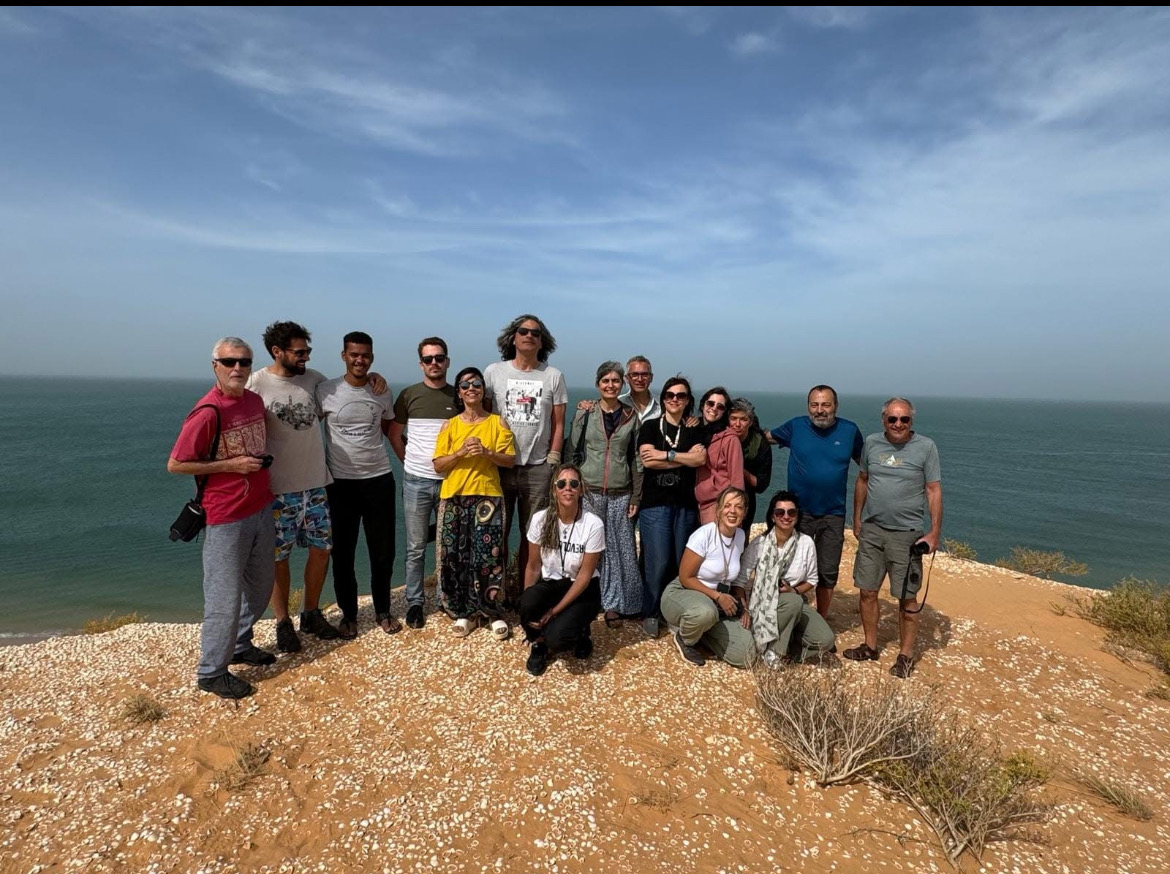
Arriving in Nouadhibou feels like someone turned the contrast dial up. Ten hours ago you were in a metal box somewhere in the open desert. Now you're in a city. There's an ocean nearby. A shower exists within reach. Most people stand still for a moment.
Nouadhibou is Mauritania's second city and its main fishing and trade port — hotels, restaurants, and the kind of services that feel almost luxurious after what you've come through.
From Nouadhibou you can fly back to Nouakchott, take the coastal highway south, or spend a day or two before continuing. If you're travelling with us, we arrange pickup at the station and handle whatever comes next.
Talk to Us About Your Trip
Tell us your dates, where you're flying in from, and how many people. We'll tell you whether the timing works and what a realistic itinerary looks like — Iron Ore Train only, or the full route through Chinguetti and the Adrar.
We reply within a few hours. No obligation to book.
Frequently Asked Questions
How long does the Iron Ore Train journey take?
Choum to Nouadhibou typically takes 8–12 hours. The full run from Zouerate covers 704 km and runs 14–20 hours depending on loading stops and delays. Build extra time into your schedule — the train operates on a mining timetable and doesn't prioritise punctuality.
Is riding the Iron Ore Train free?
The open wagons are described as free, but that does not include a guided tour or its transport and logistics. Confirm any local boarding or passenger-carriage costs at the station. Guided trip prices vary by dates, group size, transport and itinerary; ask for an exact quote.
Can I ride the Iron Ore Train without a guide?
Yes. Some independent travellers manage it. The practical challenges are the drive to Choum on unmarked desert piste, finding somewhere to sleep in a settlement with no hotels, and tracking the train without local contacts. Experienced desert travellers with good French can manage it. For everyone else, local support removes the friction that turns an adventure into an ordeal.
Where is the best place to board?
Choum. It fits naturally into a Mauritania itinerary via Atar and Chinguetti, and the wait — while unpredictable — is part of the experience. Zouerate gives you the full 704 km but adds two days of driving through very remote terrain each way.
What is the best time of year to ride?
October to March. October and November are the sweet spot: the heat has broken, the desert light is excellent, and nights are cold but manageable. Avoid May through September — iron wagons in summer heat are a genuine safety concern.
When does the Iron Ore Train depart?
There is no public timetable. SNIM runs the train on a mining schedule that changes daily. Departures from Zouerate are typically early morning or late afternoon, but they shift. The only reliable way to know when the train is coming is to have contacts at the station.
What should I wear on the Iron Ore Train?
An N95 or FFP2 dust mask and goggles or wraparound sunglasses from the moment you board. Thermal layers under a windproof jacket, and a sleeping bag rated to at least 5°C. Even in October, the combination of night temperature and wind chill at train speed is colder than the daytime gives any indication of.
Are there toilets on the Iron Ore Train?
No. There are no toilet facilities on the open wagons or in the passenger carriage. The train stops at intervals in the open desert — that is your only option. Plan accordingly and stay sensibly hydrated rather than restricting water intake, which causes its own problems.
What food is available on the train?
Nothing is sold on the train. No food, no water. Whatever you carry onto the wagon is everything you have for the entire journey plus the wait in Choum. Stock up in Atar or Choum's small market — bread, dates, tinned goods, nuts. Bring more water than you think you need.
Can I combine the Iron Ore Train with Chinguetti and the Adrar desert?
This is the standard itinerary for a good reason. Nouakchott → Atar → Chinguetti → Choum → Iron Ore Train → Nouadhibou takes 7–10 days. Choum is on the route regardless, so the train becomes the finale rather than a detour. See our upcoming 7-Day Mauritania Itinerary guide for a full day-by-day breakdown.
Explore More Mauritania Guides
On this site
Still have questions?
Message us on WhatsApp and we'll answer honestly — even if you don't book with us. We'd rather you go prepared than not go at all.