Your guided Iron Ore Train experience in 2026–2027
The classic loaded-train experience runs from Choum to Nouadhibou. A local Mauritanian guide accompanies you, with boarding preparation and overland logistics coordinated around your trip. The existing sample itinerary below spans five days; shorter trips and Adrar extensions are planned around your dates.
The trip price depends on your travel dates, group size, and whether you join a group or travel privately. Group departures usually offer the best value.
Guide support, transport coordination and accommodation assistance are described in the inclusions below; international flights, visas, insurance and personal expenses are not included.
There is no fixed passenger timetable. Choum to Nouadhibou is commonly described here as an 8–12-hour crossing, but waiting and operational stops can extend it. Keep onward travel flexible; the full Zouerate route is longer.
Planning the Iron Ore Train? Send us your travel dates and number of travelers and we’ll help you choose the best itinerary.
Get My Trip PriceBefore you decide, read our Iron Ore Train danger and safety guide. Combine the journey with Terjit Oasis, Chinguetti or a requested Ouadane extension; check the seven-day Mauritania itinerary or send a booking request.
Starting from $1,000 per person for eligible shared-group departures. Final prices depend on travel dates, group size, itinerary, and inclusions. Private expeditions are quoted separately.
We organize guided Iron Ore Train trips around your route and dates. Our local team can coordinate the journey from Nouakchott, Atar, or Nouadhibou, help you reach Choum, support boarding, and arrange the transport and logistics around the train. Choose an Iron Ore Train-only adventure, combine it with the Adrar Desert, or ask about a custom private Iron Train trip.
What Is the Mauritania Iron Ore Train?
The Mauritania Iron Ore Train — locally known as the Train du Désert or simply le train — is one of the most iconic and extraordinary rail journeys on earth. Operated by SNIM (Société Nationale Industrielle et Minière), the state mining company, the train runs approximately 704 kilometres from the iron ore mines of Zouerate, deep in the northern Sahara, to the Atlantic port of Nouadhibou. On its journey it passes through some of the most remote and breathtaking desert landscapes on the planet.
What makes this train truly extraordinary is its scale. Each convoy consists of up to 210 wagons — each loaded with hundreds of tonnes of raw iron ore — making it regularly one of the longest and heaviest trains in the world, sometimes stretching more than three kilometres from locomotive to caboose. Yet despite its industrial purpose, the train has become a bucket-list experience for adventurous travellers from around the world, drawn by the romance of riding a thundering freight train across the open Sahara under a sky blazing with stars.
The railway was built in the 1960s to service the newly discovered iron ore deposits around Zouerate. Today it is the economic backbone of Mauritania's mining industry, transporting millions of tonnes of ore per year. It is also the only reliable overland link between Zouerate, Choum, and the coast — meaning that alongside adventurous tourists, the train carries Mauritanian traders, herders, soldiers, and families who have no other practical means of crossing this section of desert.
Mauritania itself remains one of Africa's least-visited countries, and the Iron Ore Train is one of the primary reasons serious adventure travellers make the journey. There is nowhere else on earth quite like it.
Why Travelers Choose This Experience
Raw Adventure
No tourist circuit, no crowds — just the open Sahara and one of the world's most extreme freight railways.
Photography
Endless desert light, iron ore landscapes, silhouetted wagons at sunset, and a sky blazing with stars at night.
Local Support
Our Mauritanian team knows every step: train timing, boarding logistics, desert routes, and cultural context.
Unique Landscapes
700 km of Saharan hamada, dune fields, remote settlements, and the Atlantic coast — nothing else like it.
Desert Immersion
Combine the train with Saharan dune camps, ancient caravan cities, and oasis stops for a full expedition.
All Logistics Handled
We plan transport, accommodation, train boarding, and adapt the route to your dates and travel style.
How We Help You Organize It
Mauritania Experience is a local operator based on the ground in Mauritania. We have organized the Iron Ore Train for travelers from across Europe and beyond. Here is exactly what we provide:
- Local guide support — A Mauritanian guide with you from arrival to departure — handling all communication, logistics, and safety.
- Driver & 4x4 transportation — We provide experienced desert drivers and 4x4 vehicles for all overland legs — Nouakchott → Atar → Choum → Nouadhibou or any combination.
- Choum / Zouerate train boarding — We know the train schedule, the station contacts, and how to check current conditions and explain the risks. We have done it many times.
- Hotel & accommodation support — We arrange hotels in Nouakchott, Nouadhibou, Atar, and desert camp accommodation along the route.
- Airport pickup — We meet you at Nouakchott or Nouadhibou airport. No need to figure out transport on arrival.
- Itinerary planning — We build the right itinerary for your dates, group size, and travel style — whether Iron Ore Train only or combined with Adrar, Chinguetti, or the desert.
- WhatsApp support — We are reachable before and during your trip. Real communication with the local team, not a booking platform.
Sample Iron Train Itinerary
This is a typical itinerary for the Iron Ore Train experience. We adapt it to your dates, entry point, and preferred extensions.
Arrival in Nouakchott or Nouadhibou
Airport pickup included. Hotel accommodation arranged. Briefing on the route and logistics.
Transfer & Desert Route
Depart by 4x4 toward Atar and the Adrar region. Desert piste driving, local stops, and overnight.
Choum & Train Preparation
Arrive in Choum. Local contacts check train timing. Rest, wait, and prepare for the overnight journey.
Iron Ore Train Experience
Board the Iron Ore Train. 8–12 hours across the Sahara to Nouadhibou. Stars overhead, desert scrolling past.
Arrival in Nouadhibou & Recovery
Arrive in Nouadhibou. Clean up, rest, explore the coastal city. Optional Atlantic excursions.
Adrar Desert Extension
Combine with Chinguetti, Ouadane, Terjit oasis, or the Richat Structure for a full desert expedition.
What's Included in Our Mauritania Iron Ore Train Tour
Exact inclusions depend on whether you choose the train only or a wider desert itinerary. Where applicable, our guided trips include the local support and practical coordination that make this remote journey easier to organize.
Our Local Team
Every Iron Ore Train experience is run by our Mauritanian team — people who were born in this country and have spent years learning its desert routes, train logistics, and cultural landscape.
Sidhamed
Local Guide
Sidhamed has guided dozens of international travelers through the Iron Ore Train experience and across the Adrar desert. He knows the train, the people, and the routes — and speaks French and Arabic fluently.
Mohamed
Driver
Mohamed has driven the desert pistes between Nouakchott, Atar, and Choum hundreds of times. He knows the route in all seasons and handles every breakdown, navigation challenge, and logistical surprise calmly and professionally.
Iron Ore Train Tour Options
Choose the level of support and time in the desert that fits your trip. We can adjust the route, transport, and accommodation around your dates.
Iron Ore Train only
For travelers who mainly want the train experience with help organizing pickup, transport, Choum boarding, timing, and local support.
Quote depends on dates, route, group size, and transport.
Plan Iron Train TripIron Ore Train + Adrar Desert
For travelers who want to combine the train with Chinguetti, Ouadane, Atar, Choum, and the landscapes of the Adrar Desert.
Quote depends on dates, route, group size, and transport.
Explore Desert TourCustom private Iron Train trip
For solo travelers, couples, friends, photographers, and small groups who want flexible dates and a custom private route.
Quote depends on dates, route, group size, and transport.
Request Custom Trip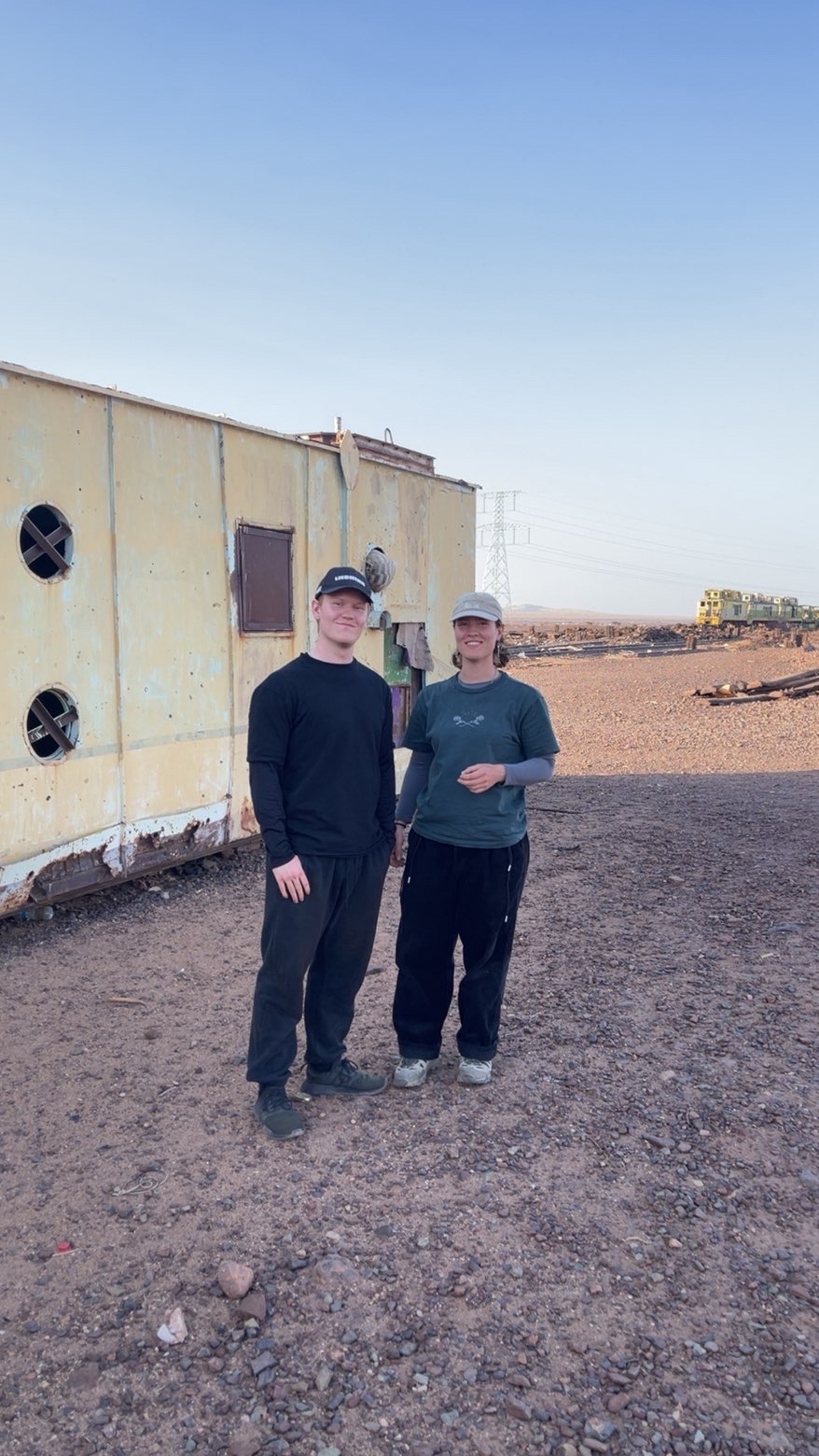
How to Ride the Iron Ore Train
Riding the Iron Ore Train is not like boarding a normal passenger service. There are no online booking systems, no printed tickets, no departure screens in a station concourse. This is a working freight train, and accessing it requires local knowledge, flexibility, and a healthy sense of adventure.
The Iron Ore Train transports loaded iron ore wagons westward from Zouerate to Nouadhibou. Empty wagons generally return eastward after unloading. This is a working freight train, not a regular passenger service. Travelling in open freight wagons carries serious risks, and authorization cannot be assumed. Never board or leave a moving train. Always follow the railway operator's current instructions.
The second option is the passenger carriage — a single enclosed wagon attached to the rear of the train. This carriage offers wooden benches, shelter from the wind and dust, and a more social atmosphere with local Mauritanian passengers. Confirm current ticket costs and arrangements locally; they are separate from a guided tour quote. The carriage fills quickly and can be crowded, but it is a more comfortable option for those who find the open wagons too challenging.
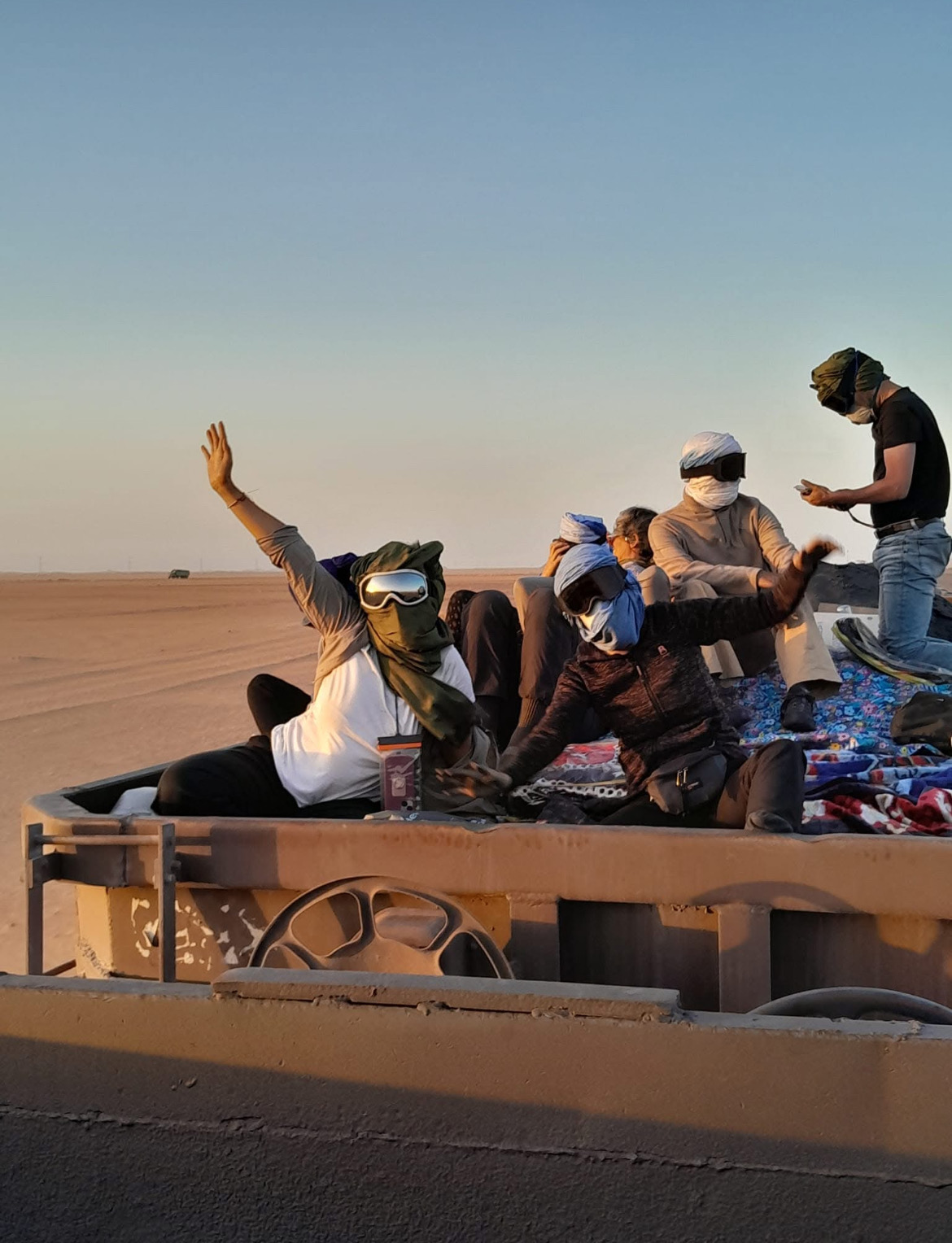
Most experienced travellers and guides recommend the open wagons for the first leg at least — particularly at night, when the temperature drops dramatically and the Milky Way blazes overhead in a sky entirely free of light pollution. It is an experience that is simply impossible to replicate anywhere else in the world.
Boarding the Iron Ore Train from Choum
Choum is the most popular boarding point for international travellers, and for good reason. It sits roughly at the midpoint of the railway, making it accessible both from Nouakchott via a long desert piste and from the north via Atar. Most organised tours and independent travellers arrive in Choum by 4WD, often having already explored the ancient city of Chinguetti and the Adrar region.
Choum itself is a tiny settlement — little more than a handful of mud-brick buildings, a water tower, and the railway infrastructure. There is no hotel in the formal sense, but locals will often find you a place to sleep for a modest fee. Basic food is available: bread, tea, dried goods. There are no ATMs, no banks, no reliable mobile signal. Come prepared with everything you need.
Train arrival times at Choum can be unpredictable. Always remain at a safe distance from the railway tracks and follow instructions from authorized railway staff. Never board or leave a moving train. Open freight wagons are not designed for passenger travel, and access must not be assumed to be permitted. Confirm current travel arrangements before your journey.
The train can arrive at Choum at almost any hour of the day or night. Locals track it by word of mouth, radio contact with SNIM workers, and experience. A good local guide is invaluable here. Waiting times of 4–12 hours are perfectly normal — bring food, water, a book, and patience.
Boarding the Iron Ore Train from Zouerate
Zouerate is the origin of the Iron Ore Train and the heart of Mauritania's mining industry. A SNIM company town in the far north of the country, it sits in a dramatic landscape of red-sand dunes and rocky hamadas. Getting here is itself an adventure — the journey from Nouakchott by 4WD takes two days of hard desert driving across some of the most remote terrain in West Africa.
Boarding at Zouerate has the advantage of giving you the full journey to Nouadhibou and the most time in the wagons. The station here is also the most organised: there is a proper SNIM facility, and you can more easily negotiate access to the passenger carriage or select your wagon before the train departs. The trains typically depart in the early morning or late afternoon, though — as always — schedules are subject to operational demands and should be confirmed on the ground.
Zouerate itself has basic hotels, a market, and a few restaurants. It is a genuine working mining town with little tourist infrastructure, but welcoming to travellers who treat locals with respect. The surrounding landscape is extraordinary — vast rocky plains, migrating sand dunes, and the sky of the deep Sahara.
For travellers incorporating Zouerate into a wider Mauritanian itinerary, it pairs beautifully with a northward exploration of the Saharan pistes toward the Algerian border, the ancient rock art of Ben Amira, or the Atlantic coast south of Nouadhibou. Mauritania Experience designs custom routes that use Zouerate as both a starting point for the train and a gateway to the far north.
Safety Tips for the Iron Ore Train
Travelling in open freight wagons involves serious risks. These wagons are not designed for passengers. Preparation can reduce some risks, but cannot eliminate them. Access should not be assumed to be permitted. Always confirm current arrangements with the railway operator.
Iron Ore Dust
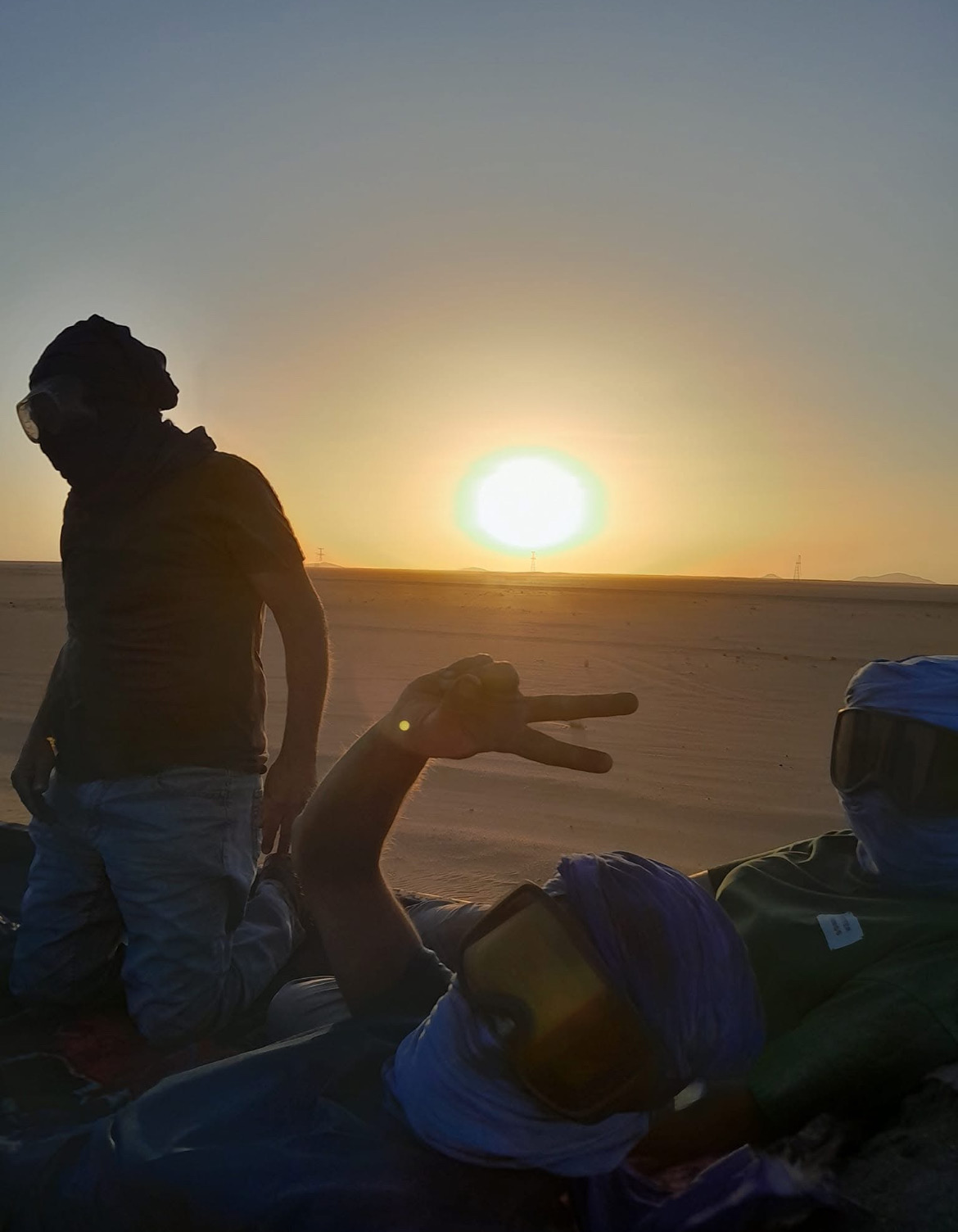
This is the most significant discomfort of the open wagons. On the loaded westbound journey, fine iron ore dust coats every surface and can irritate eyes and lungs. A good-quality dust mask or buff covering nose and mouth is essential. Goggles or wrap-around sunglasses will protect your eyes. Cover all cameras, electronics, and bags in sealed plastic bags or dry bags. Expect to arrive in Nouadhibou covered in a fine red film — it is part of the experience, but plan your luggage accordingly.
Temperature Extremes
The Saharan desert is famous for its heat, but night temperatures — especially at speed in an open wagon — can drop to near freezing even in what feels like a warm month. A good sleeping bag, thermal layers, and a windproof outer layer are not optional. Conversely, the daytime sun at a stop can be punishing. Water is critical: bring at least 3–4 litres per person for the journey and do not rely on being able to resupply en route.
Boarding and Disembarking
Boarding or leaving a moving train can cause serious injury or death. Never attempt it. Freight wagons are not designed for passenger travel. Access must not be assumed to be permitted. Follow instructions from authorized railway staff and confirm approved travel arrangements in advance.
Valuables and Security
Keep valuables — passport, money, electronics — in a body bag or inside layer you sleep on. The vast majority of travellers report no security incidents, and Mauritanians are extraordinarily hospitable. Common sense precautions are sufficient. Travel with a local guide wherever possible, particularly if you are unfamiliar with Mauritanian culture and language.
What to Pack for the Iron Ore Train
Packing for the Iron Ore Train requires balancing adventure readiness with the reality that everything you bring will get dirty. Keep your pack small and your essentials protected.
Dust & Eye Protection
- Dust mask / N95 respirator or quality buff
- Goggles or wrap-around sunglasses
- Sealed bags or dry bags for electronics and documents
Warmth & Comfort
- Sleeping bag rated to 5°C or lower
- Thermal base layer (top and bottom)
- Windproof / waterproof shell jacket
- Warm hat and gloves for night travel
Food & Water
- Minimum 4 litres of water per person
- High-calorie snacks: dates, nuts, energy bars
- Bread and canned goods from Choum market
- Reusable bottle or hydration bladder
Essential Gear
- Headlamp with spare batteries
- Offline maps (Maps.me or OsmAnd with Mauritania data)
- First-aid kit including antihistamine and pain relief
- Cash in Mauritanian Ouguiya (no ATMs on route)
Best Season to Ride the Iron Ore Train
The Mauritanian Sahara is a year-round destination for the hardy, but the optimal window for the Iron Ore Train — and for Mauritanian travel in general — is October through March, when daytime temperatures are tolerable and the nights are cool rather than bitterly cold.
October – November (Ideal)
This is the sweet spot. The summer heat has broken, days are warm and manageable (25–35°C), and nights are refreshingly cool without being freezing. The desert light is extraordinary at this time of year — long golden hours, dramatic shadows on the dunes. Mauritania Experience runs its most popular expeditions during this window precisely because the conditions are optimal for both the train journey and desert exploration.
December – February (Peak Comfort)
The coolest months. Daytime temperatures hover around 20–28°C, making overland travel and dune walking genuinely pleasant. Nights in open wagons will be cold — temperatures can approach 5–10°C — so a proper sleeping bag is essential. This is also the period when the Saharan light has a particular crystalline quality much beloved by photographers.
March – April (Transitional)
Temperatures begin rising again. Still manageable, though the Harmattan wind can bring dusty conditions. Good for travellers who want the experience with fewer other visitors.
May – September (Avoid)
Summer in the Mauritanian Sahara is genuinely dangerous for the unprepared. Temperatures regularly exceed 45°C in the shade and can reach 55°C in direct sun. The Iron Ore Train still runs, and hardy local travellers still ride it, but for the vast majority of international visitors this is not advisable. If you must travel during summer, travel exclusively at night and carry substantially more water than you think you need.
Ready to Plan Your Mauritania Adventure?
Tell us your dates, group size, and travel style. We'll help you organize the right trip.
Pricing
The trip price depends on your travel dates, group size, and whether you join a group or travel privately. Group departures usually offer the best value.
Send us your dates and number of travelers and we’ll recommend the best option for you.
Get My Trip PriceGetting to the Train: Key Logistics
Most international travellers fly into Nouakchott Oumtounsy International Airport, which has connections from Casablanca, Dakar, Paris, and several other African hubs. From Nouakchott, the journey to Choum by 4WD takes approximately two full days of driving across desert pistes, passing through Atar (the gateway to the Adrar region) and ideally with a night stop at Chinguetti or another desert settlement.
Travelling independently is possible but challenging. The pistes are unmarked in many sections, there are no petrol stations between towns, and local knowledge is essential for navigation and for knowing the current train schedule. A breakdown on an empty desert piste in midsummer is a life-threatening situation.
Our recommendation: travel with an experienced local operator. Mauritania Experience designs Iron Ore Train expeditions that combine the train with the best of Mauritanian desert travel — Saharan dune camping, ancient cities, oasis visits, and the Atlantic coast — led by guides with genuine deep-desert expertise. This is the safest, richest, and most rewarding way to experience it.
Need a transfer to Choum, Atar, or Nouakchott airport? Book private transport in Mauritania — we arrange airport pickups, intercity 4×4 transfers, and Iron Ore Train connections with trusted local drivers.
Read our complete Mauritania Iron Ore Train guide for in-depth information on the route, packing requirements, wagons versus carriage, best months, and what to expect on board.
Frequently Asked Questions
How much does the Mauritania Iron Ore Train tour cost?
Prices vary depending on group size, travel dates, transport and itinerary. Joining a group can reduce the cost. Send us your dates and number of travelers for an exact quote.
Is the Iron Ore Train safe for tourists?
Open freight wagons are not designed for passengers and travelling in them involves serious risks, including falls, dust exposure and extreme temperatures. Preparation and local guidance cannot eliminate these risks. Never board or leave a moving train. Confirm permitted travel arrangements with the railway operator before your journey.
Can I ride the Iron Ore Train without local help?
Technically yes, but it is very challenging without local knowledge. There is no public timetable, no booking system, and no tourist infrastructure in Choum. The train timing changes daily based on operational needs. A local guide knows the station contacts, the train schedule, and how to check current conditions and explain the risks — and makes the difference between a stressful experience and an unforgettable one.
Where does the Iron Ore Train go?
The Iron Ore Train runs from Zouerate (the mining town in the far north) to Nouadhibou (the Atlantic port city), a distance of approximately 704 km across the Sahara. It passes through Choum — the most popular boarding point for international travellers. The journey takes between 14 and 20 hours depending on stops.
Can you organize pickup from Nouadhibou, Choum, Atar, or Nouakchott?
Yes. We can organize your trip starting from any of these cities. Most travelers fly into Nouakchott — we pick you up at the airport and handle all transport to the train. If you're already in Nouadhibou or Atar, we can work from there too. Contact us with your entry point and dates and we'll build the right route.
What should I bring for the Iron Ore Train?
The essentials: a quality dust mask or N95 respirator, goggles or wrap-around sunglasses, a sleeping bag rated to 5°C or lower, thermal layers, a windproof jacket, at least 4 litres of water, high-calorie snacks, a headlamp, and offline maps. See our full packing list section above for more detail. We also send a complete packing guide to all booked travelers.
Can this be combined with Chinguetti, Ouadane, or the Adrar desert?
Absolutely — and this combination is what we specialize in. Most travelers combine the Iron Ore Train with the Adrar region: Chinguetti (a UNESCO heritage site), Ouadane, Terjit oasis, and desert dune camps. The natural route goes Nouakchott → Atar → Chinguetti → Choum → Iron Ore Train → Nouadhibou, which gives you the best of both the desert and the train.
How do I book?
Fill in our booking form with your dates, group size, and travel style — we'll get back to you within a few hours with a custom proposal. You can also contact us directly on WhatsApp (+222 32 11 32 82) for a faster response. We confirm reservations with a deposit and send you everything you need to prepare before arrival.
How long does the journey take?
The full journey from Zouerate to Nouadhibou covers approximately 704 km and takes between 14 and 20 hours. The Choum-to-Nouadhibou leg — the most popular section for tourists — takes roughly 8–12 hours. Delays are common; plan for flexibility.
When does the Iron Ore Train depart?
There is no fixed public timetable. The train typically departs Zouerate once or twice daily, usually in the early morning or late afternoon — but schedules change frequently. Your best sources are SNIM staff at the station or our local team, who track the train through established contacts.
Is there mobile signal on the train?
Mobile signal is extremely limited for most of the journey. Download offline maps before you leave (Maps.me or OsmAnd), inform someone of your itinerary, and carry a small power bank for your devices. The disconnection is, for most travellers, one of the most powerful parts of the experience.
How Your Iron Train Trip Works
We make the difficult parts simple — planning, transport, local support, and on-the-ground logistics.
Tell Us Your Dates
Send us your travel dates, group size, and where you will arrive: Nouakchott, Nouadhibou, Choum, Atar, or Dakhla.
We Plan the Logistics
We help organize the best route, pickup, transport, guide support, accommodation advice, and Iron Train timing.
Confirm Your Trip
Once the plan is clear, we confirm the itinerary and deposit and payment details.
Travel With Local Support
Our team helps you on the ground so your Mauritania experience is smoother, safer, and better organized.
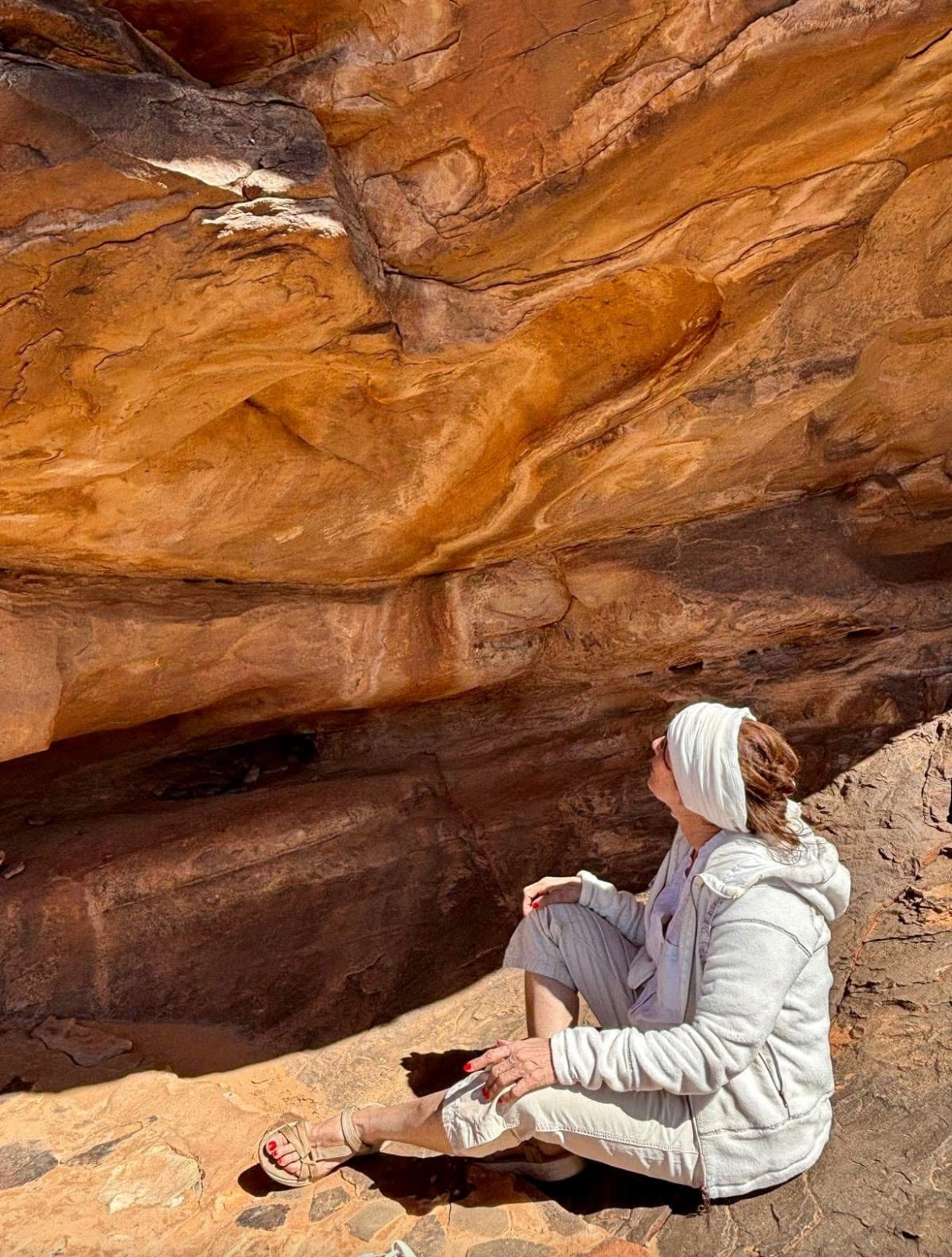
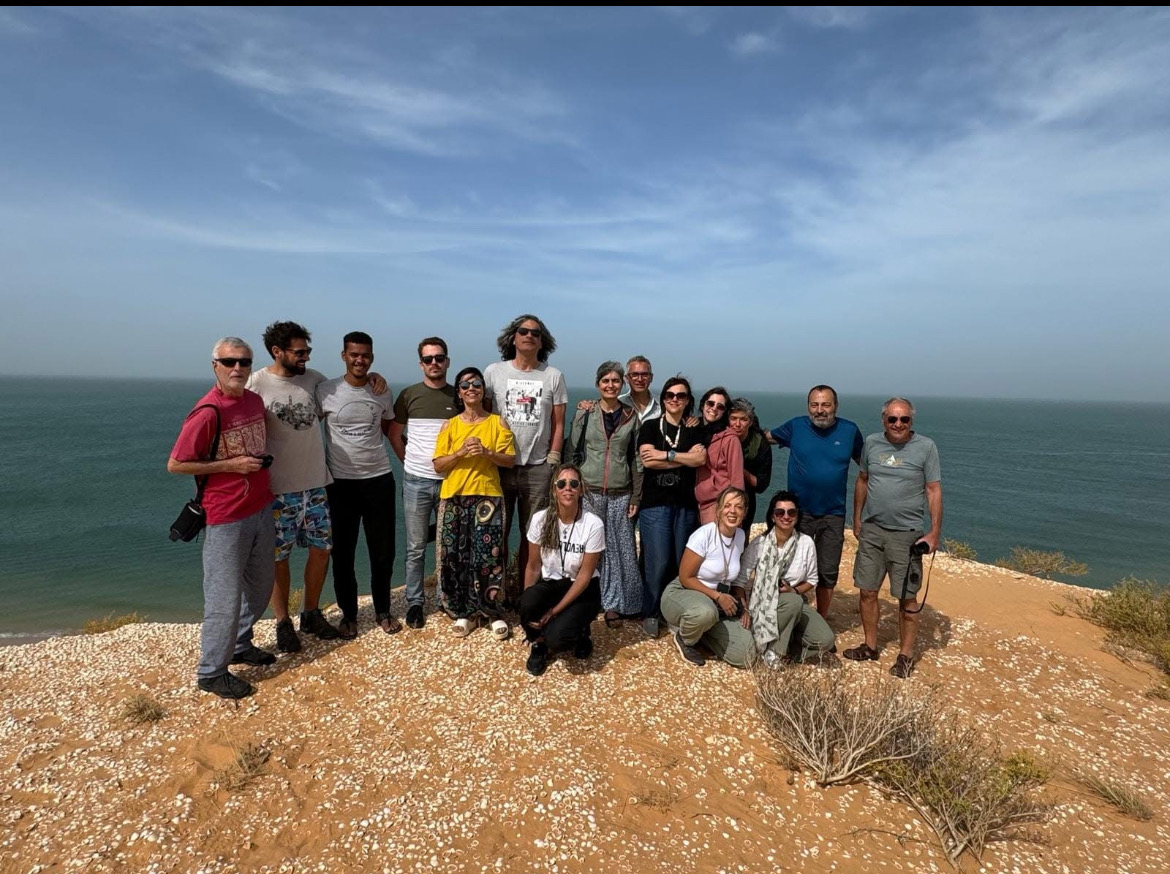
Mauritania in Pictures
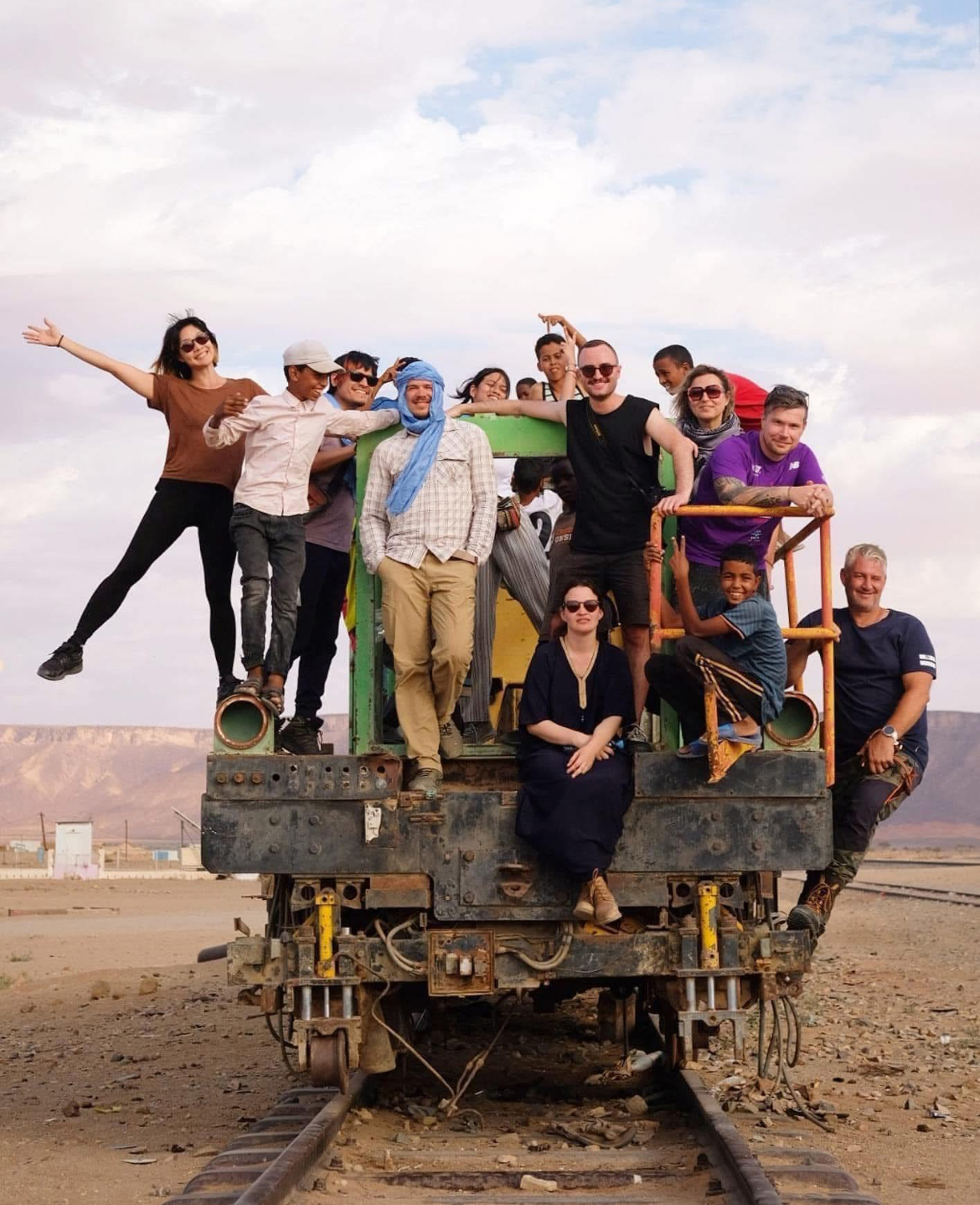
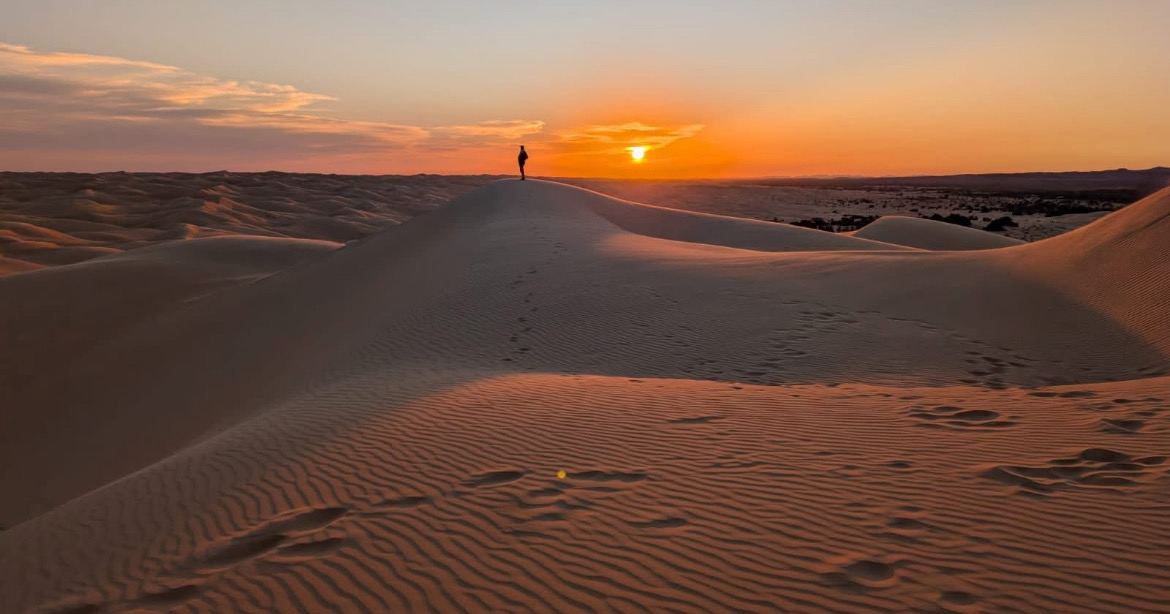
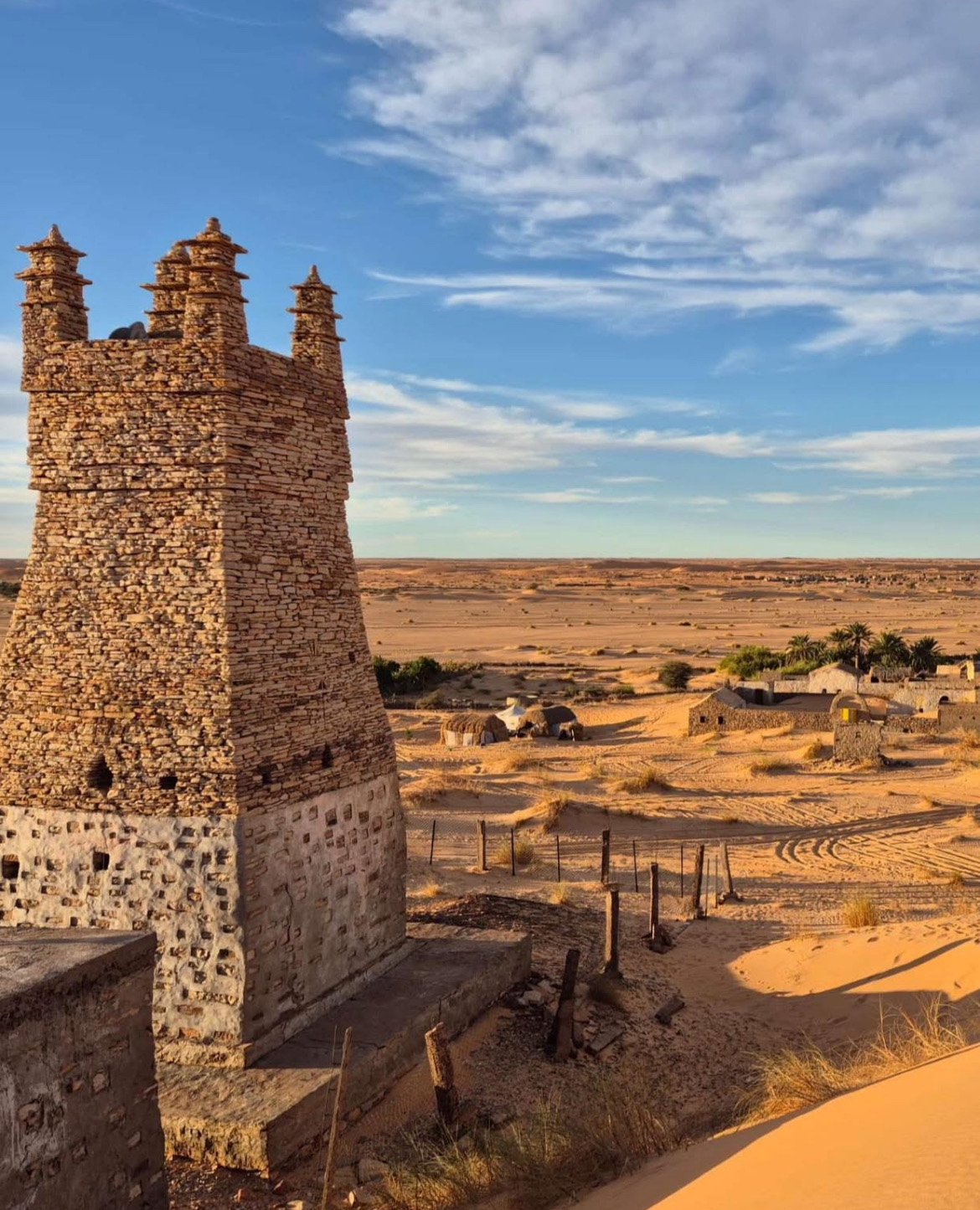
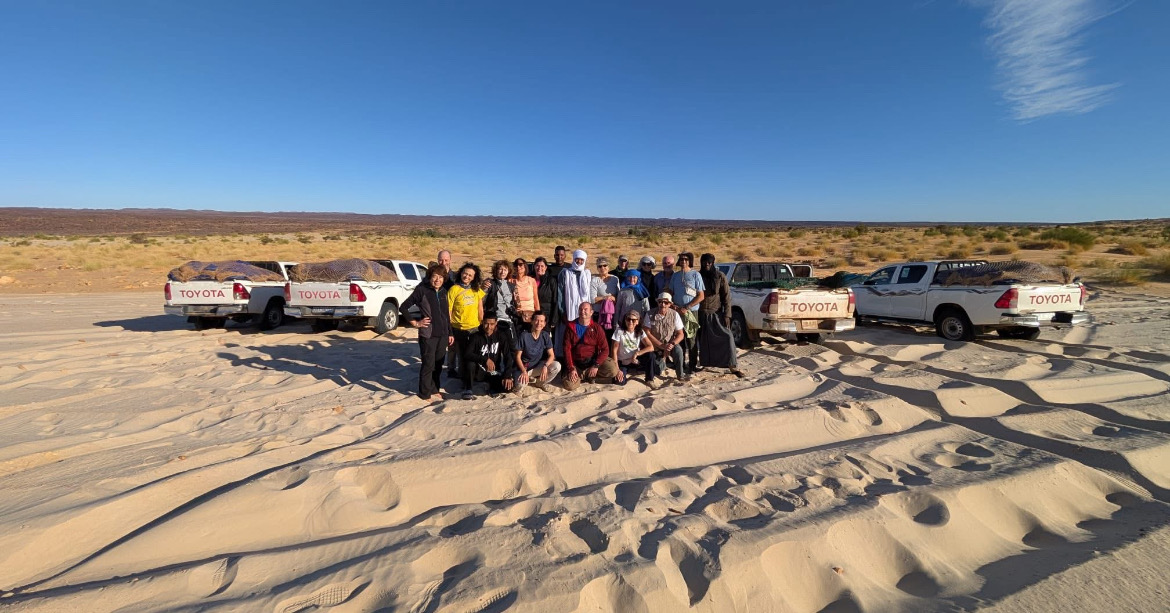
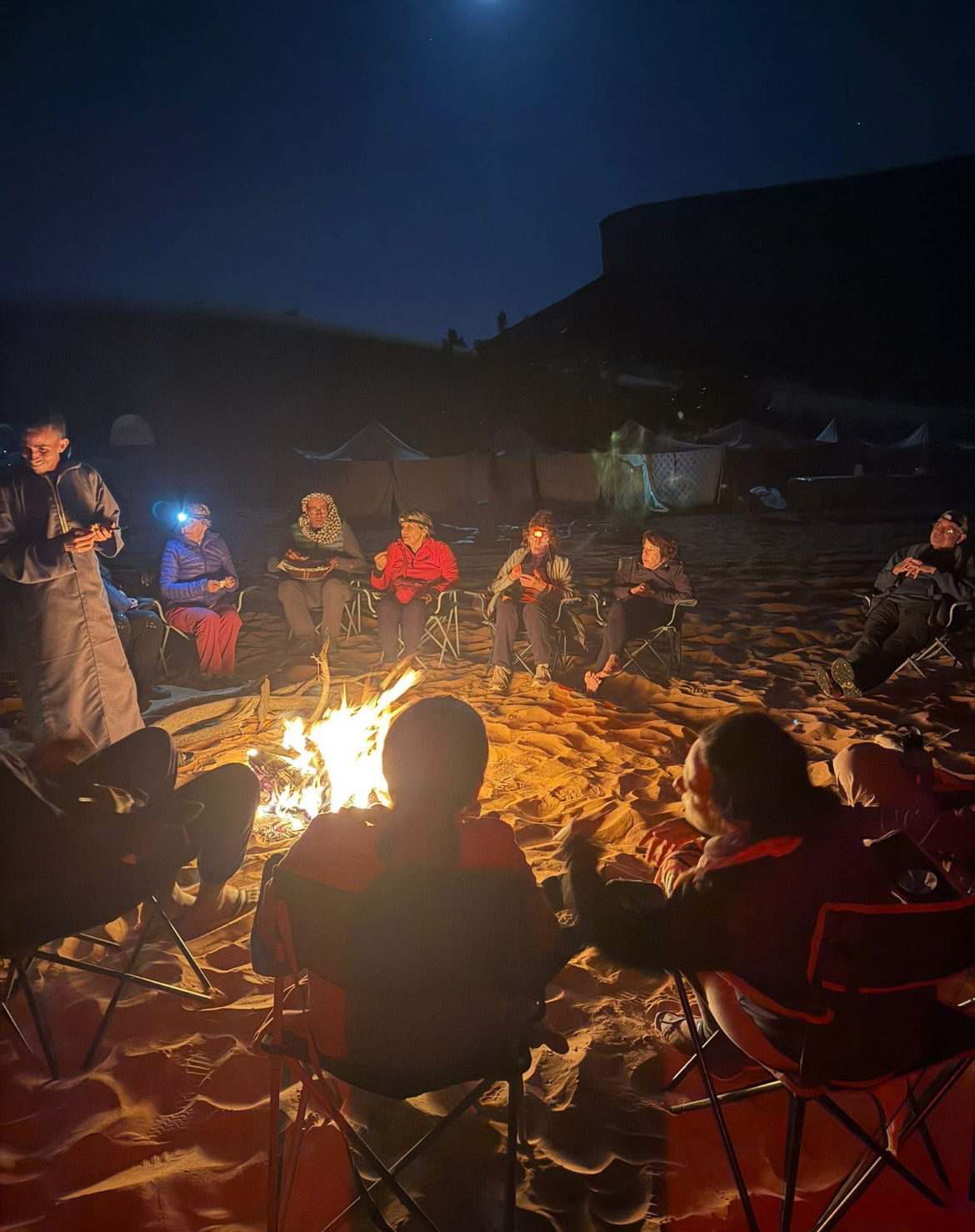
Iron Ore Train, Adrar desert, Chinguetti, local roads, and desert camps.
Plan Your Iron Ore Train Adventure
Tell us your dates, group size, and travel style. We'll help you organize the right Iron Train experience in Mauritania.