How We Keep You Safe
Safety Standards
& Local Knowledge
The Mauritanian Sahara is one of the most extraordinary environments on Earth. It is also genuinely unforgiving of poor preparation. Every safety measure we take exists because someone who knew this desert decided it was necessary — not because a liability checklist required it.
This page explains exactly how we run safe desert expeditions — from the vehicles we use and the gear we carry to the security context we operate in and what we do when things go wrong. If you have specific questions after reading this, message Ahmed directly on WhatsApp.
Our Protocols
What We Do, Specifically
Vehicle Standards
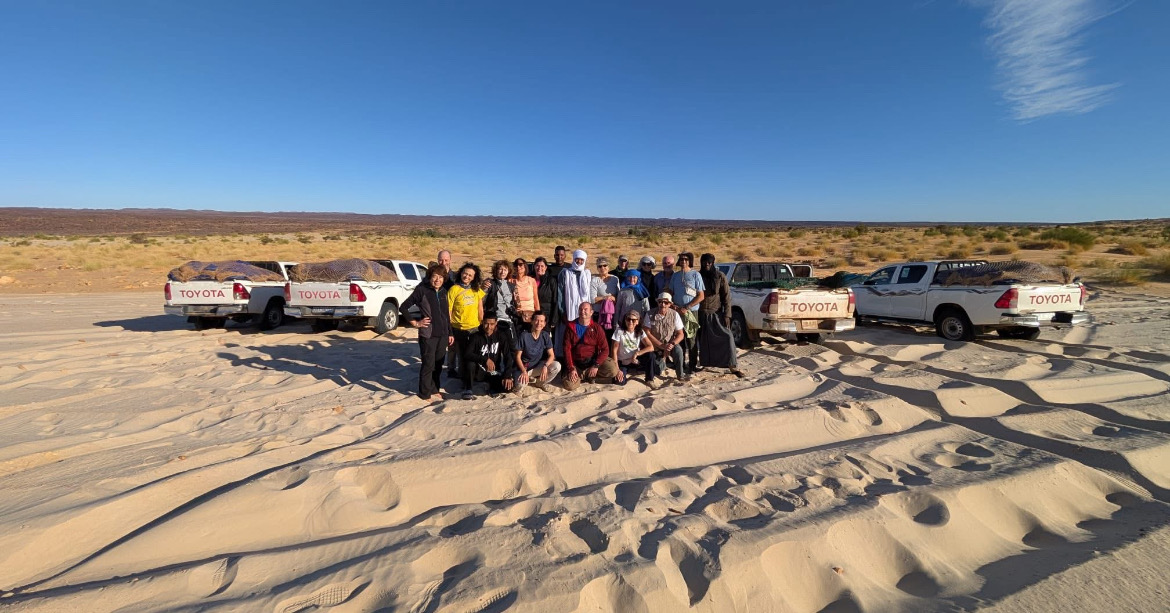
- Toyota Land Cruiser or Toyota Hilux 4×4 — maintained, not rented from a tourist pool
- Full set of spare tyres (minimum 2) plus repair kit, jack, and compressor on every desert route
- Sand ladders / recovery boards carried on all dune and soft-sand itineraries
- Jerry cans with fuel reserve calculated for the route plus a 30% buffer
- Tow straps, shackles, and basic mechanical tools for field repairs
- Vehicles checked before every departure — not just annually
Communication & Navigation
- Local SIM with voice call capability maintained throughout the itinerary
- Offline GPS maps and route waypoints loaded before entering remote areas — not reliant on data coverage
- Driver and guide are in contact with a local base throughout the trip
- Emergency contact protocol established before departure: who to call, in which order, what to say
- Nearest hospital, clinic, and emergency services for each leg of the route identified in advance
Heat & Desert Conditions
- We operate October through March only — outside of Mauritania's dangerous heat window
- Minimum 3 litres of water per person per day carried as a baseline reserve beyond individual supplies
- Shade shelters carried for mid-day stops on exposed desert routes
- Pre-trip briefing on heat management, hydration, and warning signs of heat exhaustion and heatstroke
- Itinerary paced around the heat — no prolonged outdoor exposure between 11am and 3pm on hot days
Medical & First Aid
- Comprehensive first aid kit on every vehicle: dressings, antiseptic, oral rehydration salts, pain relief, blister and wound care
- Ahmed and lead guides have completed first aid training
- Pre-departure medical briefing: recommended vaccinations, malaria prophylaxis for relevant areas, prescription medication protocols
- Clients with significant medical conditions are briefed honestly on route difficulty and hospital access before booking
- Nearest medical facility for each route stage documented in the trip plan
Route Planning & Local Knowledge
- All routes are pre-driven by our guides — no improvised navigation in unfamiliar terrain
- Piste (desert track) conditions checked through local contacts before departure where possible
- Sandstorm protocols: stop, orient the vehicle as a windbreak, shelter, wait
- We do not take shortcuts through unplanned routes under client schedule pressure
- Night driving on desert pistes is avoided unless absolutely necessary and pre-planned
Security Context
- We operate exclusively in Mauritania's tourist corridor — Adrar, Inchiri, Dakhlet Nouadhibou, and the Iron Ore Train route
- We do not operate near the borders with Mali or Algeria, which carry genuine elevated risk
- Security situation monitored before every trip through local contacts, not just foreign government advisories
- Clients are briefed honestly on which areas we operate in and which we avoid, and why
- In 10+ years of operations in Mauritania, we have had zero security incidents with clients
Our Limits
What We Won't Do
Common Questions
Safety FAQ
Is Mauritania safe for tourists?
The tourist corridor — Atar, Chinguetti, Ouadane, Terjit, the Iron Ore Train route, and Nouadhibou — is safe for well-prepared travellers working with a trusted local operator. The elevated risk that foreign government advisories cite is concentrated in specific eastern and northeastern border regions that we do not operate near. We brief every client honestly on the security picture before they book.
What happens if there is a medical emergency?
Our first aid kits allow us to stabilise the most common issues in the field. For anything requiring hospital care, we evacuate to Atar (on the main Adrar circuit) or Nouadhibou (on the northern coast/Iron Ore Train route) — both have functioning hospitals. For the most remote routes (Richat Structure, Ben Amera), we factor evacuation time into the trip plan and brief clients accordingly.
What if the vehicle breaks down in the desert?
Our vehicles carry spare tyres, tools, and fuel reserves. Field repairs for the most common failures — tyre punctures, minor mechanical issues — are handled by our drivers on the road. For serious failures, we have a local contact network and can arrange a second vehicle where route coverage allows. We do not leave clients alone with a broken vehicle.
Do you go out in any weather?
No. We do not operate during sandstorm warnings, and we avoid prolonged outdoor exposure during mid-day heat in shoulder months. Our season is October to March specifically because this is when the Sahara is manageable. We will delay or reschedule departures if conditions are genuinely dangerous.
What vaccinations do I need?
Recommended vaccinations include Hepatitis A, Typhoid, and Tetanus. Yellow fever proof of vaccination is required for entry if you are arriving from a yellow fever zone. Malaria prophylaxis is recommended for travel near the Senegal River Valley; the main desert areas (Adrar, Tiris Zemmour, Inchiri) carry low risk. Consult a travel medicine clinic at least 4–6 weeks before departure.
Is the Iron Ore Train safe?
The Iron Ore Train is safe for physically healthy, properly prepared travellers. The open wagons carry real physical challenges — iron ore dust, cold nights, no facilities — that require the right gear and a realistic expectation of what you are signing up for. Our pre-trip packing guidance and safety briefing cover everything you need to know. We do not recommend it for travellers with respiratory conditions, significant cold intolerance, or limited mobility.
Still Have Questions?
Ask Ahmed Directly
If you have a specific concern about safety, health, or logistics that this page doesn't answer, send Ahmed a message. He responds in person.