Nouadhibou
Where the Sahara meets the Atlantic — and the Iron Ore Train ends
Overview
At the northern tip of Mauritania, on a narrow peninsula where the Sahara runs straight into the Atlantic Ocean, Nouadhibou sits at one of the world's most improbable geographical junctions. To the east, the open desert stretches to Mali and Algeria. To the west, the grey-green Atlantic churns against a long and largely empty coastline. And arriving on the tracks from 700 kilometres across that desert, the Iron Ore Train — one of the longest trains on Earth — pulls into the terminal that is the reason the city exists.
Nouadhibou is Mauritania's economic capital, the country's main port, and the focal point of a massive iron ore export industry that has shaped the entire northwest of the country. It is also a city of striking contrasts: industrial infrastructure on a scale that feels incongruous in the desert context, set alongside a natural environment of extraordinary richness — the Banc d'Arguin National Park, one of the most important bird habitats in Africa, lies directly to the south.
For travellers, Nouadhibou serves as both a starting point and an end point. Many begin their Mauritanian journey here, arriving from Morocco or the Canary Islands by ferry or overland from Dakhla, before heading into the interior. Others arrive here on the Iron Ore Train, emerging iron-dusted and exhilarated after the night crossing of the desert.
Continue planning: Complete Nouadhibou travel guide · Mauritania wildlife and birds guide
From Fishing Settlement to Iron Capital
The Ras Nouadhibou peninsula has been inhabited by fishing communities for centuries, its sheltered bay providing one of the few natural harbours on the otherwise exposed Atlantic coast of the western Sahara. Spanish and Portuguese navigators knew this coastline well — a Spanish enclave on the northern end of the peninsula survived until 2002, when Spain finally ceded the territory to Mauritania.
Nouadhibou's modern form was created almost entirely by one thing: iron. When the SNIM mining company began large-scale extraction of iron ore at Zouerate in the 1960s, a purpose-built railway was constructed across the Sahara to connect the mines to the coast — 704 kilometres of track through open desert that is still one of the most remote rail lines in the world. Nouadhibou became the export terminal, and the port and city grew around that function.
The result is a city that feels less like an organic Mauritanian settlement and more like an industrial compound that has slowly accumulated a city around it. The ship graveyard visible in the bay — the rusting hulks of fishing vessels and cargo ships that were beached or abandoned when they became too costly to repair or scrap — has become one of the most photographed images of Nouadhibou, a striking symbol of the industrial and maritime history that defines this place.
Highlights of Nouadhibou
- The Iron Ore Train arrival — the culmination of the desert crossing, arriving at the Atlantic terminus
- The ship graveyard (Cimetière de Bateaux) — one of the world's largest collections of abandoned vessels
- Fresh seafood directly from the fishing port — some of the best in West Africa
- Banc d'Arguin National Park (UNESCO) — a one-hour drive south, globally significant for migratory birds
- Cap Blanc and the monk seal colony — the critically endangered Mediterranean monk seal shelters here
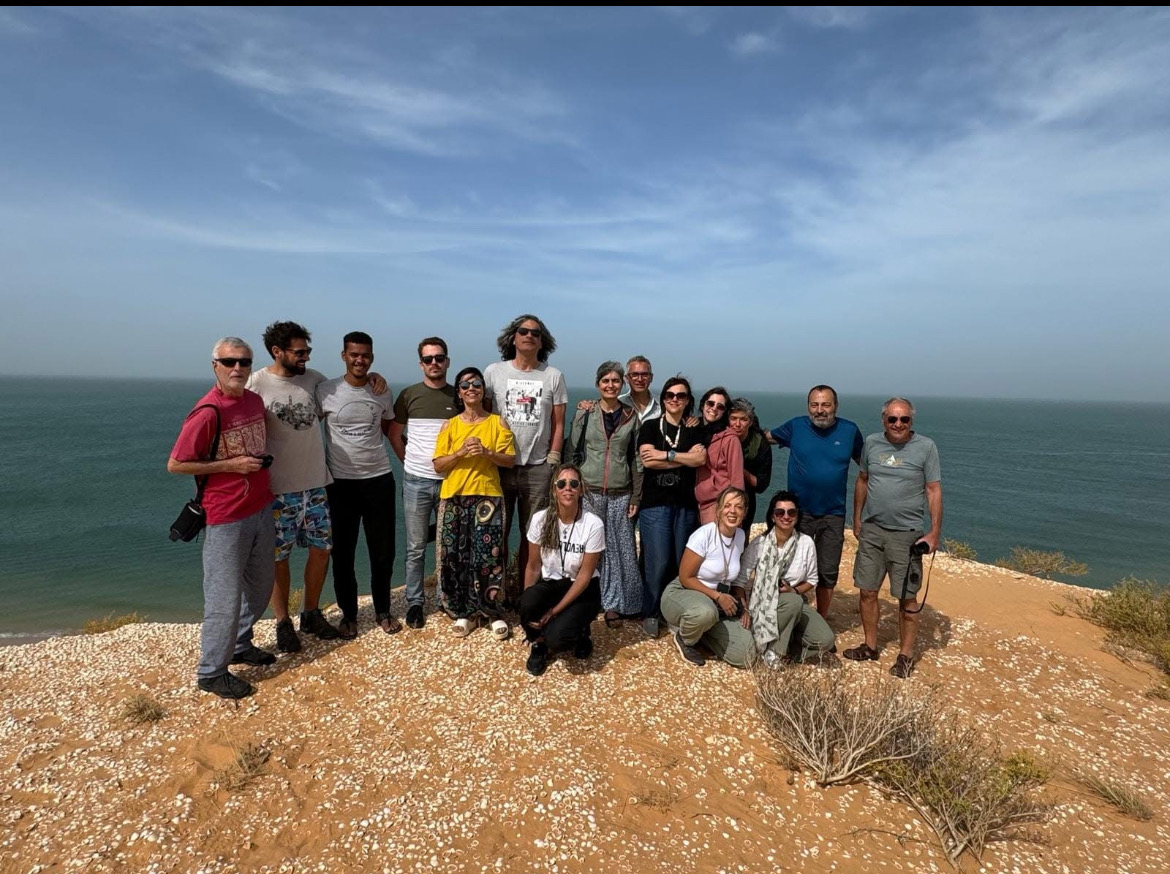
- The rugged Atlantic coastline — dramatic, windswept, and almost completely undeveloped
- The logistical hub it provides for everything: flights, money exchange, supplies, and transport connections
Best Time to Visit Nouadhibou
Nouadhibou has a more moderate climate than the interior — the Atlantic moderates temperatures and keeps extremes in check. Year-round visiting is possible, but October through April is most comfortable. Temperatures hover between 18°C and 32°C in this period, with sea breezes keeping conditions pleasant even at the warmer end.
May through September brings heat and the harmattan — the dry, sandy wind that blows from the Sahara and can reduce visibility significantly for days at a time. This period is manageable but less pleasant.
Birders should note that the Banc d'Arguin is most spectacular from November to April, when millions of migratory birds winter here — flamingos, pelicans, terns, waders, and many more species. The park is recognised as one of the five most important wetland habitats for birds in the world, and the peak winter season is when its extraordinary scale becomes most apparent.
Getting to Nouadhibou
Nouadhibou is one of the most accessible cities in Mauritania. It has its own international airport (NDB) with regular flights to Nouakchott and seasonal connections to the Canary Islands. By road, it is connected to the Mauritanian road network south toward Nouakchott (a long drive of 500+ kilometres, partly on rough piste), and accessible overland from Dakhla in Morocco's Western Sahara via the Guerguerat border crossing.
The Iron Ore Train arrives at the SNIM terminal in Nouadhibou after crossing the 704 kilometres from Zouerate via Choum. This is the most dramatic arrival in Mauritania — stepping off the train after a night or two in the desert, covered in iron ore dust, into the Atlantic coastal city.
For travellers starting or ending their trip in Nouadhibou, there are hotels across multiple price ranges, banks, ATMs, money exchange, and reliable mobile connectivity — making it the most logistically straightforward Mauritanian city to navigate.
See also: Iron Ore Train complete guide →
What to Expect in Nouadhibou
Nouadhibou is a working city of around 150,000 people — it is more functional than atmospheric. Do not come here expecting the visual richness of Chinguetti or the raw wilderness of the open desert. What Nouadhibou offers is different: the contrast of ocean and desert, good food, logistical ease, and some genuinely striking industrial landscapes.
The ship graveyard is Nouadhibou's most-photographed attraction. Dozens of rusting vessels are beached in the bay in various states of decomposition — some still recognisably ship-shaped, others reduced to skeletal frames. Access requires local knowledge and sometimes permission; your guide or hotel can arrange this. Photography is outstanding in the early morning when the light catches the rust and the mist off the water.
Seafood is exceptional here — octopus, fish, and shellfish come directly from a fishing fleet that operates year-round. A meal at a local restaurant by the port is one of the most authentically Mauritanian experiences available in the city.
Travel Tips for Nouadhibou
- 1.Nouadhibou has ATMs and banks — stock up on cash if heading into the interior
- 2.The ship graveyard access requires local guidance; do not go independently
- 3.Seafood from the port restaurants is the culinary highlight — try grilled fish with rice
- 4.Banc d'Arguin requires a full day and a guide — arrange in advance
- 5.The ferry to the Canary Islands operates seasonally — confirm dates well in advance
- 6.If arriving on the Iron Ore Train, allow a day in Nouadhibou to rest and recover
- 7.The wind on the peninsula can be strong and cold in December–January — pack accordingly
With Mauritania Experience
How We Visit Nouadhibou
Nouadhibou is most often the end point of our Iron Ore Train expeditions — the natural terminus after the desert crossing. We arrange transfers from the SNIM terminal to accommodation, city orientation, and if requested, guided visits to the ship graveyard and a day trip to Banc d'Arguin.
For travellers starting their Mauritanian journey here, we can arrange logistics for the reverse route: Nouadhibou → Choum (by road) → Iron Ore Train → Zouerate → onward to Atar and the Adrar. We can also organise the Banc d'Arguin visit as a standalone day tour for travellers who are passing through.
If you are arriving by ferry from the Canary Islands or overland from Dakhla, Nouadhibou is where your Mauritanian adventure begins. We can arrange a guide and 4x4 to meet you on arrival and take care of everything from that point forward.
Explore More