Ouadane Mauritania Travel Guide 2026
Mauritania's oldest caravan city — ancient, remote, and rarely visited
Overview
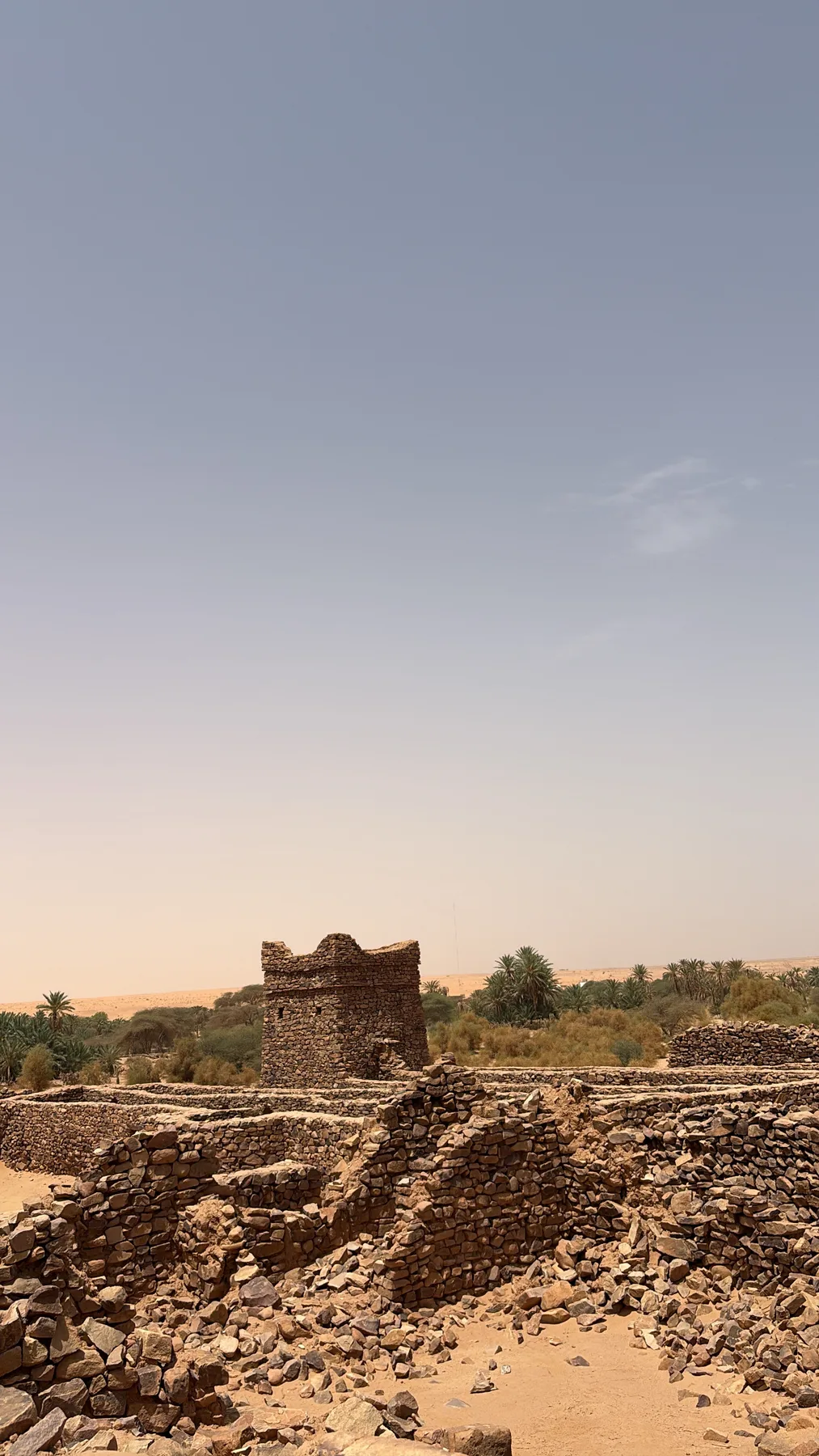
If Chinguetti is Mauritania's famous ancient city, Ouadane is its secret. Founded in 1147 CE — more than a century before Chinguetti — it was one of the most important commercial and scholarly towns in the Sahara, a crossroads where trade routes from sub-Saharan Africa met those heading north to Morocco and east to the Nile Valley. Today it receives a fraction of Chinguetti's visitors and rewards those who make the journey with an experience of striking authenticity.
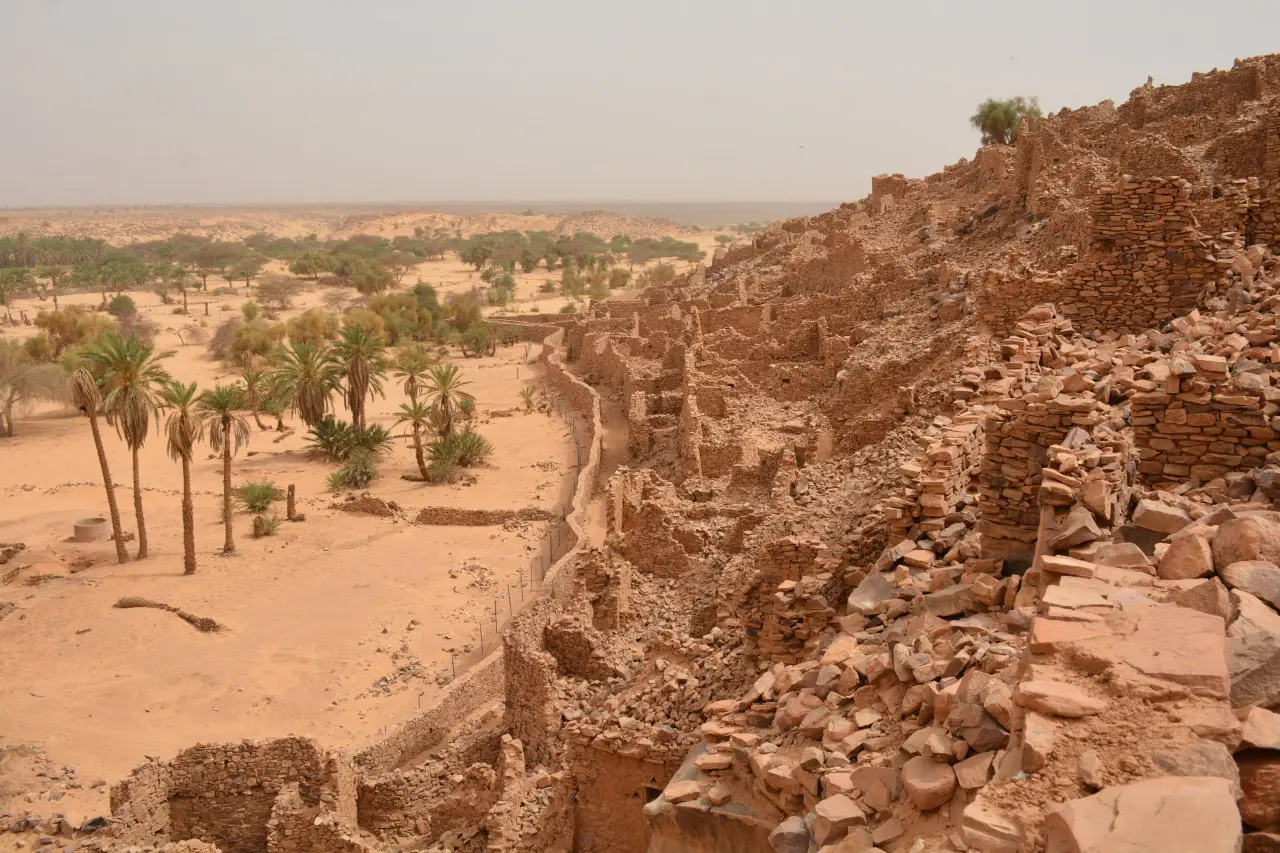
Ouadane sits on a rocky plateau overlooking a wide desert valley, roughly 95 kilometres northeast of Atar. The old ksar — the fortified upper town — is partially in ruins, partially restored, and still home to a small permanent population. The view from its summit takes in a vast sweep of the Adrar plateau, unbroken by roads or buildings, stretching to the horizon. It is exactly the kind of landscape that makes you understand why this region is called one of the last true wilderness areas in Africa.
Like Chinguetti, Ouadane is a UNESCO World Heritage Site under the 'Ancient Ksour' designation inscribed in 1996. Unlike Chinguetti, it has not been softened by even modest tourism infrastructure. What you encounter here is the Sahara on its own terms.
Continue planning: Complete Ouadane travel guide
Ouadane is an optional itinerary choice, not a stop promised on every tour. Ask us to confirm desert-road conditions, the time needed for the ksar and any Richat extension before choosing your route. See our Mauritania tour options or plan a private Adrar itinerary.
Ancient Crossroads of the Western Sahara
Ouadane was established in 1147 CE by Berber traders seeking a strategic base at the intersection of three major trans-Saharan trade routes. Its founding predates Chinguetti by more than a century, making it one of the oldest surviving cities in Mauritania. At its peak in the 14th and 15th centuries, it was a prosperous city with mosques, markets, a significant scholarly community, and trade connections spanning West Africa, North Africa, and the Arabian Peninsula.
The city traded primarily in gold from the sub-Saharan goldfields, salt from the great deposits at Tichitt and Taghaza, and date palms cultivated in the surrounding oases. Portuguese explorers noted its importance in the 15th century, and it appears in several early accounts of Saharan trade. The decline began in the 16th century as sea-based trade routes around the African coast bypassed the overland caravans, and Ouadane slowly diminished from a metropolis to a village.
The old ksar contains structures dated to the 12th–15th centuries, some restored in recent decades with UNESCO support. The mosque — still active — is one of the oldest continuously used religious buildings in West Africa.
Highlights of Ouadane
- The restored 12th-century ksar with its labyrinthine alleys and multi-storey stone houses
- Panoramic views from the plateau edge across the Adrar desert — some of the finest in Mauritania
- The ancient mosque, still in active use after 900 years of continuous prayer
- Small private manuscript collections comparable to those in Chinguetti
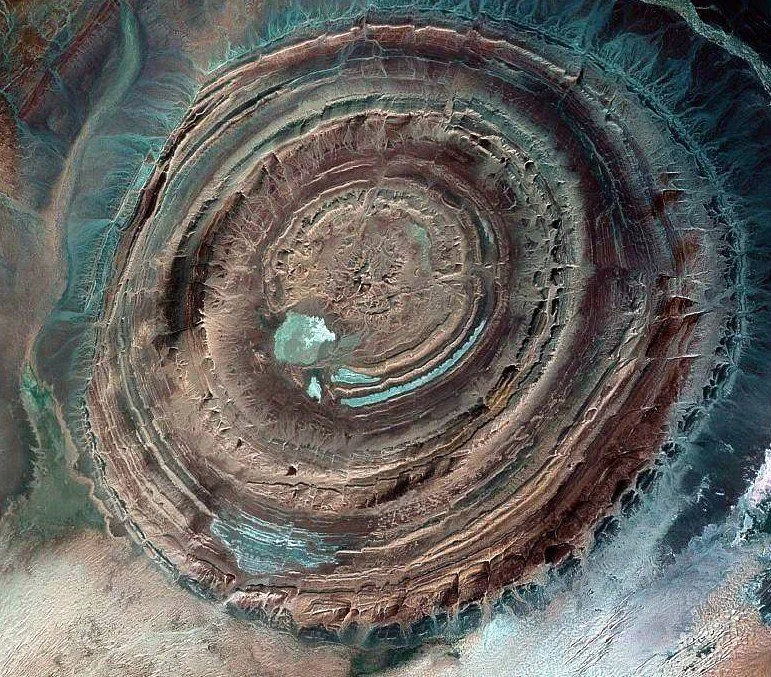
- Proximity to the Richat Structure (Eye of the Sahara) — often combined as a day excursion
- Camels and nomadic families in the surrounding valleys
- Complete absence of tourist crowds — Ouadane is genuinely off the beaten track
Best Time to Visit Ouadane
October to March, with November through February being optimal. Because Ouadane sits on a slightly elevated plateau, temperatures can be marginally cooler than the open plains of Atar — which is a relative term in the Sahara, but appreciated. Expect daytime highs of 25–35°C in November and December, and cold nights requiring a warm jacket.
Avoid April through September. The heat in Ouadane in summer is extreme, and there is nowhere to shelter from it — no hotels with air conditioning, no shaded streets, no cool retreats. Flash rains in August can temporarily affect the desert piste approach.
If you plan to combine Ouadane with the nearby Richat Structure, allocate two nights in the area — one in Ouadane, one moving toward the Richat viewpoint. This rhythm gives you the early morning and late afternoon light that makes both sites most rewarding to photograph.
Getting to Ouadane
Ouadane is reached from Atar on a desert piste of approximately 95 kilometres. The road is unpaved for most of its length and crosses open stony desert with rocky sections requiring clearance and proper off-road driving. In a capable 4x4 with an experienced driver, the journey takes three to four hours. It is not a drive to attempt without local knowledge.
There is no public transport of any kind to Ouadane. Occasional local vehicles make the run for residents, but these are irregular and not something visitors can reliably depend on. The correct way to visit is to arrange a 4x4 and driver through a reliable local operator.
Many travellers combine Ouadane with the Richat Structure — the two are within reasonable range of each other and share the same general desert zone. Coming from Chinguetti, it is possible to reach Ouadane via cross-desert tracks, though this route requires experienced desert navigation. We can design the most logical routing based on your overall Mauritanian itinerary.
What to Expect in Ouadane
Ouadane is smaller and quieter than Chinguetti, with a permanent population of a few hundred residents in and around the ksar. Guesthouse accommodation exists but is very basic — a room, a mattress, a generator for a few hours of electricity in the evening, and simple meals prepared by your hosts.
Because tourism is minimal, local people are genuinely curious about visitors rather than accustomed to them. This creates some of the most natural and rewarding human interactions available in the entire country. Children will follow you through the alleys; older residents may invite you for tea.
There are no shops beyond the most basic supplies, no ATM, no reliable mobile internet. Bring everything you need — food supplies, cash, medicine, and sun protection. A local guide is helpful not only for historical context but for navigating the social landscape of a small, tightly knit community where introductions matter.
Travel Tips for Ouadane
- 1.Bring all food, water, and supplies from Atar — Ouadane's shops are extremely limited
- 2.Combine with the Richat Structure, which is in the same general area
- 3.Allow a full day in the ksar — the layers of history reward slow exploration
- 4.Sunrise from the plateau edge is one of the finest Saharan views available
- 5.A local guide is essential for accessing private manuscript collections and historical homes
- 6.Carry more water than you think you need — the plateau is dry and exposed
- 7.Bring a power bank; electricity is solar-powered and limited to a few hours per day
With Mauritania Experience
How We Visit Ouadane
Ouadane features in our extended Adrar desert itineraries, typically as a two-day detour from Atar that combines the ksar with a visit to the Richat Structure viewpoint. We arrange all 4x4 transport, a qualified local guide, and accommodation in one of the small guesthouses.
Because the road is long and rough, we rarely include Ouadane as a single-night stop — the journey time makes that impractical. A minimum of two nights in the Ouadane–Richat area allows you to explore at a reasonable pace without spending the entire visit in transit.
For travellers doing the full Mauritanian circuit — Iron Ore Train, Adrar, and Atlantic coast — Ouadane and Chinguetti together form the historical heart of the journey. Contact us to discuss how to build Ouadane into your itinerary.
Explore More
Related Destinations
Also Consider
The Iron Ore Train Experience
Combine Ouadane with the legendary Iron Ore Train — 700 km across the Sahara from Choum to Nouadhibou. Many travellers include both on the classic Mauritanian circuit.
Iron Ore Train Guide