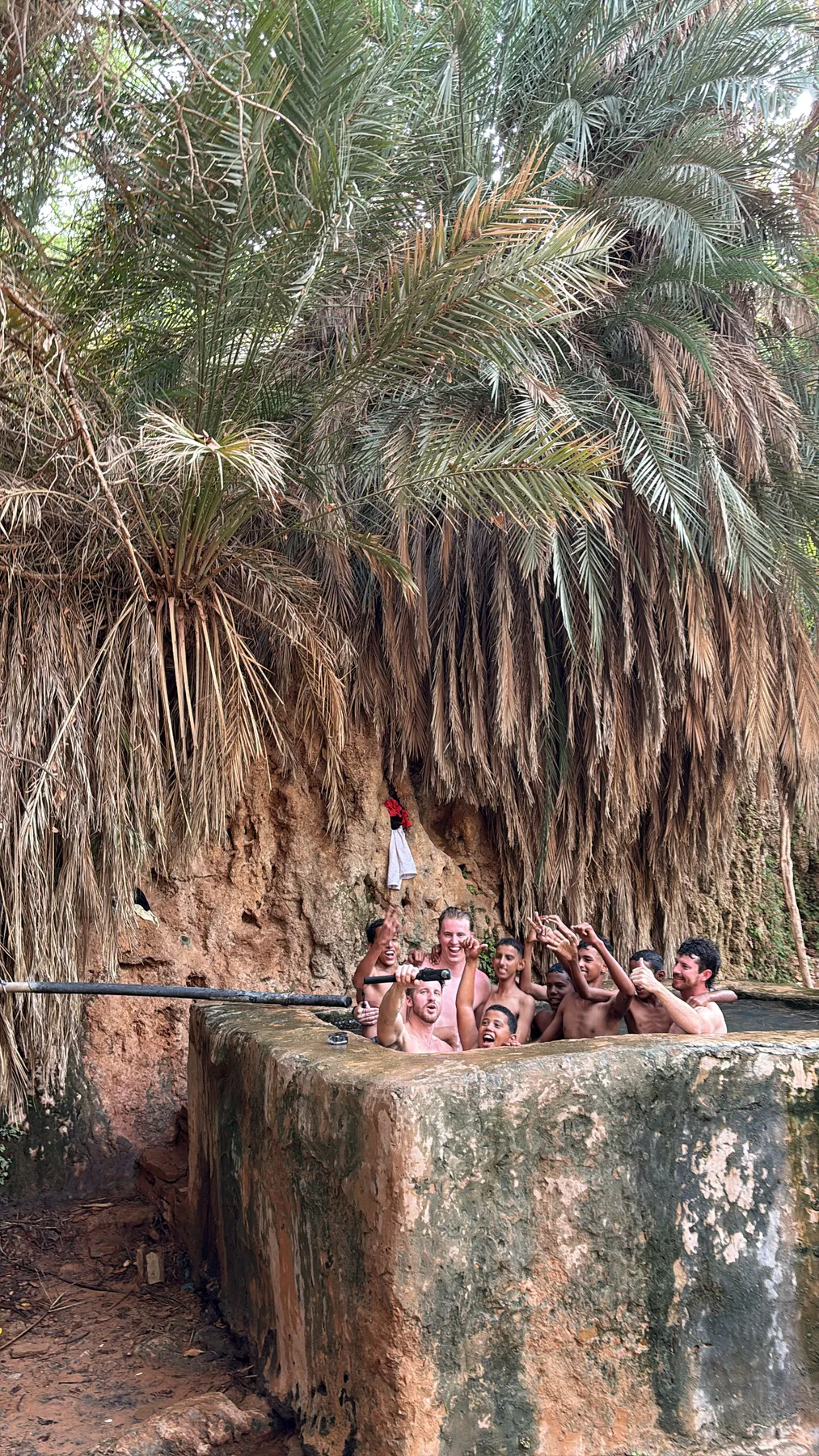
Terjit Oasis Mauritania: Travel Guide 2026
A hidden canyon oasis of freshwater springs and ancient palms
Overview
Forty-five kilometres south of Atar, a narrow gorge cuts through the sandstone plateau of the Adrar and, at its base, springs emerge from the rock — cold, clear, and constant. Terjit is the finest oasis in Mauritania and one of the most beautiful natural sites in the entire Saharan region: a lush canyon pocket of date palms, freshwater pools, and cool shade that feels impossibly improbable in the middle of one of the driest places on Earth.
The contrast is what hits you first. You drive across open, baking desert for an hour from Atar, then descend into the gorge and the temperature drops, the colour changes from ochre to deep green, and the sound of running water — absent from everything around you for hundreds of kilometres — fills the air. It is one of the most striking natural transitions in Africa.
Terjit is not a resort or a managed park. It is a working oasis that has sustained local communities for centuries, with date palm gardens tended by the families who have lived here for generations. A few simple guesthouses and a small palm-shaded camp allow visitors to stay overnight, making it an ideal base for combining with Atar, Chinguetti, and the wider Adrar desert.
Continue planning: Practical Terjit Oasis visitor guide · Seven-day Mauritania itinerary
For a Terjit visit, confirm current access, entrance arrangements and any pool conditions locally. Bring water, sun protection and footwear suitable for the gorge, and respect local privacy when swimming or taking photographs. See our Mauritania tour options or plan a private Adrar itinerary.
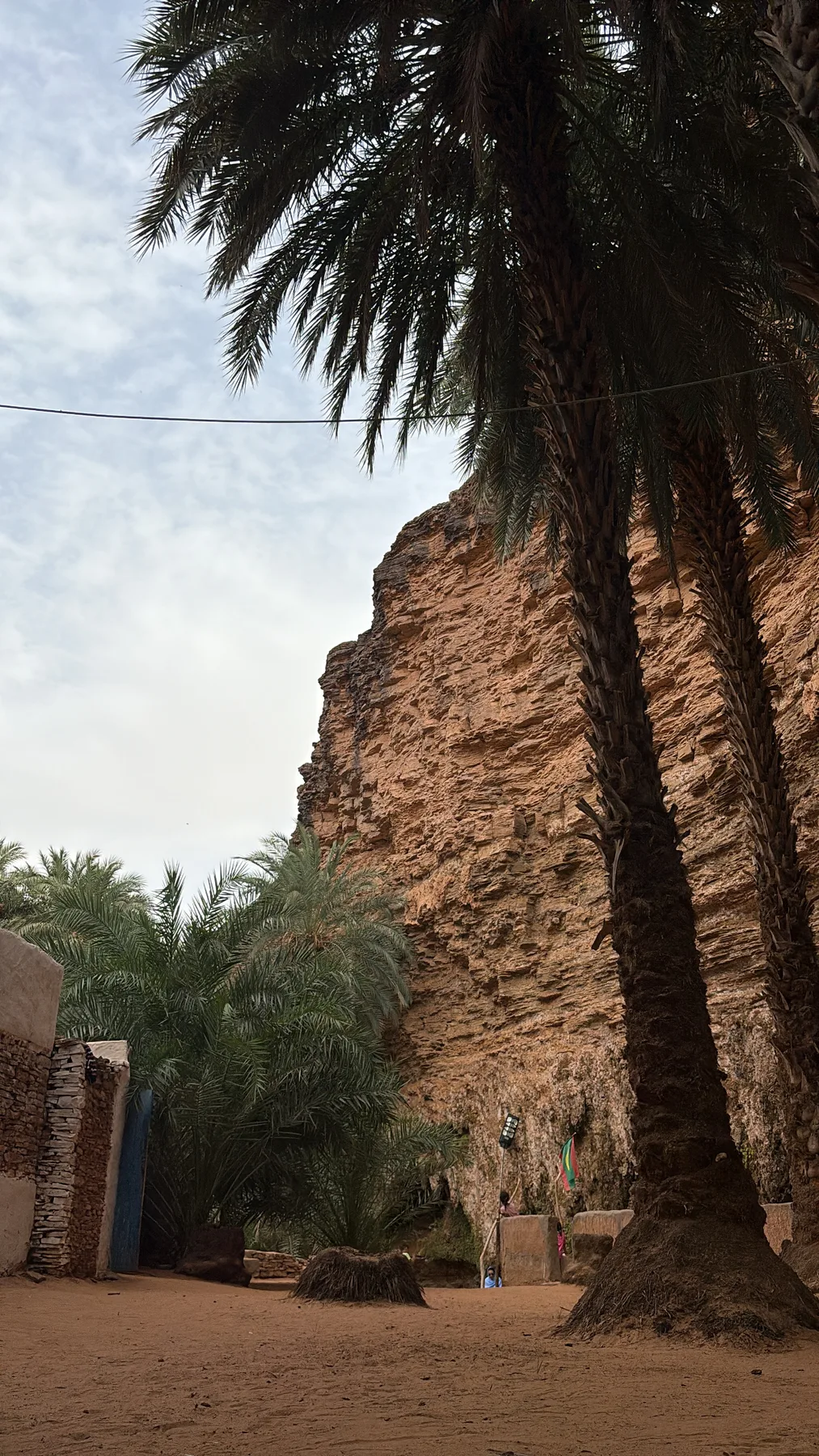
Oasis at the Heart of the Adrar
Oases like Terjit have been the lifeblood of the Adrar plateau for thousands of years. The springs that feed Terjit emerge from a natural aquifer system, fed by the rare rains that fall on the plateau above and seep slowly through the sandstone until they find an outlet in the gorge. This water supply has supported permanent human habitation through periods of history when the surrounding desert was otherwise unliveable.
The date palm gardens of Terjit represent centuries of careful cultivation — varieties selected and maintained across generations, the palms tended to produce dates that are traded across the region. Palm cultivation in the Adrar is a highly skilled practice, and the families who manage these gardens have knowledge accumulated over many lifetimes.
Terjit also carries spiritual significance — oases throughout the Saharan world are considered blessed places, and Terjit is no exception. The combination of water, shade, and life in the midst of an overwhelming desert has given it a quality that goes beyond the merely beautiful. Sitting in the shade of the palm grove beside the spring, the word that keeps returning is 'sanctuary'.
Highlights of Terjit Oasis
- Swimming in the natural freshwater pools — cool, clear, and fed by the mountain springs
- Walking through the ancient palm grove along the canyon floor
- The descent into the gorge — the temperature change and colour shift are dramatic
- Watching the sunset from the canyon rim as the gorge fills with shadow and golden light
- Overnight camping at the oasis edge under a Saharan sky with the sound of running water
- Interaction with local families who tend the ancient date palm gardens
- Rock formations and canyon walls with characteristic Adrar sandstone colouring
Best Time to Visit Terjit
October through April. Unlike the fully exposed desert sites, Terjit benefits from the shade and cool of the gorge, which extends the comfortable visiting window slightly at both ends of the season. In October the days are warm but the shade keeps conditions pleasant; in March and April the gorge remains cooler than the open plateau.
July and August should be avoided entirely. Even with shade, the humidity that accompanies summer rains in this region can make the gorge uncomfortable. Additionally, flash rains on the plateau above can cause rapid and dangerous water rises in the canyon below — this is not a risk to take lightly.
November through February is the peak period and the most comfortable. Daytime temperatures in the gorge are typically 5–8°C lower than on the plateau above — a significant difference when the plateau hits 30°C. Evenings are cool, nights are cold, and the spring water has a consistent freshness year-round that makes it particularly refreshing on the warmest days.
Getting to Terjit
Terjit is the most accessible major natural attraction in the Adrar region — 45 kilometres south of Atar on a desert piste that is generally in good condition. In a proper 4x4 the journey takes 45 minutes to an hour. The final descent into the gorge is steep and requires a capable vehicle, but is managed confidently by local drivers every day.
Some visitors attempt the road in regular vehicles and regret it — the final approach is rough enough to cause damage. A 4x4 is strongly recommended, and local knowledge of the descent route makes the experience smoother and safer.
From Atar, you can arrange a local driver for a day trip or combine the visit with a multi-day tour. Terjit works naturally as a first stop on an Adrar circuit — visiting on the way out from Atar before continuing to Chinguetti, Ouadane, or the Richat Structure. We include Terjit in most of our Adrar desert itineraries.
What to Expect at Terjit
The oasis itself is relatively small — the canyon floor is perhaps 200–300 metres wide at its broadest, narrowing to a slot at the spring source. You can walk the length of the cultivated area in 20–30 minutes. But this is not a place where you arrive, tick it off, and leave. The experience of Terjit is about time spent in the shade, in the water, listening to the birds and the sound of the spring.
Accommodation at the oasis is simple — palm-frond shelters, basic rooms in a small auberge, and the option to sleep in the open in the cooler months. Food is basic: fresh dates in season, bread, tea, and whatever the guesthouse is cooking. This is genuinely rustic.
Locally, Terjit is considered one of the jewels of the Adrar. Local guides speak of it with obvious pride. Mauritanians use it as a weekend retreat from Atar — you may share the gorge with local families on picnics, which adds to the atmosphere rather than detracting from it.
Travel Tips for Terjit Oasis
- 1.Bring a swimming costume — the pools are one of the main reasons to come here
- 2.Wear shoes with grip for the descent path into the gorge, which can be slippery in places
- 3.The spring water is cold even in summer — refreshing, not alarming
- 4.Stay overnight if possible — the evening and morning light in the gorge is exceptional
- 5.Date palms produce fruit in September–October; visiting then may mean fresh local dates
- 6.Respect the local families tending the gardens — ask before walking through cultivated areas
- 7.Avoid Terjit in July–August due to flash flood risk from plateau rains above
With Mauritania Experience
How We Visit Terjit
Terjit is included in nearly all our Adrar desert tours as a standard stop — it is simply too good to miss. We typically arrange it as either a day trip from Atar combined with a market visit, or as the first overnight stop on a multi-day Adrar circuit heading toward Chinguetti.
For travellers who want to focus on natural landscapes rather than historical sites, Terjit combined with the dunes around Chinguetti and the Richat Structure makes an excellent three to four day Adrar nature tour without the need for extended historical exploration.
The journey from Atar to Terjit is smooth enough that we also include it for travellers who need a gentler introduction to desert travel before tackling longer pistes. If you have limited time in the Adrar, Terjit and Chinguetti together make the most rewarding two-day combination.
Explore More
Related Destinations
Also Consider
The Iron Ore Train Experience
Combine Terjit Oasis with the legendary Iron Ore Train — 700 km across the Sahara from Choum to Nouadhibou. Many travellers include both on the classic Mauritanian circuit.
Iron Ore Train Guide