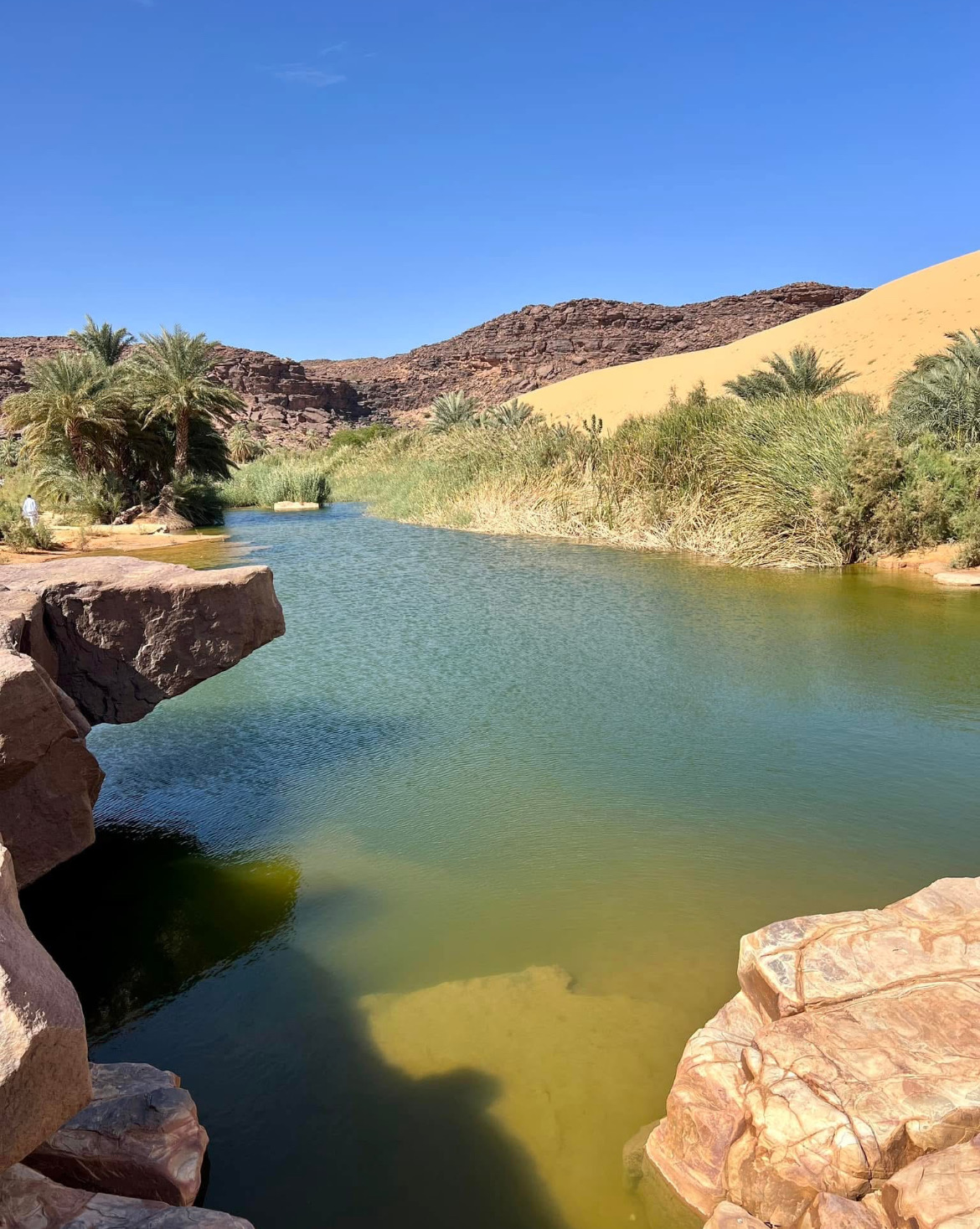
Terjit Oasis: Everything You Need to Know Before You Visit
Terjit delivers one of the most dramatic moments of contrast in all of Mauritanian travel — the descent into a freshwater canyon gorge after hours of open desert. Here's everything you need to know to experience it properly.
The First Impressions: A Physical Shock
The drive from Atar to Terjit passes 45 kilometres of flat, exposed, sunbaked desert. The landscape is beautiful in its emptiness but offers no shade, no water, and no relief from the heat that builds through the morning. Then the road reaches the canyon rim, and you begin to descend.
The first sign is the temperature. Within 50 metres of starting the descent into the gorge, the air cools noticeably — 5°C initially, then more as the canyon walls rise on either side and shade the path. The colour changes: the ochre of the desert gives way to the red-orange of the sandstone canyon walls, and then the green of date palms appears below. Finally, audible before it is visible, comes the sound of running water.
For travelers who have been in the Mauritanian desert for several days, this moment is genuinely moving. The gorge at Terjit is smaller and more intimate than photographs suggest, but after the heat and emptiness of the desert the contrast of running water, shade, and green is close to overwhelming.
The Spring System: How Terjit Works
Terjit is fed by a natural aquifer system embedded in the Adrar sandstone plateau above. Rainwater — infrequent but real — falls on the plateau, percolates through the porous sandstone over months and years, and eventually emerges through fractures in the canyon walls where the rock meets an impermeable layer below.
The result is a permanent, year-round freshwater spring that has sustained life in this canyon for millennia. The water is clear, cold relative to the desert air (typically 20–24°C even in warm months), and safe to swim in — it is not stagnant and is continuously replenished from the aquifer.
The palm gardens along the canyon floor have been cultivated using this water for centuries. Dense groves of date palms line the canyon bottom, their roots reaching the shallow water table the spring maintains. The combination of running water, deep shade, and cool canyon air makes Terjit a genuine thermal refuge — the temperature difference between the canyon floor and the plateau above can reach 10–15°C.
Swimming at Terjit
You can and should swim at Terjit. The freshwater pools at the base of the main spring and in the deeper sections of the canyon floor are clear, clean, and immediately refreshing.
Pack your swimming costume somewhere accessible rather than buried in your main bag. The pools range from ankle-depth to approximately chest-depth in the main basin near the spring. The water is cool rather than cold — refreshing after desert walking but not a shock to the system.
The edges of some pools are slippery where algae has developed on the rocks; sandals or water shoes with grip are safer than bare feet when moving between pools. The canyon path to the spring is rocky in sections, so closed-toe shoes or hiking sandals are recommended throughout. Swimming is best in the morning before peak heat — the canyon is fully shaded until late morning in winter, providing a comfortable window before afternoon visitors arrive.
Day Trip vs. Overnight: Which to Choose
Many travelers visit Terjit as a day trip from Atar — 45km each way, about 45 minutes driving, 2–3 hours in the canyon, then return. This gives you the essential Terjit experience: the descent, the swim, the palm grove, and the canyon views.
Overnight changes the experience significantly. The gorge at dusk, when the canyon walls glow orange-red in the last light and the palm shadows lengthen across the water, is genuinely beautiful. After dark, the canyon is extraordinarily quiet — the sound of the spring in complete silence, with the strip of sky visible between the walls slowly filling with stars.
Dawn at Terjit — waking to the canyon birds beginning their chorus as the light gradually fills the gorge from the rim downward — is something that day-trippers miss entirely.
If your itinerary allows for one overnight at Terjit rather than returning to Atar, take it. The guesthouse accommodation is very basic — a palm-frond shelter or simple room, no hot water, generator electricity for the evening — but the experience of the overnight oasis justifies every discomfort.
Photography at Terjit
Terjit is one of the finest photography locations in Mauritania, but the canyon's geometry creates specific challenges around light.
The canyon floor receives direct sunlight only during a 2–3 hour window depending on the season and your position in the gorge. In winter (November–January), morning light enters from roughly 9am to noon; afternoon light from 3pm to sunset. Midday light falls harshly from directly above and is unflattering on the rock surfaces and water. Plan your photography sessions for early morning and late afternoon.
The pools at Terjit produce extraordinary reflection photographs when the surface is calm — typically early morning before any wind picks up. The combination of palm reflection, sandstone canyon wall, and blue sky in the dark water is a classic Terjit composition. Use a wide angle for the canyon scale, a telephoto for palm details and bird life, and macro for water plants and rock textures. The canyon rewards multiple approaches. Local families tending the date palms are photogenic subjects in an extraordinary setting — ask permission, which is almost always granted with a smile.
Combining Terjit With Atar Market
The classic first-day combination for the Adrar circuit is the Atar morning market followed by an afternoon at Terjit Oasis. This pairing works well for several reasons.
The Atar souk is most active between 8am and noon. Arrive at opening, spend 1.5–2 hours exploring the dates, crafts, and live trading, then drive south to Terjit for the afternoon. Arrive by 2pm, swim, explore the canyon in the afternoon light, and photograph the sunset from the rim if energy allows. This is a single driving day (30–40km, Atar to Terjit) that delivers both urban market culture and natural oasis in one efficient pairing, setting up the following day for the Chinguetti drive east.
Alternatively: stay overnight at Terjit and combine the dawn experience with a return to Atar market in the late morning for any missed shopping before continuing east. If you're ready to lock in your Adrar dates, our booking page makes it easy to build this combination into your itinerary.
Frequently Asked Questions
Can you actually swim at Terjit Oasis?
Yes. The freshwater pools are clean, clear, and safe to swim in. Bring a swimming costume. The water is refreshingly cool — approximately 20-24°C year-round.
Is Terjit accessible in a regular car?
No. The final approach and descent into the gorge requires a vehicle with reasonable clearance and off-road capability. Standard road cars risk damage on the rocky descent path. A 4x4 is recommended.
How long should I spend at Terjit?
Minimum 2 hours for a day trip experience. 4-6 hours to swim, walk the palm grove, and photograph in both morning and afternoon light. Overnight to experience the canyon at dusk, night, and dawn — strongly recommended if your schedule allows.
Plan Your Adventure
Book Your Mauritania Tour
We handle every detail — 4×4 transport with experienced local drivers, the Iron Ore Train boarding at Choum, ancient desert cities, and the guides who open the right doors. Tell us your dates and we'll build the right trip around you.
- Iron Ore Train experience from Choum
- Chinguetti, Ouadane & the Richat Structure
- Terjit Oasis & full Adrar desert circuit
- Banc d'Arguin, Nouadhibou & the Atlantic coast
Keep Reading