Best Time to Visit Mauritania: A Month-by-Month Breakdown
Mauritania has a narrow travel window: October through March. Outside these months the heat is not merely uncomfortable — it is genuinely dangerous in the desert interior. Here is what each month looks like.
The Essential Truth: October to March Only
Mauritania has one of the most clearly defined travel windows of any destination in the world. October through March is when visiting the country's main attractions — the Adrar desert, Chinguetti, the Iron Ore Train, Terjit Oasis — is both comfortable and safe. Outside this window, Saharan heat in the interior reaches levels that create genuine medical risk.
This is not a matter of personal preference for mild weather. July temperatures in the Mauritanian desert regularly exceed 48°C. Iron ore wagons exposed to direct sun can reach 60°C internally. Desert pistes radiate heat at ground level to temperatures that damage vehicle tyres and blister exposed skin. People die from heat exposure in these conditions without access to shade, water, and cooling.
Plan your Mauritanian itinerary within the October-March window. Within that window, there are meaningful differences between months worth understanding before you book.
October: The Transition Month
October is when the Saharan summer breaks and the first real travelers begin arriving. Daytime temperatures drop from summer extremes to 32-38°C in the low desert — warm but increasingly manageable. Evenings cool noticeably, falling to 18-22°C by late October.
October has clear advantages: the tourist infrastructure is just warming up, so accommodation is available without advance booking; the light is beautiful — warm and slightly hazy from the last of the summer dust; and the desert has a freshness that peak-season months lack. Disadvantages include occasional sandstorms still possible from the dying harmattan winds, some desert pistes that may need assessment after rare summer rains in the Adrar, and certain operators who are not fully up and running until November.
October is an excellent month for experienced travelers who want the Mauritanian experience without peak December-January crowds and who are comfortable with slightly warmer conditions than February.
November: The Sweet Spot
November is, for most purposes, the finest month to visit Mauritania. Daytime temperatures settle into the 25-33°C range — genuinely comfortable in the desert. Nights cool to 10-16°C, pleasant for sleeping without much gear and cool enough to make campfire evenings deeply enjoyable.
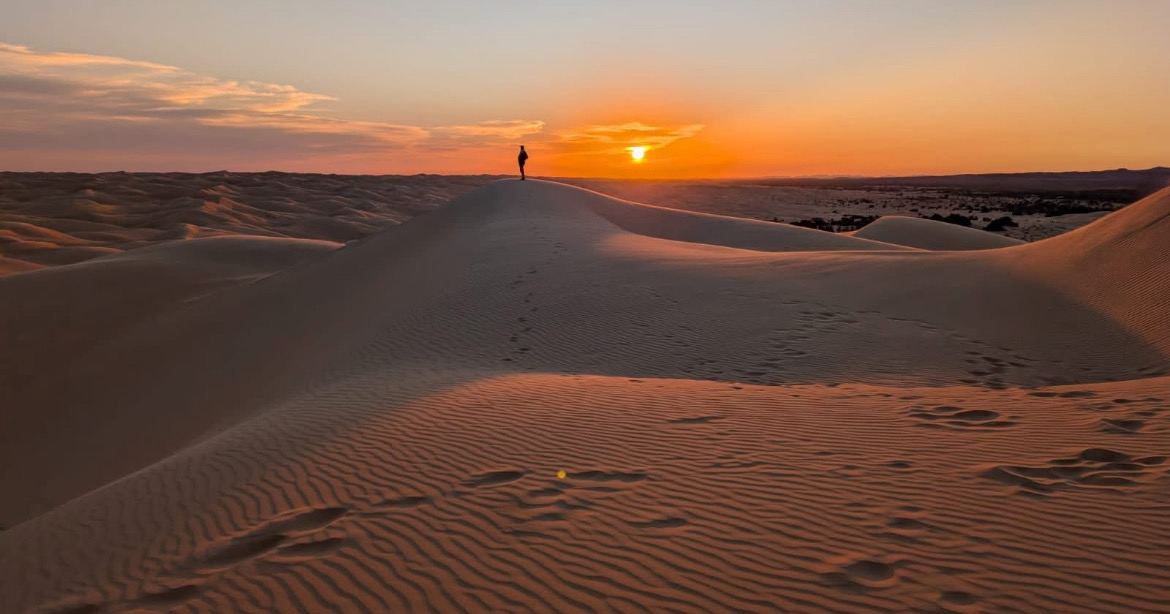
The desert light in November is exceptional. The summer haze has fully cleared, producing crystalline visibility. Sunrise and sunset create long golden light across the red desert landscape that photographers specifically plan trips around. The Milky Way at night is at its sharpest contrast of the season.
Banc d'Arguin's migratory birds begin arriving in November — by mid-month the concentrations are building toward their winter peak. The Iron Ore Train is running and conditions in the open wagons at night are ideal: cold enough to need a sleeping bag, not cold enough to be dangerous. November is the month we consistently recommend to first-time visitors seeking the most complete version of the Mauritanian experience.
December and January: Peak Season
The coolest months, and the busiest. Daytime temperatures in the Adrar in December and January run 20-28°C — spring-like by European standards and pleasantly warm in the desert sun. Nights in Chinguetti and the open desert can drop to 8-12°C, and with wind chill on the Iron Ore Train the felt temperature approaches 0°C. A warm sleeping bag and thermal layers are necessary equipment, not optional extras.
This is when the tourist circuit sees its highest visitor numbers — still modest compared to Morocco or Egypt, but enough that Chinguetti's auberges fill in advance and popular Iron Ore Train boarding windows have more travelers attempting them simultaneously. For visitors who prefer cooler conditions and whose main concern is avoiding heat, December and January are ideal. For photographers, the light is excellent though slightly lower in the sky than November. For bird watchers, Banc d'Arguin reaches its peak population through January.
February and March: The Shoulder Season
February is still excellent — temperatures rising gradually from January's cool peak but remaining very comfortable throughout the month. February through early March is the last reliable window for a comfortable desert experience.
By late March, daytime temperatures in the low desert are approaching 40°C and the heat begins to erode the quality of experience for most travelers. The light becomes more washed out as haze returns. The Iron Ore Train wagon experience at night grows warmer, but the daytime journey becomes harder going.
February offers lower visitor numbers than December-January with no sacrifice in landscape quality or weather. It is arguably the most underrated month on the Mauritanian travel calendar.
April to September: Do Not Visit the Desert Interior
Avoid the Mauritanian desert interior from April through September. This is not an exaggeration for dramatic effect — it is a practical safety statement. Temperatures in the low desert regularly exceed 45°C by May. The Adrar plateau is somewhat cooler but still reaches 42°C at peak summer. Iron ore wagons in direct sun can hit 60°C internally. Ground temperatures on the pistes blister exposed skin on contact.
Nouadhibou, on the Atlantic coast, has a more moderate climate year-round due to the Canary Current — summer highs there reach 25-30°C rather than the interior's extremes. If a summer visit is unavoidable, the coast is marginally viable, but the desert circuit is not. The Banc d'Arguin bird populations are also minimal in summer, with migratory species on their northern breeding grounds and only resident birds remaining.
Best Timing for Specific Activities
Different activities have their own optimal windows within the October-March season.
- Iron Ore Train: November-February (cooler nights, clear skies, manageable conditions in open wagons)
- Bird watching, Banc d'Arguin: November-March (peak migratory bird populations)
- Desert photography: November-January (best light quality, low haze, long golden hours)
- Chinguetti and ancient cities: October-March (all viable; November-February optimal)
- Desert camping: November-February (cool enough for sleeping bag camping; October can be warm at night)
- Terjit Oasis: October-April (the gorge provides shade; avoid July-August due to flash flood risk from plateau rains)
Frequently Asked Questions
Can you visit Mauritania in summer?
Not the desert interior. Temperatures exceed 45°C and are genuinely dangerous. Nouadhibou on the Atlantic coast is marginally viable in summer (25-30°C) but the desert circuit — Atar, Chinguetti, Iron Ore Train — is not.
Is December or November better?
Both are excellent. November has slightly warmer temperatures (25-33°C vs December's 20-28°C), arguably better light quality, and fewer tourists. December is cooler and has peak Banc d'Arguin bird populations. First-time visitors: November. Those who prefer cool weather: December.
When should I ride the Iron Ore Train?
November through February. The night cold in the open wagons is manageable with proper gear, the skies are clear and the Milky Way spectacular, and conditions avoid both the summer heat extremes and the late-March temperature rise.
Plan Your Adventure
Book Your Mauritania Tour
We handle every detail — 4×4 transport with experienced local drivers, the Iron Ore Train boarding at Choum, ancient desert cities, and the guides who open the right doors. Tell us your dates and we'll build the right trip around you.
- Iron Ore Train experience from Choum
- Chinguetti, Ouadane & the Richat Structure
- Terjit Oasis & full Adrar desert circuit
- Banc d'Arguin, Nouadhibou & the Atlantic coast
Keep Reading