Banc d'Arguin: Mauritania's World-Class Bird Paradise
Two million migratory birds. An ancient fishing community that works alongside dolphins. The critically endangered Mediterranean monk seal just offshore. Banc d'Arguin is one of the most remarkable wildlife destinations on Earth — and almost no one knows it.
Why Banc d'Arguin Matters Globally
Banc d'Arguin National Park covers approximately 12,000 square kilometres of shallow tidal flats, barrier islands, mangroves, and Atlantic coastal waters between Nouakchott and Nouadhibou in northwestern Mauritania. It was inscribed as a UNESCO World Heritage Site in 1989.
The park's global significance lies in its role within the East Atlantic Flyway — the migratory corridor linking breeding grounds in Siberia, Scandinavia, Iceland, and Northern Europe with wintering areas in West Africa. Banc d'Arguin is the single most important wintering site on this flyway, hosting over 2 million waterbirds during the peak season from November to March.
Scientists rank it among the five most important wetland bird habitats on Earth. The shallow, nutrient-rich tidal waters produce extraordinary quantities of invertebrate food — the engine behind the bird concentrations. In December and January, tens of thousands of flamingos, pelicans, waders, and terns are visible simultaneously, creating wildlife spectacles that rival anything in Africa.
Birds: What to See and When
The bird diversity at Banc d'Arguin is exceptional in both numbers and species. During peak season (November–March), these are the most significant species to look for:
Greater flamingo: flocks of thousands visible in the tidal channels, their pink colouring detectable from considerable distances. Lesser flamingo also occurs but is less common. Great white pelican: colonial nesting on low sandy islands, with groups visible fishing cooperatively in the channels — the sight of 200 pelicans hunting in coordinated formation is extraordinary.
Bar-tailed godwit: one of the most remarkable migration stories in the bird world — these birds fly non-stop from Alaska or Siberia to West Africa, covering 10,000+ kilometres without landing. Banc d'Arguin is where they rebuild energy reserves for the return journey. Spoonbill: large white birds with distinctive paddle-shaped bills, present in good numbers.
Caspian, Sandwich, and Little terns nest in the park. Osprey nest on low cliff faces and rocky outcrops and fish the tidal channels. Grey plover, dunlin, curlew sandpiper, and dozens of other wader species form enormous mixed flocks on the tidal flats.
The Imraguen: Fishing With Dolphins
The permanent human inhabitants of Banc d'Arguin are the Imraguen — a small fishing community whose villages are scattered across the park's barrier islands and sandy shores. Living within the park for centuries, the Imraguen practice one of the most remarkable human-wildlife partnerships remaining anywhere in the world.
Mullet migration through the tidal channels is the centrepiece of the Imraguen year. When the mullet schools arrive, bottlenose dolphins drive the fish toward the Imraguen nets from the deep water side. The fishermen splash the water with poles and their traditional nets to signal the dolphins, which respond by herding the fish more tightly. The result is a coordinated hunt between humans and wild dolphins observed since at least the 19th century.
Visiting Imraguen villages within the park (with a guide and the required park permit) is one of the most authentic cultural experiences in Mauritania. These communities maintain ways of life that have changed little over generations — their knowledge of the tidal systems, the fish movements, and the dolphins that share their fishing grounds is extraordinary.
Mediterranean Monk Seals: A Rare Encounter
The Mediterranean monk seal is among the most endangered marine mammals on Earth. Current estimates place the global population at approximately 800 individuals — representing a gradual recovery from a mid-20th century near-extinction, yet still making this one of the world's rarest pinnipeds. The largest remaining breeding colony — roughly 200–250 animals, or approximately 25–30% of the global population — shelters in sea caves and rocky coves at Cap Blanc, the peninsula just north of Nouadhibou.
The colony is protected within a small nature reserve, and direct approach from land is restricted. Observation from the sea with guides who know the colony's movement patterns is the standard approach. Sightings are not guaranteed on any given visit — these are genuinely wild and wary animals — but the combination of colony size and boat access makes Cap Blanc one of the most reliable places on Earth to see this species.
For wildlife travelers, the monk seal colony alone justifies adding Nouadhibou to a Mauritanian itinerary. Arrange observation attempts through operators with established relationships with the park authority and existing knowledge of the colony's current behaviour.
Marine Life Beyond Birds
Banc d'Arguin's waters support significant marine biodiversity beyond the birds.
Marine turtles: loggerhead and green turtles nest on remote sandy beaches within the park boundary. The green turtle population using Banc d'Arguin beaches is one of the largest in the eastern Atlantic. Bottlenose dolphins are resident year-round in the tidal channels and bay areas, including the famous fishing-with-Imraguen partnerships.
Dugong: the West African dugong population is critically endangered and rarely observed, but Banc d'Arguin's seagrass beds provide suitable habitat. Several shark species, including the sicklefin lemon shark, use the park's waters; hammerhead sharks have been recorded at the park boundary. The overall marine ecosystem is remarkable for the richness of its tidal flat habitat — productive sedimentary environments that underpin the food chains sustaining all the visible wildlife.
How to Visit Banc d'Arguin
Access to Banc d'Arguin requires a permit from the park authority (PNBA) and an authorised guide. Independent visits are not permitted — this is both a legal requirement and a practical necessity given the challenge of navigating the park's tidal channels and sandy tracks.
The most common approach is from Nouadhibou, approximately 1–2 hours south on the coastal road to the park entry points. From Nouakchott, the northern edge of the park is around 140km and reachable in a single day.
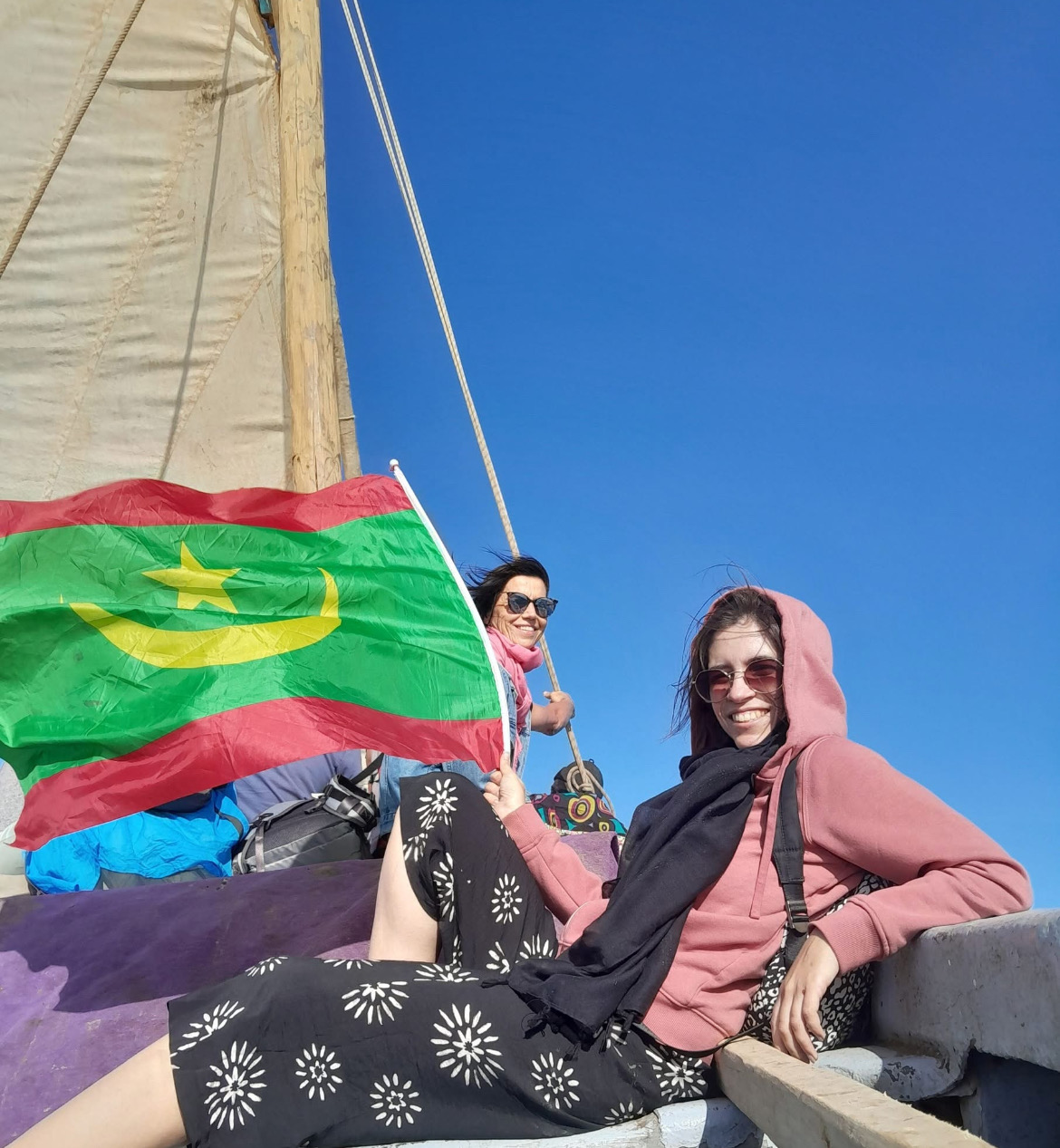
The most rewarding experience involves a pirogue (traditional flat-bottomed boat) trip into the tidal channels — typically a half to full day. From the water, bird concentrations, dolphin sightings, and access to Imraguen villages are all significantly better than from the shore. Visit November through March for peak bird numbers; outside this window the park's resident populations remain, but the migratory concentrations that make it globally significant are absent. Check our booking page to arrange a fully permitted guided visit.
Frequently Asked Questions
When is the best time to visit Banc d'Arguin?
November through March for peak migratory bird populations. December and January are the absolute peak for bird numbers. Outside this window the park is still beautiful but the 2-million-bird spectacle is absent.
Can I visit Banc d'Arguin independently?
No. A permit from PNBA and an authorized guide are required. Arrange through a registered tour operator in Nouadhibou or Nouakchott.
Are the Mediterranean monk seals visible to visitors?
Possible but not guaranteed. Viewing is from the sea with experienced guides who know the colony locations. These are protected, wild, and wary animals — no guaranteed sighting is possible, and any approach must prioritize the animals' welfare.
Plan Your Adventure
Book Your Mauritania Tour
We handle every detail — 4×4 transport with experienced local drivers, the Iron Ore Train boarding at Choum, ancient desert cities, and the guides who open the right doors. Tell us your dates and we'll build the right trip around you.
- Iron Ore Train experience from Choum
- Chinguetti, Ouadane & the Richat Structure
- Terjit Oasis & full Adrar desert circuit
- Banc d'Arguin, Nouadhibou & the Atlantic coast
Keep Reading