Atar: Your Essential Guide to the Adrar's Capital City
Atar is not a destination in itself — it is the key that unlocks every other destination in the Adrar. Understanding Atar's role and spending time here properly sets up everything that follows.
Landing in Atar
Atar airport (IATA: ATR) is a small terminal receiving domestic flights from Nouakchott approximately 1 hour away. The airport feels appropriately provisional for a Saharan desert town — a single-room terminal building, a small parking area, and a blast of dry desert air the moment you step off the aircraft.
For travelers on their first Mauritanian desert visit, stepping onto the Atar tarmac is significant. The heat (even in November it is warm), the particular smell of the desert, the quality of the light, and the scale of the surrounding landscape — flat on three sides, rising plateau on the fourth — immediately establish that this is a different environment from anything in Europe or the Americas.
Your guide and driver meet you here. This is where the Mauritanian desert trip actually begins. To have everything arranged before you land, book through mauritaniaexperience.com/book.
The Atar Morning Market
The Atar souk is the most important and rewarding market on the Adrar circuit. It runs most actively between roughly 7am and noon, drawing traders and buyers from across the region.
The dates section is the most photogenic and the most practically useful. Mounds of dates from across the Adrar's oasis gardens are sold by the kilogram — varieties ranging from the small, intensely sweet Tijib to the larger, softer Mahmoud. Buy a kilogram for the circuit ahead. They are inexpensive, shelf-stable, calorie-dense, and genuinely excellent travel food.
The silver jewelry section reflects the long tradition of Mauritanian silversmithing — geometric Berber designs, large fibula pins, and intricately worked bracelets. These are not tourist trinkets; they are functional items made by craftspeople using designs unchanged for centuries. Ask your guide to help you distinguish genuine silver from tourist copies.
Live animal trading at the market edge — camels, sheep, and goats changing hands through the elaborate formality of Mauritanian commerce — is worth watching even if you don't participate. The evaluations conducted through extensive handling and negotiation between buyer and seller are an education in themselves.
The Old Medina Quarter
Atar has a traditional Moorish medina quarter that rewards an hour's exploration before the heat builds. The narrow earthen streets, covered market sections, and the Friday mosque with its simple minaret represent the architectural tradition of the Saharan desert town — functional, climatically adapted, and aesthetically coherent in their use of local materials.
The medina is smaller and less remarkable than Chinguetti's ksar but provides useful orientation to the architectural vocabulary you will encounter throughout the desert circuit. Understanding the logic of earthen construction — thick walls for insulation, small windows for shade, central courtyards for airflow — makes the ancient cities more legible.
The medina is a working residential area, not a heritage exhibition. Residents are present throughout. Move respectfully, dress conservatively, and ask your guide before photographing in residential alleyways.
Atar as a Logistics Hub
This is Atar's most critical function and deserves specific attention. Before leaving Atar for any desert destination, work through this checklist:
Cash: withdraw everything you need for the entire desert circuit from Atar's bank or ATM. There are no ATMs in Chinguetti, Terjit, Ouadane, the open desert, or at Choum. Any cash needed for Iron Ore Train boarding must be carried from here.
Fuel: fill the 4x4 completely. Carry additional fuel in approved jerry cans for any circuit that includes Ouadane or the Richat Structure — the distances exceed a single tank.
Water: buy your water supply for the next phase of the journey. Bottled water in the desert costs more and becomes harder to find as you move away from Atar.
Provisions: stock up on desert travel food — dates, bread, tinned items, nuts — for days when guesthouse meals will be unavailable or insufficient.
SIM card: if you don't already have a Mauritanian SIM, this is your last reliable opportunity.
Guide briefing: use your time in Atar to fully brief and be briefed by your guide on the itinerary ahead. Confirm train timing at Choum if the Iron Ore Train is on your agenda.
Day Trips From Atar
Atar's central position in the Adrar makes it the natural departure point for all the region's main attractions.
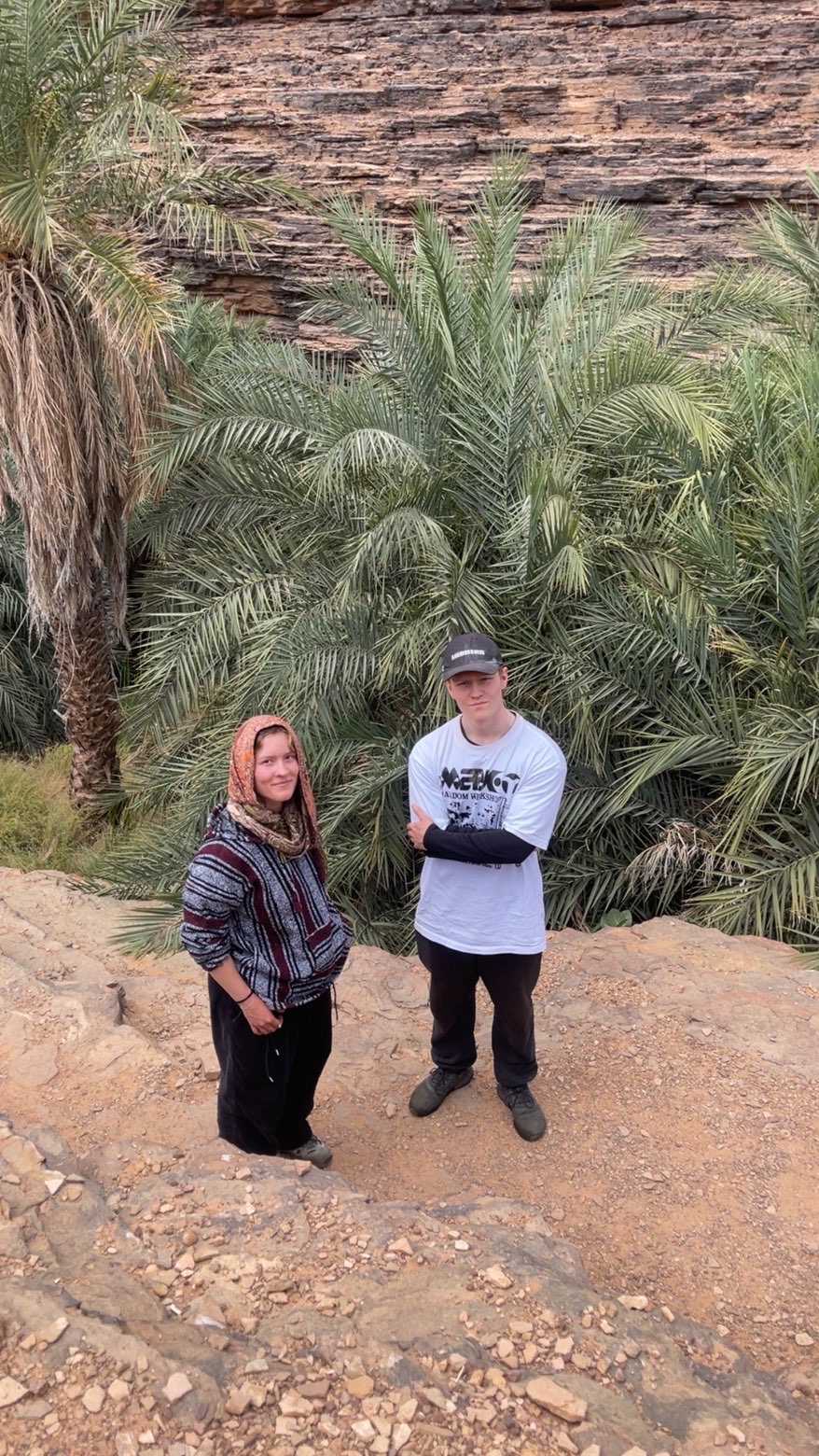
Terjit Oasis (45km south, 45 minutes): the freshwater canyon oasis — the most accessible natural wonder on the circuit. Ideal for an afternoon visit followed by overnight at the oasis, or as a first-day activity after arriving from the airport.
Chinguetti (80km east, 2–3h by piste): the UNESCO ancient city. Allow 2+ nights for a meaningful visit. Leave Atar with a full fuel tank and confirmed accommodation in Chinguetti.
Oued Amogjar (25–30km from Atar): a spectacular canyon with rock paintings and dramatic cliff faces — a compact half-day excursion for travelers who want another geological perspective on the Adrar.
The Atar market visit combined with a Terjit afternoon is the classic first-day pattern — cultural immersion followed by natural drama, setting the tone for everything that follows.
Atar's Climate Advantage
Atar sits at approximately 200–250 metres elevation above the surrounding desert — not dramatic altitude, but enough to take the edge off the heat that accumulates in the low desert below.
In November and December, Atar's daytime temperatures run 25–33°C — pleasantly warm rather than oppressive. Evenings cool quickly to 15–20°C, making outdoor dining, market visits, and evening walks genuinely comfortable.
The temperature difference from the open low desert is most noticeable in February and March, when the low desert is already pushing 38–40°C while Atar remains a few degrees cooler. By mid-April, the elevation advantage is no longer sufficient to make Atar comfortable for extended desert travel.
The plateau light in Atar also carries a clarity the hazy low desert lacks. Sunrise and sunset from the higher ground cast colours across the surrounding terrain that make even the transition from guesthouse to vehicle a photographic moment worth pausing for.
Frequently Asked Questions
How do I get from Nouakchott to Atar?
Domestic flight on Mauritania Airlines (1 hour, 50-150 USD, book 2-3 weeks ahead) is strongly recommended. Bush taxi is available (9-10 hours, 15-25 USD) for travelers with significant time flexibility.
Is there much to see in Atar itself?
The souk and medina quarter provide 2-3 hours of genuine interest. Atar's primary value is as a logistics base and gateway rather than a destination in itself. Allow time to do the logistics properly.
Can I use Atar as a base for day trips to Chinguetti?
Possible but inadvisable — the 2-3 hour piste drive each way is exhausting as a daily commute and leaves very little time in Chinguetti. Overnight in Chinguetti is strongly recommended. Use Atar as your night-before-departure and post-circuit base.
Plan Your Adventure
Book Your Mauritania Tour
We handle every detail — 4×4 transport with experienced local drivers, the Iron Ore Train boarding at Choum, ancient desert cities, and the guides who open the right doors. Tell us your dates and we'll build the right trip around you.
- Iron Ore Train experience from Choum
- Chinguetti, Ouadane & the Richat Structure
- Terjit Oasis & full Adrar desert circuit
- Banc d'Arguin, Nouadhibou & the Atlantic coast
Keep Reading