Chinguetti: Practical Guide for Visitors
Chinguetti is not one afternoon's work. The UNESCO ancient city, the private manuscript libraries, the encroaching dunes, and the pace of the place all require time. Here is the practical guide for getting it right.
First Impressions: What Chinguetti Actually Looks Like
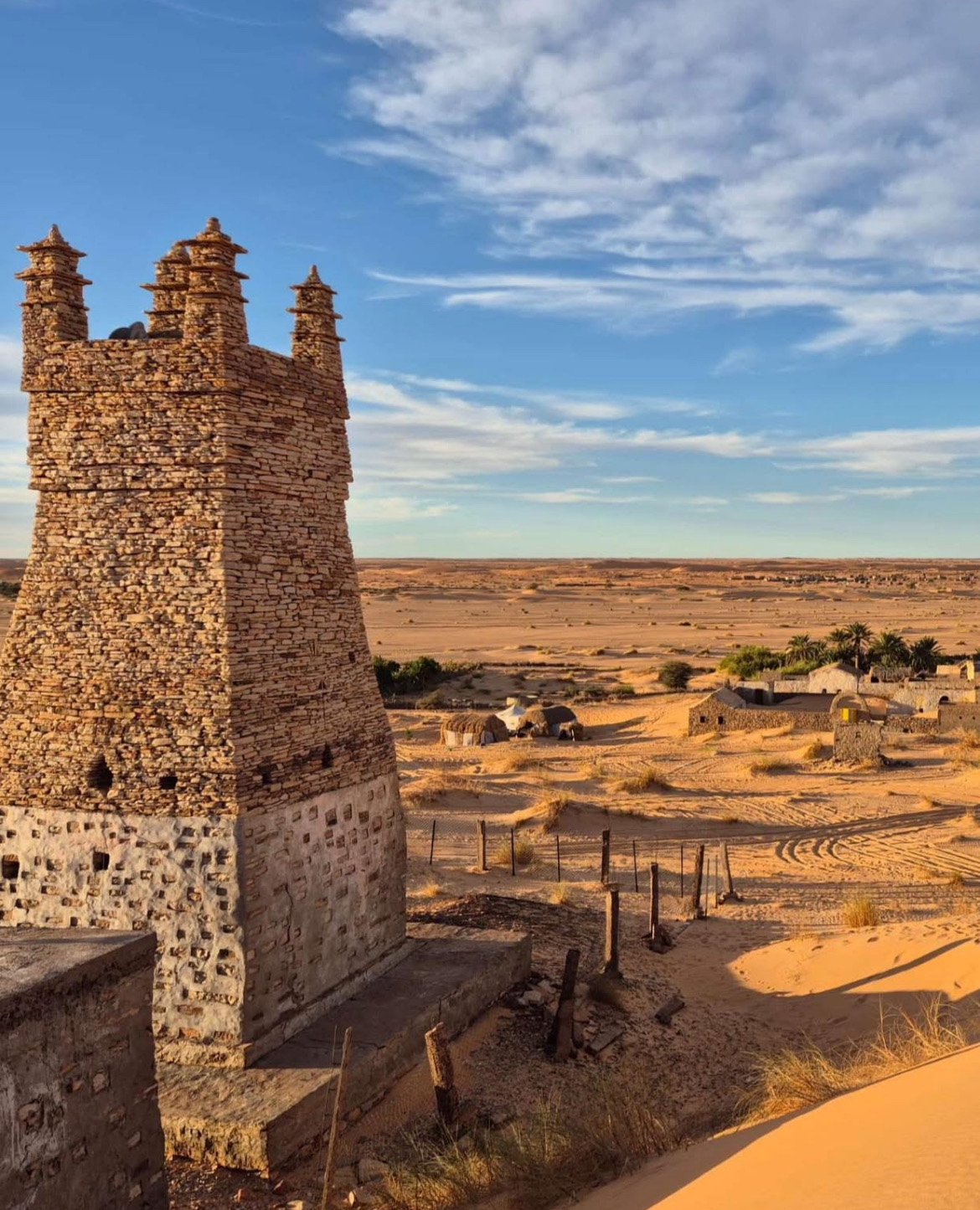
Chinguetti announces itself before you arrive. Driving east from Atar on the desert piste, the city appears as a distinctive shape on the horizon — the five-sided minaret of the old mosque rising above a cluster of earthen buildings backed by a wall of golden dunes. Nothing in the approach prepares you for the scale of the sand encroachment when you arrive at street level.
The dunes are not behind Chinguetti. They are in it. Streets of the old quarter (the ksar) have been filled to the rooflines by advancing sand. Some houses are buried to their upper windows. The effect is not ruin — it is something closer to archaeology in progress, the desert reclaiming what humans built across it six hundred years ago.
This is Chinguetti's visual character: ancient earthen architecture in a state of beautiful, fragile tension with the Sahara. Photograph it thoroughly. Nobody knows how much of what stands today will remain in thirty years.
How Many Days Do You Need?
One night is not enough. This is the consistent feedback from every serious traveler who has spent time in Chinguetti. One night means you arrive in the afternoon, see the mosque, eat dinner, sleep, and leave the next morning. The manuscripts are rushed. The old quarter is glimpsed rather than experienced. The dunes at sunrise go unvisited.
Two nights is the minimum for a meaningful visit. With two nights you have: one afternoon for the mosque and old quarter orientation; one full day for manuscript libraries, the ksar in morning light, a dune walk to the viewpoint ridge, and the sunset; the following morning for whatever you missed.
Three nights allows for a truly immersive visit — the deliberately slow pace of Chinguetti becomes accessible rather than frustrating. You can go deeper with the libraries, spend an evening talking with local guides about the city's history, and make a dawn camel ride into the sand sea beyond the dunes. When you're ready to build your Chinguetti itinerary, our booking page can help you plan the right number of nights.
The Old Mosque and Minaret
The old mosque of Chinguetti is one of the most photographed buildings in West Africa — the distinctive five-sided pyramidal minaret topped with ostrich eggs has become the visual symbol of the city and, in many representations, of the entire Mauritanian Sahara.
The mosque dates to the 13th century, rebuilt and modified over the centuries but retaining its essential character. The minaret's unconventional pentagonal cross-section is unique in Islamic architecture — whether this reflects a local geometric tradition, a builder's idiosyncrasy, or deliberate theological symbolism remains uncertain.
The mosque is an active place of worship. Non-Muslim visitors are typically shown the courtyard and exterior, but access to the prayer hall itself is generally restricted. Your guide will arrange what is appropriate. Do not enter any section of the mosque your guide hasn't confirmed is open to visitors — this is a functioning religious site, not a heritage museum.
The Manuscript Libraries: How to Access Them
Chinguetti's private manuscript libraries are what truly distinguish it from any other desert city in the Sahara. Five main families maintain collections of Islamic manuscripts accumulated over centuries — texts on theology, Islamic law, Quranic interpretation, astronomy, mathematics, and medicine, some dating to the 13th–15th centuries.
These are private collections held in family homes, not open to casual walk-in visits. Access is arranged through a local guide who has the family relationships — this is one of the practical reasons a qualified local guide is essential in Chinguetti specifically.
A typical visit involves being welcomed in the family's home, shown the main manuscripts by a family member who explains their significance, and given time to examine specific pages up close. Photography inside the libraries requires permission — usually granted, but always ask.
Each library has a different emphasis and character. If your time allows, visiting two separate collections gives a more complete picture of the intellectual tradition Chinguetti sustained.
The Dunes: Walks, Camel Rides, and the Ridge View
The sand sea northeast of Chinguetti is the setting for the experience most travelers come to the desert to have: walking on clean dunes in absolute silence, watching the sun move across the sky with nothing between you and the horizon.
The dune ridge 20–30 minutes' walk from the edge of town is the key viewpoint. From the crest, you see Chinguetti below and the sand sea extending beyond in every direction. At dawn, with the first light catching the minaret and the dunes simultaneously, it is one of the finest views in all of Mauritania. At sunset the light shifts into something more abstract and more beautiful.
Camel rides are offered by local guides and are worth considering for the experience itself rather than as transport. A 45-minute ride into the sand sea provides access to dune areas hard to reach on foot and a perspective on the landscape that is genuinely different from walking.
Where to Stay and Eat
Chinguetti has a small number of simple auberges (guesthouses) — local family-run establishments offering a room, a mattress, solar electricity for a few hours in the evening, and basic meals. Expect to pay 15–35 USD per night depending on the establishment and what is included.
Hot water is rare. Electricity beyond early evening is rare. WiFi exists but is slow and inconsistent. These are the realities of accommodation in a 13th-century desert city, and they contribute to rather than detract from the experience.
Meals in Chinguetti are simple: rice with meat or vegetables, fresh bread, tea. There are no restaurants outside the auberges. Communicate any dietary requirements to your guide in advance so the auberge can prepare accordingly.
Respecting the Holy City
Chinguetti is one of Islam's seven holy cities — a status that shapes daily life in ways visitors should acknowledge. Dress conservatively throughout your visit: covered shoulders, knees covered, and women with a headscarf when in town rather than only at the mosque.
Ask permission before photographing people. This is always appropriate in Mauritania but especially important in Chinguetti, where local residents may hold more conservative views about being photographed.
Respect prayer times — the city quietens at the five daily prayer times and it is appropriate to behave with corresponding restraint during these periods. Your guide is the best interpreter of what is appropriate in specific situations. When uncertain, follow their lead.
Frequently Asked Questions
Is it safe to visit Chinguetti?
Yes. Chinguetti and the wider Adrar region are well within the safe tourist circuit. The city is small, friendly, and accustomed to international visitors. The usual common-sense travel precautions apply.
Do I need a guide specifically in Chinguetti?
A local guide is strongly recommended, specifically for access to the manuscript libraries (which require family introductions), the best photography spots, and to navigate the social customs of the holy city appropriately.
Can I visit the mosque in Chinguetti as a non-Muslim?
The mosque exterior and courtyard are generally accessible to respectful visitors. The prayer hall interior is typically restricted to Muslims. Your guide arranges what is appropriate and advises on the current situation.
Plan Your Adventure
Book Your Mauritania Tour
We handle every detail — 4×4 transport with experienced local drivers, the Iron Ore Train boarding at Choum, ancient desert cities, and the guides who open the right doors. Tell us your dates and we'll build the right trip around you.
- Iron Ore Train experience from Choum
- Chinguetti, Ouadane & the Richat Structure
- Terjit Oasis & full Adrar desert circuit
- Banc d'Arguin, Nouadhibou & the Atlantic coast
Keep Reading