Mauritanian Culture & Customs: What Every Traveler Should Know
Understanding Mauritanian culture doesn't require deep expertise — it requires specific awareness. The greetings matter, the hospitality is real, the dress code has practical effects, and the tea ceremony is never optional.
The Moorish Heritage: Context for Everything
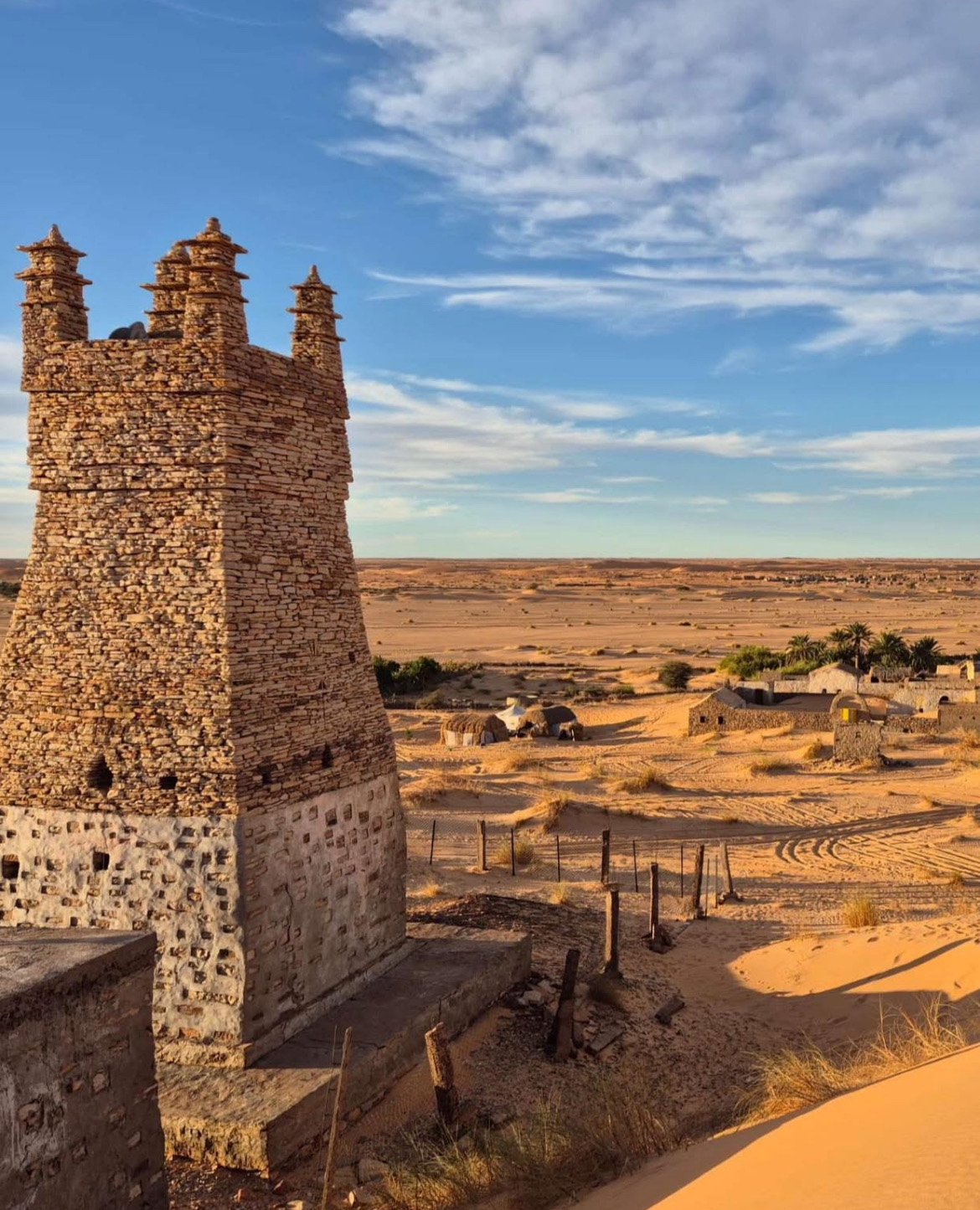
Mauritanian culture is rooted in the Arabic-Berber nomadic tradition of the Bidan Moors, who historically dominated the Saharan interior and established the caravan cities and scholarly traditions that define the country's cultural identity. The Adrar region — Chinguetti, Ouadane, Atar — is the heartland of this tradition.
The country also has significant sub-Saharan African communities in the south — the Haratines (historically associated with servitude) and the Afro-Mauritanian peoples who maintained cultural ties to Senegal and Mali. This complexity shapes Mauritanian society in ways that are not always visible on the standard desert circuit but become apparent on longer visits.
For practical purposes, the cultural norms most relevant to travelers in the Adrar and on the Iron Ore Train circuit reflect the Moorish tradition: deeply Islamic, nomadically influenced, hospitality-oriented, and structured by social hierarchies and relationship networks that a good local guide understands intimately.
Islam in Daily Life
Mauritania is an Islamic republic and Islam shapes daily life in ways that are not primarily formal or restrictive — they are atmospheric, rhythmic, and culturally central.
Five daily prayers structure the day. The adhan (call to prayer) from mosque loudspeakers marks time more reliably than clocks in the desert towns. During prayer times — particularly at noon (Dhuhr) and afternoon (Asr) — activity slows; shops may close briefly; your guide will excuse himself. This is not an inconvenience to manage but a rhythm to respect and, once you grow familiar with it, a pleasant punctuation to the day.
Friday is Jumu'ah — the Islamic holy day. The Friday noon prayer is the most significant of the week. Services and shops slow noticeably on Friday mornings; activity resumes in the afternoon. If you have logistics to arrange on a Friday, handle them early in the morning or after midday.
Ramadan, which moves approximately 10 days earlier each year, transforms daily life dramatically. Restaurants close during daylight hours; the night becomes the social hour; generosity and reflection define the cultural mood. Traveling in Mauritania during Ramadan is manageable but requires adjustment — carry your own food and water for daytime travel, and be mindful about eating openly in public.
Greetings: The Gateway to Every Interaction
Mauritanian social greetings are elaborate, important, and not optional. Walking past someone without greeting them is considered rude in a way that has no real Western equivalent — it signals a complete absence of social interest.
The standard greeting begins with 'As-salamu alaykum' (peace be upon you) and the response 'Wa alaykum as-salam' (and upon you peace). This is followed by several rounds of inquiry — 'How are you?', 'How is your health?', 'How is your family?', 'How was your journey?' — each requiring a response and reciprocation.
This exchange takes 2–5 minutes when done properly. Do not rush it. The relationship established in these few minutes of greeting determines the quality of everything that follows.
Learning even a basic Arabic greeting and using it genuinely — rather than rushing past it — opens more doors in Mauritania than any amount of money or any service a tour operator can provide. Your guide is your best teacher for the local variants of these phrases. To begin planning a trip where these cultural encounters are your daily reality, explore options at mauritaniaexperience.com/book.
Hospitality: The Genuine Article
Mauritanian hospitality is not the performance that tourism has made of it elsewhere. When a Mauritanian family invites you in for tea, it is a genuine expression of the social value placed on welcoming guests — a value rooted in the nomadic tradition, where travelers in the desert depended on the hospitality of others for survival.
Refusing hospitality — particularly the offer of mint tea — is genuinely rude in a way that Europeans and Americans often underestimate, because they are accustomed to optional hospitality. In Mauritania, accepting the tea, sitting through the ceremony, participating in the conversation, and leaving with thanks is the minimum social courtesy. It takes 30–45 minutes. In exchange, you get a window into Mauritanian life that no tour schedule can manufacture.
Being invited to eat with a family is a greater honour than the tea offer. Accept. Remove your shoes at the door. Eat from the communal dish with your right hand. Stay until the host signals the meal is finished. Compliment the food. The conversation and connection that follow are the actual gift.
Dress Code: Practical Effects
Mauritania's dress code is conservative by global tourist standards, and the practical effects of respecting or ignoring it are measurable.
For men: long trousers and covered shoulders are appreciated throughout the country. Shorts are tolerated in desert camps and some guesthouse settings but draw unwanted attention in town markets, mosques, and city streets. In Chinguetti specifically, wearing shorts marks you as an outsider rather than a guest — a subtle but real difference in how you are received.
For women: covering shoulders and knees is important throughout. A headscarf is not legally required for foreign tourists, but it genuinely changes the quality of interactions in small towns and at religious sites. With it, women are treated as culturally aware guests; without it, as culturally indifferent tourists. The difference is not hostility but access. A lightweight scarf that packs to nothing and can be draped when entering towns is the practical solution.
In Nouakchott and Nouadhibou, Western clothing standards are more tolerated. In the desert towns and at religious sites, more conservative dress is expected without exception.
Photography Etiquette
Always ask before photographing any person. This is the only rule, and it is non-negotiable.
The mechanics are simple: make eye contact, smile, indicate your camera, and mime the act of taking a photograph. In most contexts — markets, street scenes, guide interactions — this produces a nod and genuine permission. Once you have that permission, take the photograph respectfully and show the result on your screen, which is universally appreciated.
Women are more conservative about being photographed, particularly in smaller towns and religious contexts. Follow your guide's lead on when it is appropriate to ask. A guide's introduction and endorsement significantly improve the chances of permission in sensitive situations.
Never photograph military installations, government buildings, police officers, or anything associated with national security infrastructure. This is a serious legal matter in Mauritania, not a cultural preference. Cameras have been confiscated and travelers detained for photographing military equipment near the Iron Ore Train infrastructure. When uncertain, don't photograph it.
Frequently Asked Questions
Do I need to wear a headscarf in Mauritania?
Not legally required for foreign women tourists, but strongly recommended for interactions in towns, markets, and religious sites. A lightweight scarf that packs flat is a practical packing item — put it on when entering towns, remove it at the guesthouse or camp.
Is it acceptable to photograph Mauritanian people?
Yes, with permission. Ask first, always — indicate your camera and wait for agreement. Most people are happy to be photographed once asked properly. Never photograph people who have declined or without asking.
Can you drink alcohol in Mauritania?
Mauritania is a dry country — alcohol is officially prohibited. It is not available in any tourist context on the standard circuit. This includes the desert camps, the guesthouses, and restaurants. Bring no expectations of wine with dinner.
Plan Your Adventure
Book Your Mauritania Tour
We handle every detail — 4×4 transport with experienced local drivers, the Iron Ore Train boarding at Choum, ancient desert cities, and the guides who open the right doors. Tell us your dates and we'll build the right trip around you.
- Iron Ore Train experience from Choum
- Chinguetti, Ouadane & the Richat Structure
- Terjit Oasis & full Adrar desert circuit
- Banc d'Arguin, Nouadhibou & the Atlantic coast
Keep Reading