Solo Female Travel in Mauritania: What to Really Expect
Mauritania is more welcoming to solo female travelers than most assume. Specific cultural awareness makes an enormous difference — and women travelers have access to parts of Mauritanian life that men simply cannot reach.
The Honest Headline
Mauritania is more welcoming to solo female travelers than most people assume based on its location, its Islamic character, and its obscurity on the travel circuit. Women travelers who have made this trip — and many have, both independently and through guided tours — consistently report that their experience was significantly easier than they feared.
That reassurance comes with important context: specific preparation, cultural awareness, and thoughtful behavioral choices make a measurable difference to the quality of that experience. Arriving without understanding the cultural landscape produces a harder trip than arriving with it.
This guide provides the specific information that matters — not broad reassurances, not alarmism, but honest, practical guidance that changes outcomes. To plan your solo trip with an experienced local operator, visit mauritaniaexperience.com/book.
Cultural Context: What Shapes the Experience
Mauritania is a conservative Muslim society with clearly defined social roles for men and women — not because of hostility to outsiders, but because of deeply held religious and cultural structures that have evolved over centuries.
The practical effect for a foreign woman traveler is not hostility — it is different treatment than a male traveler receives, and that treatment is shaped significantly by how you present yourself.
A foreign woman who arrives in conservative clothing and carries herself with confident, friendly discretion is received as a culturally aware guest — respectfully and with genuine warmth. A foreign woman who arrives in shorts and a sleeveless top in a desert town will not be mistreated, but will be treated as a cultural outsider, which affects every subsequent interaction in small but cumulative ways.
This is not a criticism of either choice. It is an explanation of how cultural context shapes experience, and why most experienced solo female travelers in Mauritania choose conscious adaptation as a practical tool rather than a submission.
What to Wear: The Practical Effects
The single most impactful preparation decision for solo female travel in Mauritania is packing and wearing conservative clothing.
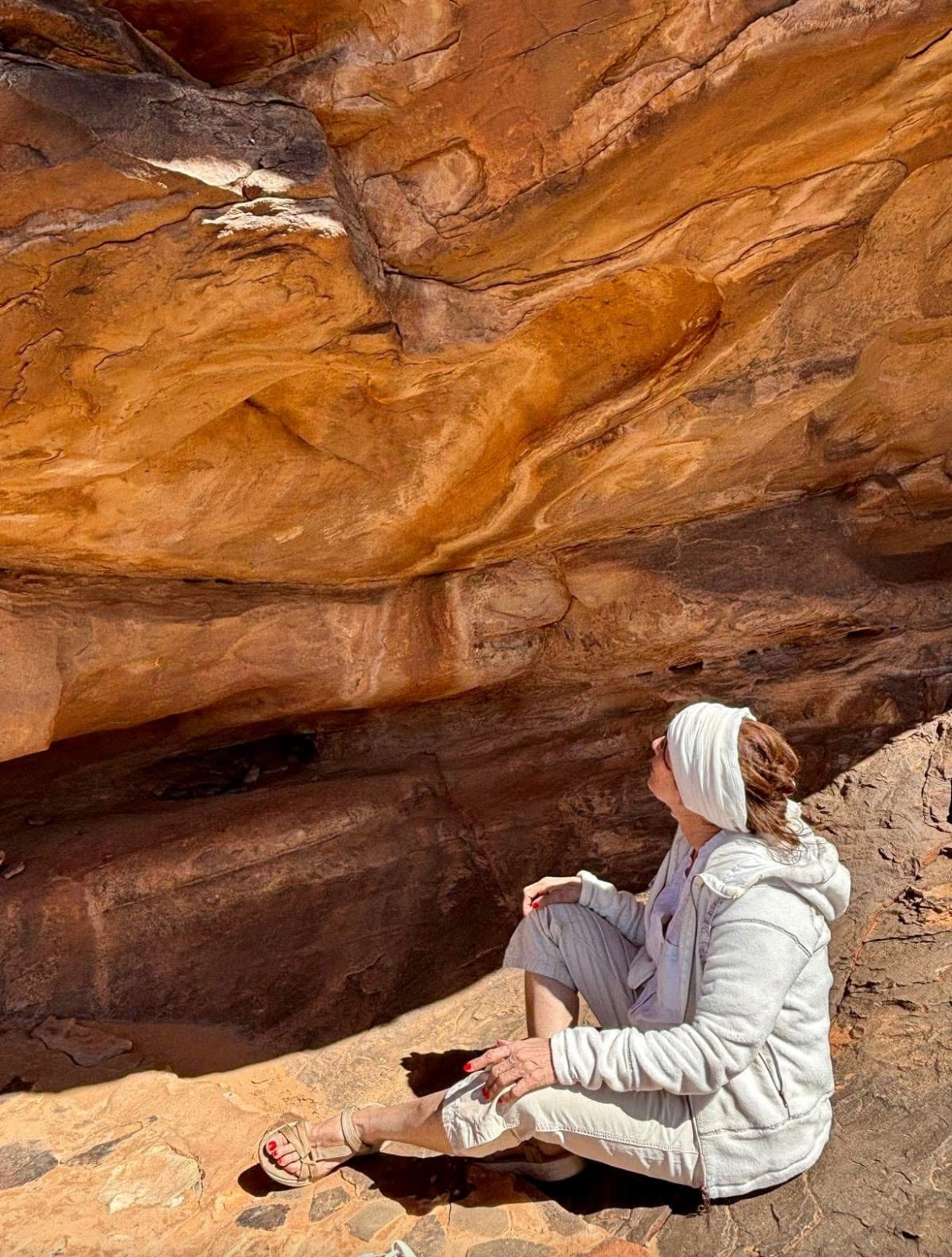
A lightweight headscarf is not legally required for foreign women tourists. In practice, wearing one in towns, markets, and at religious sites significantly changes how you are received. With it: respectful greetings, genuine hospitality, smoother access to interactions at all levels. Without it in conservative desert towns: not hostile, but marked as outside the social script, which makes everything slightly harder.
The scarf can be a simple lightweight cotton or silk square — it packs to nothing, weighs nothing, and can be put on when entering a town and removed at a camp or guesthouse. Think of it as a social tool rather than a religious statement.
Covering shoulders and knees throughout the desert circuit is important and not optional for a comfortable experience. In Nouakchott, Western clothing standards are more tolerated. In Atar, Chinguetti, and desert towns, conservative dress is practically essential.
Neutral or dark colours are practical for multiple reasons: the desert dust shows less; you are less visually conspicuous; and the conservative aesthetic aligns better with local expectations.
Harassment: The Actual Reality
Verbal attention and over-curiosity can occur in Nouakchott markets and bus stations — similar to any major West African city. The level of directed harassment at solo female travelers in Mauritania is consistently reported as lower than in Morocco, Egypt, or Tunisia.
In the desert towns — Atar, Chinguetti, Ouadane — harassment is virtually absent in the sense that Western female travelers typically encounter it elsewhere. The social conservatism that can feel restrictive in these towns also generates genuine respect for social boundaries within which interactions happen.
The effective response to unwanted attention — confident, polite, and brief — is the same as anywhere. Avoid prolonged engagement with anyone who has displayed unwanted behavior. Move on without excessive apology or explanation.
Traveling with a local guide reduces the frequency of these interactions considerably. A guide's presence signals social connection and responsibility, which changes how strangers approach.
The Guide as Social Buffer and Door Opener
Traveling with a local guide in Mauritania as a solo female traveler provides practical advantages that go beyond logistics.
A guide who is trusted in the communities you visit acts as a social guarantor — his introduction of you carries implicit endorsement of your character and seriousness. This changes how local people interact with you. Doors that would be closed to a solo foreign woman approaching independently open readily when a trusted local makes the introduction.
Conversely, the guide's presence reduces unwanted attention. His social standing signals that you are connected to someone with community roots — which, in a socially structured culture, matters considerably.
This is not dependency — it is using available social tools intelligently. The guide is not escorting you; he is facilitating access that the cultural structure makes easier with his involvement.
The Unique Access That Female Travelers Have
Solo female travelers in Mauritania gain access to parts of Mauritanian life that male travelers — regardless of their guide or their experience — simply cannot reach.
Mauritanian society is socially separated by gender in domestic settings. Male visitors enter the male space; female visitors are often welcomed into the female space — the kitchen, the family room, the conversations and activities that women share among themselves.
This access is extraordinary. While a male traveler sees the public face of Mauritanian life — the market, the mosque courtyard, the guide's professional presentation — a female traveler received into the domestic female space sees how Mauritanian families actually live. The conversations about family, daily life, children, food, and the small texture of desert existence that happen in Mauritanian women's spaces are simply unavailable through any amount of money or professional arrangement.
This is not guaranteed on every visit — it depends on the right introductions and circumstances — but it happens with enough regularity that experienced solo female travelers in conservative Muslim countries cite it as one of the hidden gifts of this style of travel.
Practical Safety Advice
The safety measures relevant to solo female travel in Mauritania are not dramatically different from those appropriate for any solo traveler in a remote destination.
Share your itinerary with a contact at home — someone who knows your planned route and can raise an alert if they don't hear from you on schedule.
Buy a Mauritanian SIM card on day one and save emergency numbers: your guide, your accommodation for each night, and your country's embassy emergency line in Nouakchott. Download offline maps before leaving connectivity areas.
Book accommodation through your operator rather than arriving unannounced. Your guide pre-screening accommodation is a practical safety step, not excessive caution.
Check in with people at home regularly. The peace of mind this provides is worth the brief message sent from Atar's WiFi before heading into the desert.
Frequently Asked Questions
Is Mauritania safe for solo female travelers?
Yes, with appropriate preparation. The harassment level is lower than many Mediterranean and North African destinations. Cultural awareness — particularly dress code — significantly improves the quality of the experience. A local guide provides additional social buffering and access.
Do I need to wear a headscarf in Mauritania as a woman?
Not legally required. Practically recommended in towns, markets, and at religious sites. A lightweight scarf that packs flat is the efficient solution — put it on when entering town, remove at the camp or guesthouse.
Are there female guides in Mauritania?
Female licensed guides are rare in Mauritania. Most local guides are male. This is not a problem in practice — the guide's role is facilitator and logistics coordinator rather than intimate companion, and male guides work effectively with solo female travelers throughout the country.
Plan Your Adventure
Book Your Mauritania Tour
We handle every detail — 4×4 transport with experienced local drivers, the Iron Ore Train boarding at Choum, ancient desert cities, and the guides who open the right doors. Tell us your dates and we'll build the right trip around you.
- Iron Ore Train experience from Choum
- Chinguetti, Ouadane & the Richat Structure
- Terjit Oasis & full Adrar desert circuit
- Banc d'Arguin, Nouadhibou & the Atlantic coast
Keep Reading