Photography Guide: How to Capture Mauritania
Mauritania is one of the great undiscovered photography destinations in Africa. The light quality, the ancient architecture, the Iron Ore Train, and the complete absence of other photographers mean images from here are genuinely rare.
Why Mauritania Rewards Photographers
Most iconic photography destinations in the world are crowded with photographers. The same angles at Santorini sunsets, the same dawn shots at Angkor Wat, the same dune ridge compositions at Morocco's Erg Chebbi — these images are simultaneously beautiful and ubiquitous.
Mauritania is genuinely undiscovered as a photography destination. Images from here — of the Iron Ore Train crossing the Sahara, of Chinguetti's minaret at dawn, of the Eye of the Sahara from above — are rare. The light quality in the western Saharan desert, filtered through an atmosphere with minimal particulate in the clear winter months, produces colour and shadow distinct from anything achievable in temperate zones. Ancient subjects that have never appeared on a mainstream travel photography feed are everywhere.
For photographers who want images that are both technically outstanding and genuinely unrepeated by thousands of others, Mauritania is one of the finest destinations on the planet. Start planning your photography trip at mauritaniaexperience.com/book.
The Quality of Desert Light
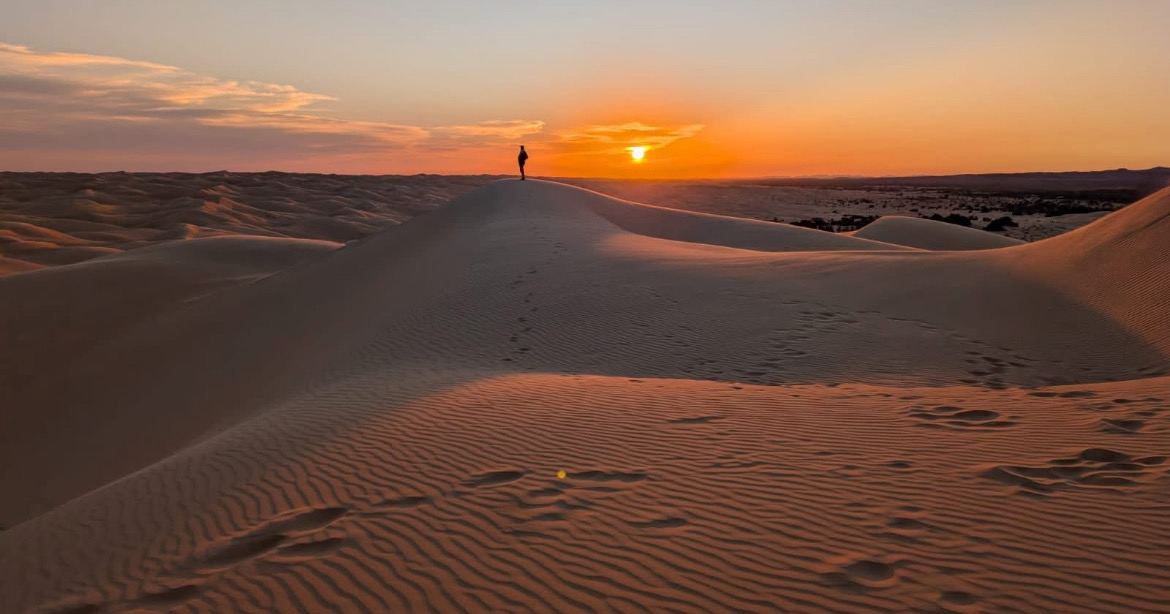
The golden hour in the Mauritanian desert is not 60 minutes. It is 30–45 minutes of rapidly shifting light that begins at sunrise and ends when the sun clears the horizon and the harshness begins. In that window, the red desert terrain, the ancient stone buildings, the dune ridges, and the faces of the people are lit with a warmth and directionality that is genuinely extraordinary.
In the afternoon, quality light arrives earlier than most photographers from temperate climates expect — in November and December, the best shooting window opens at 3–4pm and closes at sunset. Between 10am and 3pm, the overhead sun flattens the landscape and erases the shadows that give the desert its texture.
Plan every significant photography session for the first 45 minutes of daylight or the last 90 minutes before sunset. This means waking before dawn — which in a desert travel context is always worthwhile regardless of photography. The desert at dawn is extraordinary even without a camera in your hands.
Iron Ore Train Photography
The Iron Ore Train is one of the most photographically compelling subjects in African travel — but capturing it well requires specific planning.
The locomotive approach shot is iconic: low angle, positioned on or near the track several hundred metres ahead of the approaching train, wide-angle lens, desert extending to the horizon on both sides. This shot requires coordination with your guide — an experienced guide knows where to position you safely and at what point the train moves slowly enough that a close approach is manageable.
Inside the wagons at dusk and night, long exposures capture the desert floor blurring past while the stars above remain sharp. A small tripod or beanbag wedged against the wagon wall stabilizes the camera at the shutter speeds needed (1–4 seconds, depending on how much motion blur you want).
Iron ore dust is the enemy of all camera equipment in the wagons. Use a UV filter as a sacrificial front element on every lens. Keep the camera sealed in a dry bag between shooting sessions and clean it thoroughly each evening.
Chinguetti Photography
Chinguetti offers three distinct photographic zones — the mosque and minaret, the old quarter (ksar), and the surrounding dunes.
The mosque minaret is best photographed from the dune ridge 20–30 minutes northeast of town at dawn — the minaret catching the early morning light with the dunes in the foreground and the sky still dark above. Bring a tripod for pre-dawn work and shoot through the full sunrise sequence.
The ksar's alleyways in the first two hours after sunrise reveal textures — ancient earthen walls, wooden doorways, sand accumulation at thresholds — that flatten entirely in midday light. Shoot the narrow spaces between walls for geometric compositions; shoot the window openings for contrast between interior shadow and exterior brightness.
Manuscript photography inside the libraries requires permission (almost always granted) and a sensitivity to the material — these are ancient documents shown to you as a privilege, not photographic props. Natural window light is preferable to flash.
Portrait Photography: Ethics and Practice
Mauritanians are, in the experience of photographers who have worked here, among the most generous portrait subjects in West Africa — once asked properly. How you ask matters enormously.
Make eye contact. Smile. Gesture toward your camera in a questioning rather than assertive way. Wait for a clear response. In most market contexts and guesthouse settings, this produces willing subjects — people who often enjoy seeing themselves on the screen afterward and offer to pose more deliberately.
Showing the image on your screen is not just courtesy — it is the moment that turns a stranger into a portrait session. Most Mauritanians who have never seen a high-quality photograph of themselves react with genuine delight, which creates trust and, typically, more authentic expressions in subsequent frames.
In smaller towns, women are more conservative about being photographed. In Chinguetti specifically, let your guide facilitate any portrait interactions — his introduction and endorsement change the dynamic entirely.
Never photograph someone who has declined or turned away. No image is worth that violation.
Equipment Protection in the Desert
Two forces work against camera equipment in the Mauritanian desert: fine dust and heat.
Dust is the primary threat, particularly on the Iron Ore Train and on desert piste travel where the vehicle raises enormous clouds of fine red sand. Sealed dry bags for storage between shoots, ziploc bags for individual lenses, UV filters on every lens, and a rigorous evening cleaning routine are the necessary response.
Heat can degrade battery performance and damage electronics above approximately 45°C. In the cool season (November–February), this is not a significant concern. In March and October at the season's edges, keep cameras shaded when not in use and never leave equipment in a vehicle in direct sun.
A wide-angle lens (16–24mm equivalent) for landscapes and tight spaces, a 50–85mm equivalent for portraits and detail, and a telephoto (200–400mm equivalent) for wildlife at Banc d'Arguin covers the full range of Mauritanian subjects. A tripod is essential for dawn, dusk, and night work.
Frequently Asked Questions
Can I bring a drone to Mauritania?
There is no formal nationwide prohibition on recreational drones, but there is no clear permission framework either. In practice, remote geological sites (Richat Structure) and desert landscapes are relatively undisturbed by authorities. Avoid flying near military, government buildings, the Iron Ore Train infrastructure, and any security-sensitive area. Consult with your local operator.
How do I protect my camera from iron ore dust on the train?
Sealed dry bag as primary layer. Ziploc bag inside that for additional protection. UV filter on every lens as sacrificial glass. Only remove camera from bag for active shooting, reseal immediately. Clean camera externally with blower and brush every evening.
What is the most useful lens for Mauritania?
A 24-70mm (or equivalent) covers 80% of situations well — wide enough for landscape, long enough for architectural detail and casual portraits. A wide prime (24mm or 35mm) is ideal for night sky work. Telephoto is essential only for Banc d'Arguin wildlife.
Plan Your Adventure
Book Your Mauritania Tour
We handle every detail — 4×4 transport with experienced local drivers, the Iron Ore Train boarding at Choum, ancient desert cities, and the guides who open the right doors. Tell us your dates and we'll build the right trip around you.
- Iron Ore Train experience from Choum
- Chinguetti, Ouadane & the Richat Structure
- Terjit Oasis & full Adrar desert circuit
- Banc d'Arguin, Nouadhibou & the Atlantic coast
Keep Reading