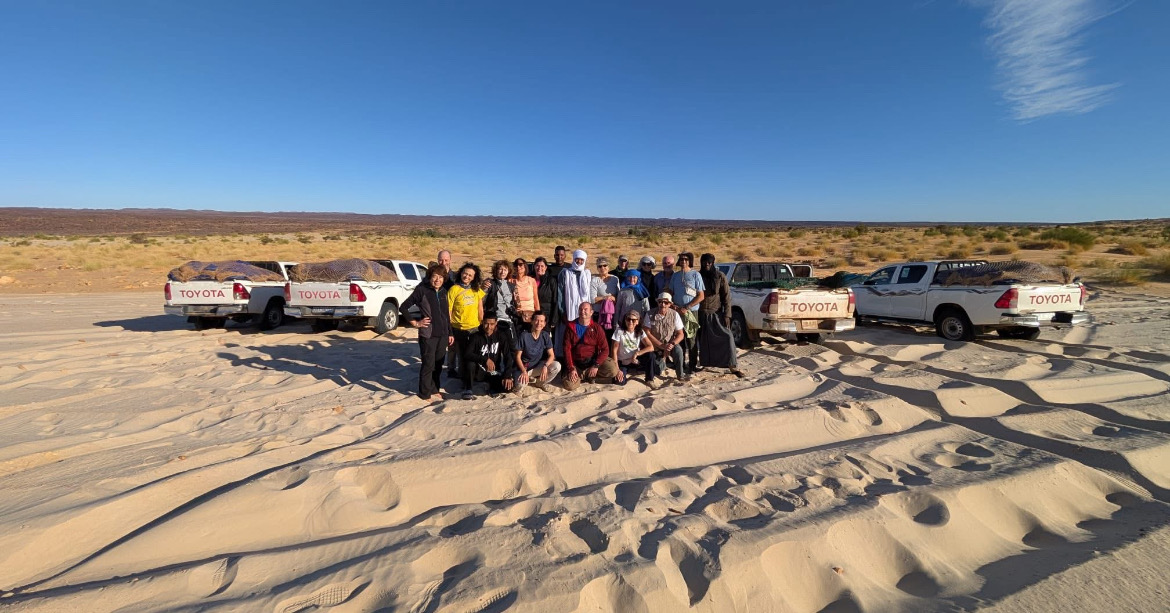
Is Mauritania Safe? An Honest Answer for 2026
Travel advisories make Mauritania sound alarming. The reality is more nuanced: the tourist circuit is genuinely safe, the risks are specific and manageable, and the areas flagged in advisories are nowhere near where visitors actually go.
The Short Answer
Mauritania is safe for travelers visiting the established tourist circuit — Nouakchott, Atar, Chinguetti, Ouadane, Terjit, Nouadhibou, and the Iron Ore Train route — with appropriate preparation and current awareness.
This is not a naive reassurance. It reflects the practical experience of thousands of visitors each year, the specific geography of the country, and an honest reading of what travel advisories actually say rather than what they sound like.
The advisories are real and worth reading carefully. But they are not uniform across the country, and they should not stop you from visiting one of the most compelling travel destinations in Africa. Ready to plan? Our booking page is a good place to start.
What the Travel Advisories Actually Say
The UK Foreign Commonwealth and Development Office, the US State Department, and their European counterparts flag Mauritania at elevated risk levels. Reading the actual text of these advisories reveals something important: the specific warnings concentrate on border regions — primarily areas bordering Mali and Algeria in the east and northeast.
The underlying concern is residual security instability linked to Sahelian jihadist groups that have historically operated in Mali and occasionally moved into Mauritanian border desert. Incidents associated with these groups in Mauritanian territory have been concentrated in remote eastern border areas — not on the tourist circuit.
The tourist circuit — Atar, Chinguetti, Ouadane, Terjit, Nouadhibou, the Iron Ore Train route — is geographically distant from the flagged border zones. Chinguetti sits approximately 700km from the Malian border. Nouadhibou is on the Atlantic coast, over 1,000km from the problematic areas. The advisories reflect genuine risk in specific locations, expressed as a country-level rating that implies more uniform danger than actually exists. Read the specific advisory text; do not rely on the summary colour code alone.
Areas to Genuinely Avoid
There are parts of Mauritania that travelers should not visit, and the advisories are correct about them. The eastern Mauritanian desert bordering Mali — roughly east of a line from Tidjikja southward — is genuinely not recommended without specific security expertise and current intelligence. This includes the area around Oualata, historically significant but currently inaccessible for safety reasons.
The region south of the Adrar toward Assaba and Hodh — approaching the Malian border — should also be avoided by independent travelers. None of these areas appear on the standard tourist circuit. A reputable operator will not include them in any itinerary, and the practical reality is that the Choum, Atar, Chinguetti, and Nouadhibou circuit offers far more than any tourist could reasonably cover without venturing near these borders.
Crime Rates and What Tourists Actually Encounter
Violent crime against tourists is uncommon in Mauritania. The country sees far less street crime and aggressive harassment than more heavily visited North African destinations.
Petty theft is possible in Nouakchott market areas, as in any busy urban market anywhere in the world. Standard precautions apply: keep valuables in inner pockets, avoid displaying expensive jewellery, and stay aware in crowded spaces.
In the desert towns — Atar, Chinguetti, Nouadhibou — the atmosphere is typically welcoming. Mauritanian culture places genuine value on hospitality to guests. Many visitors report that Mauritania feels safer day-to-day than Morocco, Egypt, or other popular regional destinations.
Practical Safety Measures That Make Sense
These measures are appropriate for Mauritania regardless of the crime or security situation — they represent sound practice in any remote, developing-world destination.
Register your trip with your country's embassy in Mauritania. Many countries maintain embassy representation in Nouakchott; registration systems allow consular assistance in genuine emergencies. Share your itinerary with a trusted contact at home who knows to raise the alarm if they don't hear from you on schedule. In a destination with limited connectivity, this simple step is a practical safety net.
Secure adventure travel insurance that covers emergency medical evacuation. The primary risk in Mauritania for most travelers is not crime — it is a medical emergency in a remote area with limited healthcare infrastructure. Evacuation to Dakar or Casablanca is the realistic outcome for serious illness or injury; insurance makes that possible.
Medical Risk: The Actual Main Concern
For most travelers, the real health risk in Mauritania is not security — it is heat, dehydration, and the scarcity of quality medical care outside Nouakchott. Between October and March, temperatures are manageable but can still cause heat exhaustion in travelers who underdrink. In summer months the risk becomes acute and the desert interior is genuinely dangerous.
Quality medical care exists only in Nouakchott. In Atar and the desert towns, basic treatment is available, but serious illness or injury requires evacuation. This is the practical reason adventure travel insurance covering medical evacuation is essential — not for the unlikely security incident, but for the genuine possibility of a medical emergency in a remote desert environment where self-rescue is not an option.
Frequently Asked Questions
Is Mauritania safer than Morocco for tourists?
By most metrics, yes. Hassle directed at tourists, aggressive selling, and street harassment are significantly less prevalent in Mauritania than in Morocco's major tourist areas. The security situation in the remote east is a genuine concern but does not affect the tourist circuit.
Is Nouakchott safe to walk around?
Generally yes, with standard urban precautions. It is not a city with a significant tourist crime problem. The main practical risks are chaotic traffic and market-area petty theft.
Should I avoid Mauritania based on travel advisories?
Read the specific advisory text for your country rather than relying on the summary rating. If your advisory specifically warns against the tourist circuit — Atar, Chinguetti, Nouadhibou — that is significant. If it warns against eastern border regions (which it typically does), the tourist circuit remains accessible.
Plan Your Adventure
Book Your Mauritania Tour
We handle every detail — 4×4 transport with experienced local drivers, the Iron Ore Train boarding at Choum, ancient desert cities, and the guides who open the right doors. Tell us your dates and we'll build the right trip around you.
- Iron Ore Train experience from Choum
- Chinguetti, Ouadane & the Richat Structure
- Terjit Oasis & full Adrar desert circuit
- Banc d'Arguin, Nouadhibou & the Atlantic coast
Keep Reading